
You can transform your recovery journey through virtual reality therapy games that create immersive, safe environments for confronting triggers and building coping skills. VR activates similar neural pathways to real-life experiences, allowing you to practice responses without consequences. Therapeutic games like The Last Reef and The TST Retreat combine CBT principles with engaging simulations, while virtual communities reduce isolation and build supportive networks. This innovative approach enhances traditional treatment methods and accelerates healing through repeated, controlled exposure that strengthens your resilience and recovery outcomes.
Understanding Virtual Reality as a Recovery Tool

Virtual reality therapy transforms recovery by immersing you in controlled digital environments where you can safely confront real-life challenges and practice essential coping skills.
When you put on a virtual reality headset, you’re transported into carefully designed scenarios that activate your brain’s natural learning processes, creating stronger skill development than traditional talk therapy alone.
These immersive experiences combine cognitive behavioral therapy principles with engaging simulations tailored to your specific triggers and recovery needs.
You’ll find yourself practicing real-world situations without real-world consequences, building resilience and exploring emotions in a completely safe space.
Clinical trials consistently show positive participant feedback, with users reporting these platforms are both helpful and easy to navigate, making VR therapy an increasingly valuable tool for substance use disorders and mental health recovery.
The Science Behind VR Therapy for Addiction Treatment
When you engage with VR therapy, your brain activates the same neural pathways it would in real-life situations, creating authentic emotional and physiological responses that traditional talk therapy can’t replicate.
You’ll experience controlled exposure to your specific triggers in a safe environment, allowing you to practice coping strategies without the risks associated with actual substance use scenarios.
This immersive approach enhances your skill development by bridging the gap between learning new behaviors and applying them when you face real-world challenges.
Immersive Brain Response Mechanisms
As your brain encounters virtual environments, it responds with the same neurological patterns triggered by real-world experiences, making VR therapy a powerful tool for addiction recovery.
These immersive brain response mechanisms activate your natural learning processes, creating authentic emotional and physical reactions that mirror real-life situations.
Virtual reality therapy strengthens your recovery through:
- Enhanced Skills Development – You’ll develop stronger coping mechanisms compared to traditional talk therapy approaches.
- Safe Practice Environment – You can confront triggers and rehearse responses without real-world consequences.
- Personalized Trigger Simulation – Your specific challenges are recreated for targeted therapeutic intervention.
- Improved Emotional Regulation – You’ll build resilience and healthier coping strategies for lasting recovery.
This neurological engagement prepares you for actual challenges while building confidence in controlled settings.
Controlled Exposure Benefits
Though traditional therapy often relies on discussing past experiences, controlled exposure through VR lets you face specific triggers while maintaining complete safety. This approach helps you build resilience against substance use disorders by practicing coping strategies without real-world consequences.
| Traditional Therapy | VR Controlled Exposure |
|---|---|
| Discusses past triggers | Actively confronts current triggers |
| Limited practice scenarios | Unlimited simulation possibilities |
| Memory-based responses | Real-time emotional responses |
| Static environment | Dynamic, personalized settings |
| Theoretical preparation | Practical skill development |
You’ll experience genuine emotional and physical responses during VR sessions, activating your brain’s natural learning processes. This controlled exposure strengthens your coping mechanisms more effectively than traditional talk therapy alone, allowing you to rehearse challenging situations repeatedly until you’ve mastered your responses.
Enhanced Skill Development
Because virtual reality therapy activates your brain’s natural learning pathways through immersive experiences, you’ll develop stronger coping skills than traditional talk therapy alone can provide.
This enhanced skill development occurs because VRT places you directly into realistic scenarios where you can practice responses to triggers and challenging situations.
The key advantages of VRT for skill building include:
- Genuine Response Training – You’ll experience authentic emotional and physical reactions in a controlled environment.
- Personalized Practice Sessions – Simulations reflect your specific triggers and circumstances.
- Safe Skill Application – You can repeatedly practice coping mechanisms without real-world consequences.
- Improved Engagement – Interactive scenarios maintain your focus and participation throughout treatment.
This approach strengthens the connection between learned strategies and real-world application, fostering resilience in your recovery journey.
Top VR Games Designed for Therapeutic Intervention
When traditional recovery methods fall short, VR games designed for therapeutic intervention offer breakthrough solutions that transform healing experiences.
Virtual reality therapy activates your brain’s natural learning processes, creating emotional and physical responses that mirror real-life situations.
The Last Reef leads this revolution, developed by NeuroAnimation specifically for stroke recovery. Clinical trials prove it’s twice as effective as standard care, backed by a $7 million budget that guarantees quality outcomes.
The TST Retreat tackles substance use disorders by combining cognitive behavioral therapy principles with immersive VR experiences.
You’ll access meditation sessions and virtual road trips that support your recovery journey. Over 81 participants have provided positive feedback about this innovative platform.
These therapeutic gaming platforms create engaging environments that distract from discomfort while building emotional connections with characters and scenarios.
Setting Up Your Virtual Recovery Environment

Before you begin your virtual recovery journey, you’ll need to guarantee your hardware meets the requirements and your space supports safe VR experiences.
Start by checking that your chosen VR headset has sufficient battery life, updated software, and compatible controllers for therapeutic games.
Next, establish a clear physical area free from obstacles where you can move safely during immersive sessions without risking injury or interruption.
Hardware Requirements Checklist
Three essential components form the foundation of your virtual recovery setup: a compatible VR headset, adequate computing power, and proper environmental preparation.
These hardware requirements directly impact your mental health recovery experience, guaranteeing smooth therapeutic gameplay without technical disruptions.
Your system needs:
- VR Headset – Meta Quest or Apple Vision Pro for accessing therapeutic games like The Last Reef
- Computing Power – Graphics card with 6GB+ VRAM and multi-core processor for ideal performance
- Physical Space – Minimum 6.5×6.5 feet cleared area for safe movement during sessions
- Connectivity – Stable internet with 25+ Mbps download speeds for seamless updates
Additionally, maintain a well-lit, obstacle-free environment to enhance tracking performance and guarantee your safety during immersive recovery sessions.
Space and Safety Setup
Setting up your virtual recovery environment requires careful attention to both physical comfort and safety considerations.
You’ll want to select a quiet space with minimal interruptions to enhance your focus and engagement during gameplay. Choose comfortable seating options since prolonged VR headset use can cause discomfort or fatigue during extended sessions.
Adjust your play area to accommodate movements safely, ensuring enough space to move around without hitting furniture or obstacles while immersed.
Take time to familiarize yourself with the VR equipment and controls beforehand—understanding the technology reduces frustration and improves your overall therapeutic experience.
Consider using noise-canceling headphones to enhance immersion by minimizing external sounds, allowing deeper connection to the therapeutic content and virtual experiences.
Combining VR Gaming With Traditional Treatment Methods
While traditional therapy has long served as the cornerstone of recovery treatment, virtual reality gaming is now revolutionizing how you can engage with therapeutic interventions.
Virtual reality therapy creates immersive environments where you’ll confront triggers and practice coping skills safely under clinical guidance.
Programs like TST Retreat demonstrate how VR enhances conventional treatment by:
- Personalizing simulations to reflect your specific triggers and challenges
- Strengthening skills development beyond what traditional talk therapy alone provides
- Increasing patient engagement through interactive, immersive experiences
- Reinforcing in-person sessions with supplemental VR practice opportunities
Clinical trials show VR’s effectiveness for substance use disorders and mental health conditions.
You’ll explore responses and emotions within controlled virtual environments, making recovery more engaging while maintaining the proven benefits of cognitive behavioral therapy principles.
Measuring Progress and Tracking Recovery Milestones
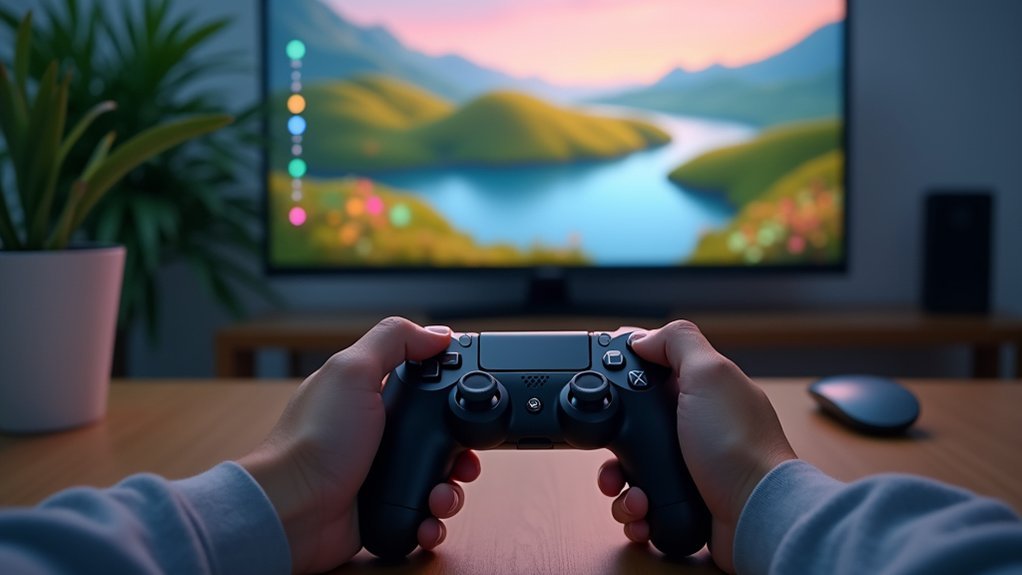
Recovery success depends on your ability to measure meaningful progress, and therapeutic gaming platforms now provide sophisticated tracking systems that monitor both behavioral changes and skill development.
You’ll find that games like The Last Reef track your emotional responses and engagement levels, providing clear indicators of motivation and resilience improvements.
VR programs such as The TST Retreat use quizzes and mini-games to assess your progress while reinforcing traditional therapy skills.
Clinical trials show therapeutic games can be twice as effective as standard care in stroke recovery.
Built-in feedback mechanisms let you visualize emotional and cognitive improvements over time, creating a sense of accomplishment.
Regular gameplay evaluations help clinicians understand your individual progress, ensuring immersive environments effectively contribute to your healing journey.
Building Support Networks Through Virtual Communities
Although tracking individual progress provides valuable insights into your recovery journey, connecting with others who share similar experiences creates an equally powerful foundation for healing.
Virtual gaming communities offer unique opportunities to form meaningful relationships that support your recovery process. These online spaces reduce isolation while building resilience through shared understanding and mutual support.
Gaming platforms facilitate connection-building through several key mechanisms:
- Collaborative gameplay develops teamwork and communication skills you’ll use in real-world relationships.
- Shared experiences within virtual communities create emotional bonds that extend beyond gaming sessions.
- Regular social interactions improve mood and emotional stability during challenging recovery periods.
- Supportive networks formed online often translate into lasting friendships that continue supporting your healing journey offline.
Frequently Asked Questions
How Much Does VR Recovery Equipment Typically Cost for Home Use?
You’ll spend $300-800 for basic VR headsets like Quest 2 or Pico 4. Premium systems cost $1,000-3,000. Don’t forget additional recovery software subscriptions ranging $10-50 monthly for specialized therapeutic applications.
Are There Age Restrictions for Using Virtual Reality Therapy Programs?
You’ll find most VR therapy programs require users to be at least 13 years old, though some platforms set minimums at 16-18. You should always consult your healthcare provider before starting any VR-based therapeutic treatment.
What Happens if I Experience Motion Sickness During VR Sessions?
You should immediately remove the headset and take a break. Inform your therapist, who’ll adjust settings like movement speed or field of view. They might recommend shorter sessions or different comfort techniques.
Can VR Therapy Replace My Current Addiction Counselor or Therapist?
VR therapy can’t replace your counselor or therapist. It’s designed to supplement traditional treatment, not substitute it. You’ll still need human connection, personalized guidance, and professional oversight that only licensed therapists can provide for recovery.
How Long Should Each VR Recovery Session Last for Optimal Results?
You’ll get ideal results with 20-30 minute VR recovery sessions. Start with shorter 15-minute sessions if you’re new to VR, then gradually increase duration. Don’t exceed 45 minutes to avoid fatigue or sensory overload.

Leave a Reply