
You’ll revolutionize your retention strategy by implementing immersive VR job simulations that mirror real work conditions, ensuring candidates understand what they’re signing up for. Use data-driven analytics to track performance metrics and transform subjective hiring into evidence-based decisions. Create personalized learning pathways tailored to each employee’s skills and aspirations, while establishing VR mentorship programs connecting newcomers with experienced staff. Build extensive feedback loops and integrate results with your existing HR systems for maximum impact.
Design Immersive Job Reality Simulations That Match Actual Work Conditions
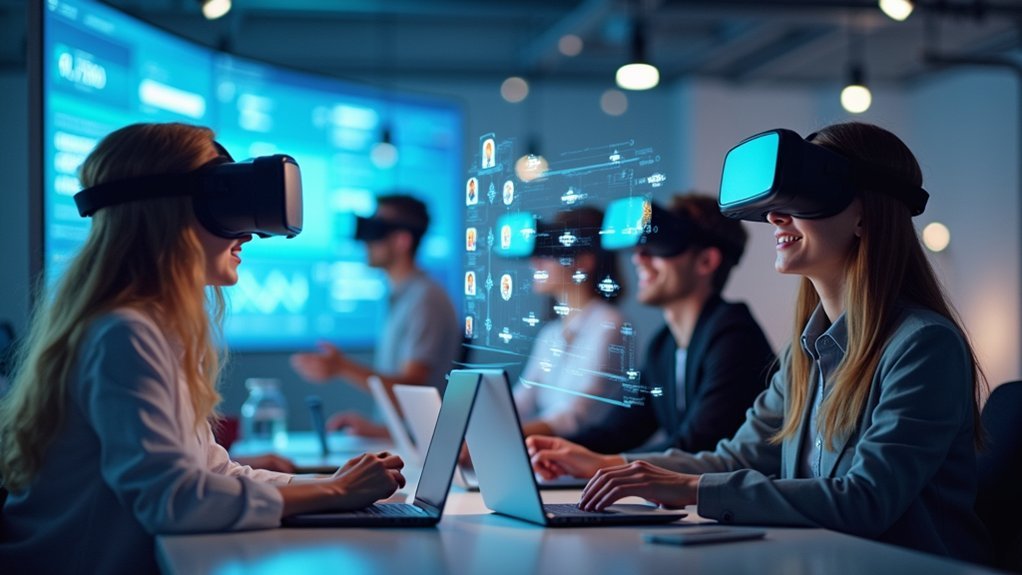
When you design VR simulations that mirror real job conditions, you’re giving candidates an authentic preview of what they’ll actually face daily.
These immersive job reality simulations considerably boost employee retention by setting proper expectations from the start.
You’ll need to analyze performance metrics and gather feedback from current employees to create realistic representations of actual work conditions.
Your training programs should address specific pain points that lead to dissatisfaction, ensuring simulations don’t sugarcoat challenging aspects.
When employees participate in developing these VR experiences, they develop ownership and contribute valuable insights.
This approach helps you measure employee satisfaction more effectively, as new hires enter roles with clear understanding of responsibilities and workplace realities.
Implement Data-Driven Analytics to Track Employee Performance and Retention Metrics
After you’ve created realistic VR simulations, you’ll need robust analytics to measure their impact on employee retention and performance. Data-driven analytics transform subjective hiring decisions into evidence-based processes that deliver measurable results.
| Metric Category | Before Analytics | After Implementation |
|---|---|---|
| Employee Turnover | Nearly 50% annually | Just over 19% |
| Cost Impact | $72 million losses | Significant savings |
| Decision Making | Subjective opinions | Data-driven insights |
Your VR training programs should capture metadata that creates baseline profiles for retention potential. By comparing simulation data between candidates and seasoned employees, you’ll develop predictive case management plans. Centralizing data from employee sentiment, training programs, and performance metrics onto one platform enables informed employee development strategies. This approach enhances employee engagement while reducing costly turnover through targeted retention metrics.
Create Personalized Learning Pathways Based on Individual Employee Profiles
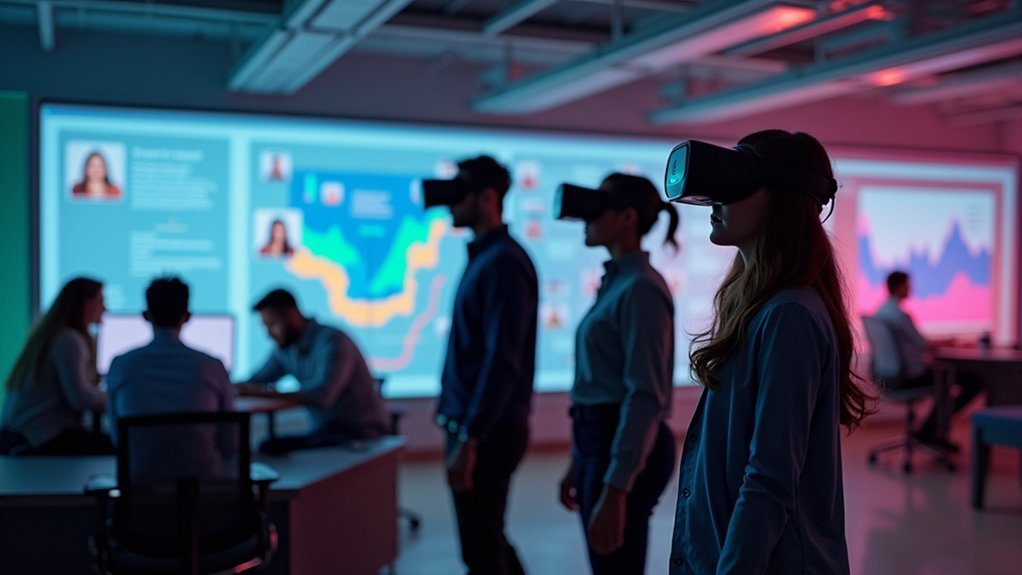
Once you’ve established your data-driven analytics foundation, you’ll transform that valuable metadata into personalized learning pathways that adapt to each employee’s unique profile and career trajectory.
These tailored experiences analyze VR training data to identify skill gaps and align content with individual career aspirations, considerably boosting engagement levels.
Your personalized learning pathways integrate seamlessly with case management systems, enabling data-driven decision-making that guarantees relevant, role-specific training.
This targeted approach notably improves job satisfaction as employees feel genuinely supported in their professional development journey.
Companies investing in these customized pathways see remarkable improvements in retention rates and reduced turnover rates.
Evidence from Indiana Child Welfare Services demonstrates that personalized VR training enhances self-awareness and decision-making skills, creating a more committed, effective workforce.
Establish VR-Based Mentorship and Team Building Experiences
Building on these individualized learning foundations, VR-based mentorship programs create immersive environments where seasoned employees guide newcomers through realistic job scenarios and career development challenges.
VR training presents authentic job previews that align expectations with reality, reducing early-stage turnover while fostering meaningful mentor-mentee relationships.
VR creates realistic job previews that set accurate expectations, reducing turnover while building strong mentor-mentee connections.
Team-building experiences in virtual reality enhance collaboration by placing employees in simulated scenarios that strengthen communication skills.
This immersive training approach drives emotional engagement, creating deeper connections among team members and boosting job satisfaction.
You’ll find that VR team-building activities generate stronger employee engagement than traditional methods.
Data analytics within these platforms let you track participation levels and measure effectiveness continuously.
Develop Skills Assessment Tools That Identify Career Development Opportunities
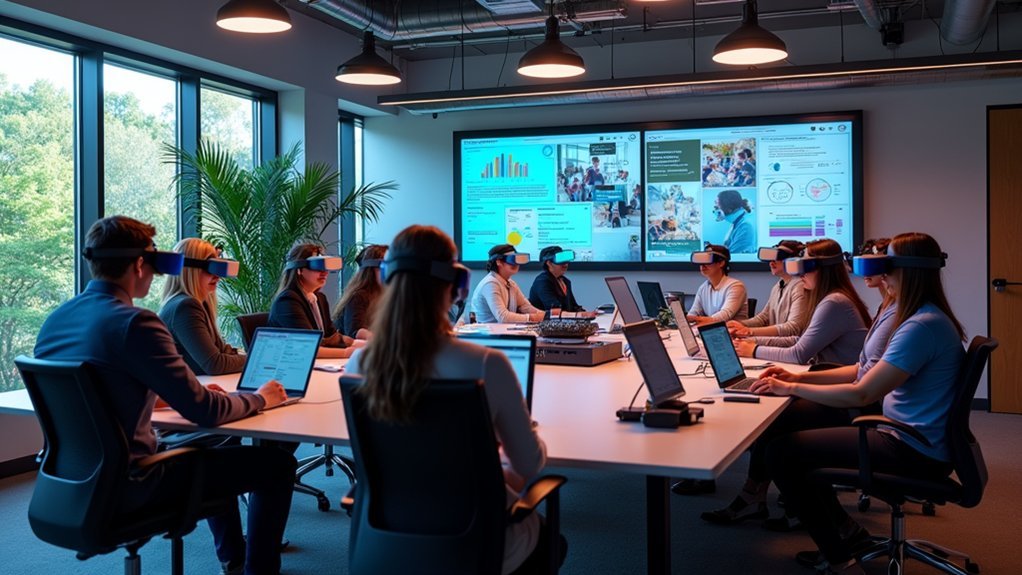
While traditional performance reviews offer limited insights into employee potential, VR-powered skills assessment tools provide thorough evaluations that reveal hidden talents and pinpoint specific growth areas.
You’ll discover that VR simulations create immersive experiences where employees can demonstrate abilities naturally, leading to enhanced self-awareness and better decision-making capabilities.
These assessment tools integrate seamlessly with your existing performance management systems, allowing you to track progress and create personalized development pathways.
When you analyze VR training data, you’ll identify specific career development opportunities that keep engaged employees motivated in their professional growth.
Your investment in employee growth through these tools demonstrates commitment to continuous improvement, directly correlating with improved retention rates and increased job satisfaction across your organization.
Build Feedback Loops That Allow Real-Time Program Optimization
Effective skills assessment tools become truly powerful when you establish robust feedback mechanisms that capture real-time insights from your VR training programs.
You’ll want to implement regular post-session surveys to gather immediate employee experiences and identify improvement opportunities. Analytics tools should track retention metrics and real-time performance data, revealing where participants struggle most.
Create systems for employees to share suggestions about VR training content, fostering continuous improvement culture. Don’t overlook qualitative feedback through focus groups—these complement your quantitative data perfectly.
Integrate VR Training Results With Existing HR and Case Management Systems
Once you’ve gathered valuable feedback from your VR training programs, you’ll maximize their impact by seamlessly integrating these results with your existing HR and case management systems.
When you integrate VR training results with centralized data platforms, you’ll create thorough baseline profiles that reveal employee retention potential through immersive learning metadata. This approach transforms your hiring decisions from subjective opinions into data-driven decision-making processes.
You’ll develop predictive case management plans by analyzing VR training performance alongside employee sentiment data. Comparing simulation results between job candidates and seasoned employees improves cultural fit assessments.
The power of this integration shows in real results—Indiana Child Welfare Services achieved remarkable turnover reduction, dropping from 50% to 19% within eighteen months through systematic VR training integration.
Frequently Asked Questions
What Are Three Disadvantages to VR Training?
You’ll face high initial costs for hardware and software. Technical glitches can disrupt learning and frustrate employees. Limited accessibility may exclude team members who can’t access VR equipment or compatible systems.
What Is the Retention Rate of VR?
You’ll see VR training achieves 75% information retention compared to 10% with traditional methods. Indiana Child Welfare Services experienced turnover dropping from 50% to 19% after implementing VR programs.
How Is Virtual Reality Used in Employee Training?
You’ll use virtual reality to create immersive job simulations that replicate real workplace scenarios. VR training lets you practice skills safely, reduces learning time by 50%, and increases information retention to 75% compared to traditional methods.
What Are the 5 Applications of VR?
You’ll find VR’s five main applications include workplace safety training, leadership development simulations, communication skills enhancement, inclusion and diversity training, and employee wellness programs for stress reduction and meditation.


Leave a Reply