You’ll boost VR performance by maintaining consistent 90 fps through advanced rendering techniques like occlusion culling, which processes only visible objects and reduces draw calls by up to 50%. Implement texture compression methods like DXT and ASTC to cut memory usage by 75%, while using mipmapping for distant objects. Keep latency below 20 milliseconds with predictive tracking algorithms and hardware-accelerated rendering pipelines. Cross-platform compatibility testing guarantees peak performance across different VR systems, and these combined strategies open up even greater optimization potential.
Frame Rate Optimization and Rendering Techniques
When developing VR content, you’ll find that maintaining a consistent 90 fps isn’t just a technical recommendation—it’s vital for user comfort and immersion. Over 70% of users experience discomfort with lower frame rates, making frame rate enhancement your top priority.
You can implement advanced rendering techniques like occlusion culling to greatly improve efficiency by processing only visible objects. This reduces graphical load and eliminates performance bottlenecks that compromise the immersive experience.
Use profiling tools such as NVIDIA NSight and Unity Profiler to analyze performance metrics and identify improvement opportunities. Focus on reducing draw calls and optimizing textures for considerable enhancements.
Regular testing across different VR systems guarantees compatibility and ideal user experience, as performance varies markedly between PC and mobile platforms.
Texture Compression and Memory Management
Beyond frame rate optimization, texture compression and memory management form the backbone of efficient VR performance.
You’ll find that texture compression techniques like DXT and ASTC can slash your memory footprint by up to 75%, enabling more assets in VR environments without performance hits. High-resolution textures consume substantial GPU memory, potentially causing frame drops during immersive experiences.
Texture compression techniques like DXT and ASTC can reduce your VR memory footprint by up to 75% without sacrificing performance.
You can implement mipmapping to use lower resolution textures for distant objects, reducing GPU workload while maintaining visual quality. Texture atlases minimize texture swaps during rendering, cutting draw calls and memory access times.
Use profiling tools like Unity Profiler to identify texture usage issues and optimize your memory management strategies for VR applications.
Occlusion Culling and Scene Optimization

While texture optimization lays the groundwork for VR performance, occlusion culling serves as your primary weapon against unnecessary rendering overhead. This technique prevents your system from rendering objects hidden from the camera’s view, reducing draw calls by up to 50% in complex scenes.
You’ll achieve significant latency reduction when combining occlusion culling with scene optimization practices like polygon reduction and texture simplification.
Implementing level of detail (LOD) management further enhances rendering performance by displaying appropriate model resolutions based on distance. This approach minimizes graphical load while preserving visual quality.
For immersive experiences, you’ll want to maintain latency below 20 milliseconds. These combined optimization strategies guarantee your VR applications deliver smooth, responsive performance without compromising the visual fidelity that keeps users engaged.
Latency Reduction and Motion-to-Photon Timing
Although occlusion culling dramatically improves frame rates, motion-to-photon timing represents the critical bottleneck that determines whether your VR experience feels natural or nauseating.
You’ll need latency reduction below 20 milliseconds for seamless user experience, preventing motion sickness that destroys immersion.
Implementing advanced tracking systems with optical sensors and inertial measurement units directly impacts motion-to-photon timing performance. You can further enhance immersive VR through predictive tracking, which anticipates movements before they complete.
Advanced tracking systems with optical sensors and IMUs create the foundation for responsive motion-to-photon timing that prevents VR motion sickness.
Essential enhancement strategies include:
- High-precision tracking systems detecting micro-movements within milliseconds
- Predictive algorithms calculating probable head positions three frames ahead
- Performance testing tools like Unity Profiler identifying latency spikes
- Hardware-accelerated rendering pipelines bypassing unnecessary processing bottlenecks
Regular performance testing guarantees your VR technology maintains ideal responsiveness throughout development cycles.
Cross-Platform Device Compatibility Testing
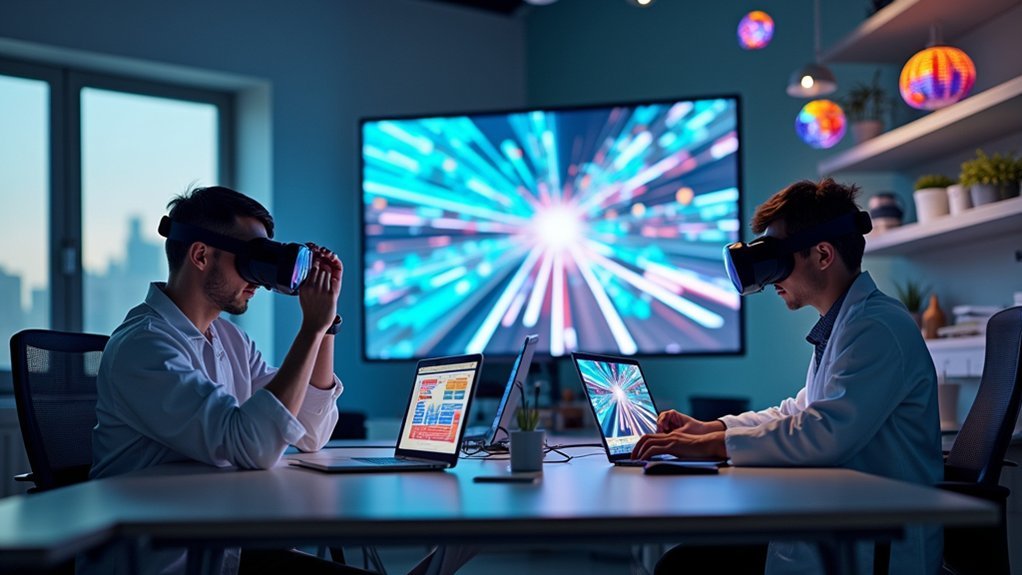
Since VR hardware spans from high-end PC headsets to mobile devices with vastly different processing capabilities, you’ll face significant challenges guaranteeing consistent performance across platforms.
Cross-platform device compatibility testing becomes essential for achieving ideal performance across diverse hardware configurations. You should establish thorough testing environments that include both powerful systems and mobile devices to identify performance bottlenecks effectively.
Approximately 60% of VR developers now utilize specialized performance evaluation software to guarantee their immersive VR content runs smoothly everywhere.
Automated testing tools can streamline your compatibility process, reducing manual checks while maintaining consistent metrics.
Regular software updates to your testing protocols, informed by user feedback and emerging technologies, will enhance user experience and deliver more satisfying VR interactions.
Performance Profiling and Bottleneck Analysis
When your VR content struggles with stuttering visuals or choppy interactions, performance profiling tools like NVIDIA NSight and Unity Profiler become your primary weapons for identifying the CPU and GPU bottlenecks that sabotage user experience.
Effective bottleneck analysis starts with examining frame rate consistency, targeting the essential 90 FPS minimum threshold. Latency measurement tools help you maintain sub-20 millisecond response times, preventing motion sickness that destroys immersion.
Your VR content performance optimization strategy should include:
- Real-time GPU monitoring showing texture memory overflow cascading into frame drops
- CPU thread analysis revealing physics calculations choking your main rendering pipeline
- Occlusion culling implementation dramatically reducing invisible object processing overhead
- Dynamic performance tracking catching frame spikes before they impact user comfort
Regularly monitoring key performance metrics guarantees you’ll catch issues early, maintaining seamless experiences that keep users engaged rather than nauseous.
Frequently Asked Questions
How to Increase Performance in VR?
You’ll boost VR performance by maintaining 90+ fps, reducing latency below 20ms, using occlusion culling, regularly profiling with tools like Unity Profiler, and ensuring you’re using high-quality graphics cards with sufficient RAM.
How Do I Make Good VR Content?
You’ll create compelling VR content by designing immersive environments with high-quality visuals, adding meaningful interactive elements, maintaining smooth performance above 90fps, and continuously testing with users to refine experiences.
How Can Virtual Reality Be Improved?
You can improve virtual reality by implementing occlusion culling, maintaining 90+ fps frame rates, using profiling tools like NVIDIA NSight, optimizing shaders and textures, and continuously monitoring performance metrics for data-driven enhancements.
Does More RAM Increase VR Performance?
You’ll see improved VR performance with more RAM, especially upgrading to 16GB minimum. It’ll reduce stuttering and handle high-resolution textures better, but you’ll need balanced CPU and graphics card components too.

Leave a Reply