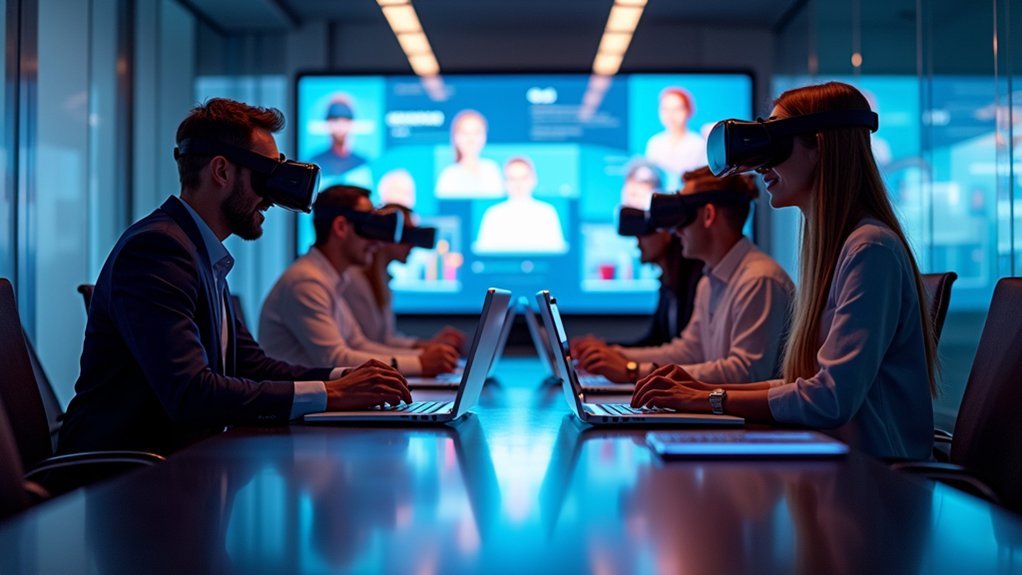
You’ll find the top virtual reality sales training platforms include Talespin with 16 ready-made modules and no-code authoring tools, Motive featuring real-time feedback capabilities, CenarioVR offering immersive experiences with progress tracking, Gleechi’s VirtualGrasp technology that reduces theoretical learning time, and Virti with AI-powered virtual humans for customer interaction practice. These platforms boost engagement and skill retention by over 20% compared to traditional methods through realistic scenario-based training. Discover how to maximize your investment in these innovative training solutions.
What Makes Virtual Reality Sales Training Platforms Effective
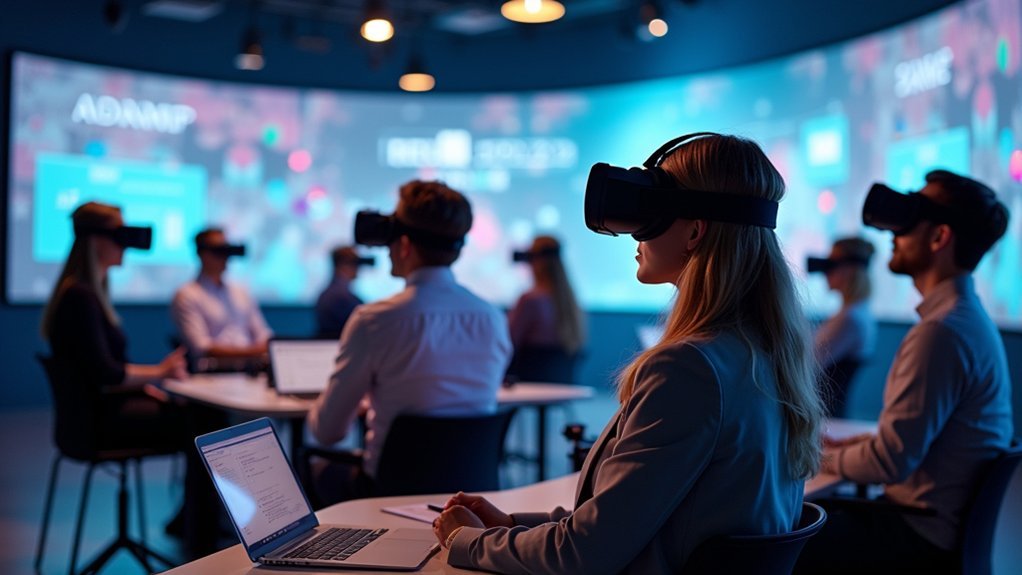
While traditional sales training often relies on classroom lectures and static role-playing exercises, virtual reality platforms transform learning through immersive environments that boost engagement and skill retention by over 20%.
VR sales training creates realistic scenarios where you’ll interact with virtual human characters to practice skills like objection handling and negotiations without real-world consequences.
VR training lets you practice high-stakes sales conversations with virtual clients, building confidence through consequence-free repetition.
These immersive learning platforms incorporate built-in analytics that track your performance and identify areas needing improvement.
You’ll benefit from gamification elements that increase motivation and create healthy competition among team members.
The scalable training approach guarantees your distributed sales team accesses consistent, tailored training modules from desktop devices.
This targeted skill development approach delivers measurable improvements while providing the flexibility to practice challenging scenarios repeatedly until you’ve mastered essential sales techniques.
Key Features to Look for in VR Sales Training Solutions
Understanding what makes VR sales training effective naturally leads to evaluating specific capabilities that’ll maximize your investment.
When selecting a VR training platform, prioritize no-code content authoring tools like CoPilot Designer that enable you to create highly customized sales training programs without technical expertise.
Look for built-in skills analytics to measure learner performance and track training efficacy over time. Choose platforms offering diverse off-the-shelf learning modules for immediate implementation alongside flexible content distribution options supporting multiple VR headsets, including Meta Quest 2, and desktop systems.
Essential features include real-time feedback capabilities during training sessions, which notably enhance engagement and knowledge retention, allowing you to deliver targeted improvements and maximize your training investment.
Top-Rated Virtual Reality Sales Training Platforms

Several industry-leading platforms have emerged as top choices for VR sales training, each offering unique strengths that cater to different organizational needs.
Talespin delivers 16 ready-made training modules plus no-code tools, enabling you to create training experiences that help teams practice soft skills effectively.
Motive’s extensive learning platform lets you develop VR training content while tracking real-time feedback for performance assessment.
CenarioVR offers immersive experiences with built-in progress tracking, making virtual sales training more measurable.
Gleechi’s VirtualGrasp VR technology transforms digital designs into realistic scenarios, reducing theoretical learning time.
Virti stands out with AI-powered virtual humans that create interactive experiences, helping you understand customer needs through data-driven insights and customizable modules.
Measuring ROI and Performance in VR Sales Training
Because VR training platforms capture extensive performance data, you can now measure training effectiveness with unprecedented precision.
These analytics transform how you evaluate training programs and calculate measuring ROI for your sales skills development initiatives.
VR training’s thorough performance metrics deliver powerful insights:
- Individual tracking – Monitor each learner’s skill improvements over time with detailed analytics
- Historical analysis – Identify trends and improvement areas using past performance data
- Measurable results – Document over 20% increases in practiced sales skills compared to traditional methods
- Team evaluation – Assess collective impact on sales outcomes and business alignment
- Enhanced retention – Leverage higher engagement rates from immersive experience for better skill retention
This data-driven approach guarantees your training programs deliver quantifiable results, demonstrating clear connections between VR training investments and improved sales performance.
Implementation Best Practices for VR Sales Training Programs
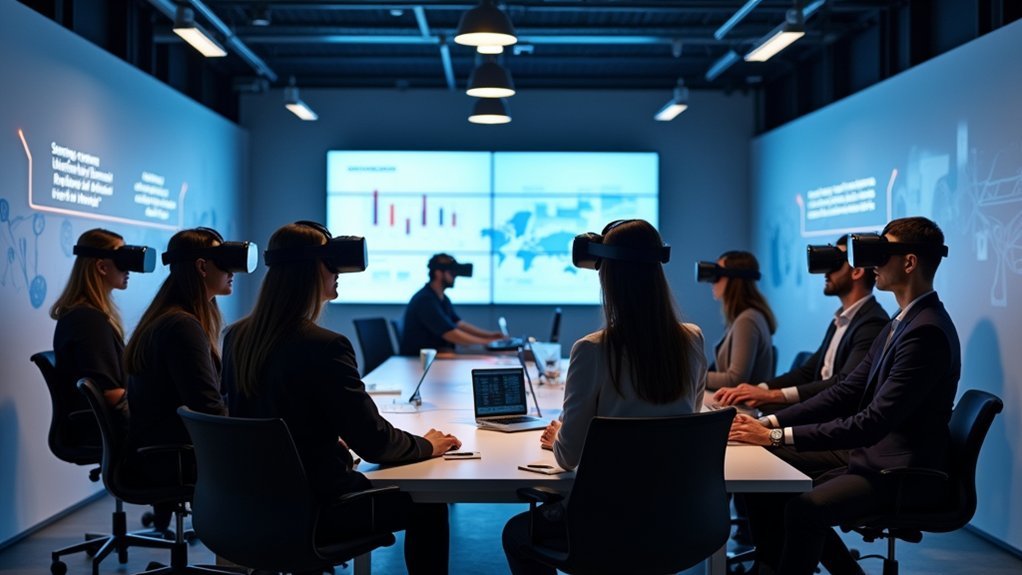
Having robust analytics means nothing without proper implementation strategy. Your VR training success depends on establishing clear objectives with measurable outcomes before launching programs. Integrate off-the-shelf and custom content to address specific organizational needs while guaranteeing accessibility across devices like Meta Quest 2 and desktop systems for distributed sales professionals.
Implement gamification elements to boost engagement and skills retention. Research shows VR training delivers over 20% improvement in practiced abilities when properly targeted. Utilize built-in analytics tools to monitor individual and team performance continuously.
| Implementation Phase | Key Actions | Success Metrics |
|---|---|---|
| Planning | Define objectives, select content mix | Clear measurable outcomes established |
| Deployment | Guarantee device compatibility, train administrators | 95% accessibility across teams |
| Execution | Launch gamified modules, monitor engagement | 80% completion rates achieved |
| Optimization | Analyze performance data, adjust content | 20%+ skills improvement demonstrated |
Frequently Asked Questions
How Much Does VR Training Cost?
You’ll spend $99-$167 monthly for basic VR training platforms, with custom solutions costing more. Don’t forget hardware expenses of $300-$1,000 per headset. Many providers offer free trials before you commit.
Which Bank Has a Virtual Reality Training Program for Its Employees?
You’ll find that Bank of America has implemented an extensive virtual reality training program for its employees, allowing them to practice customer interactions and enhance sales skills through immersive simulated environments.
Is VR Training Effective?
Yes, VR training’s highly effective. You’ll retain information better through immersive experiences, improve practiced skills by over 20%, and practice safely without real-world consequences while receiving continuous performance analytics.
What Is Reality Training?
Reality training uses virtual reality technology to create immersive learning experiences where you’ll practice real-world scenarios. You’ll interact with virtual characters, developing skills through realistic simulations that improve your performance and knowledge retention considerably.


Leave a Reply