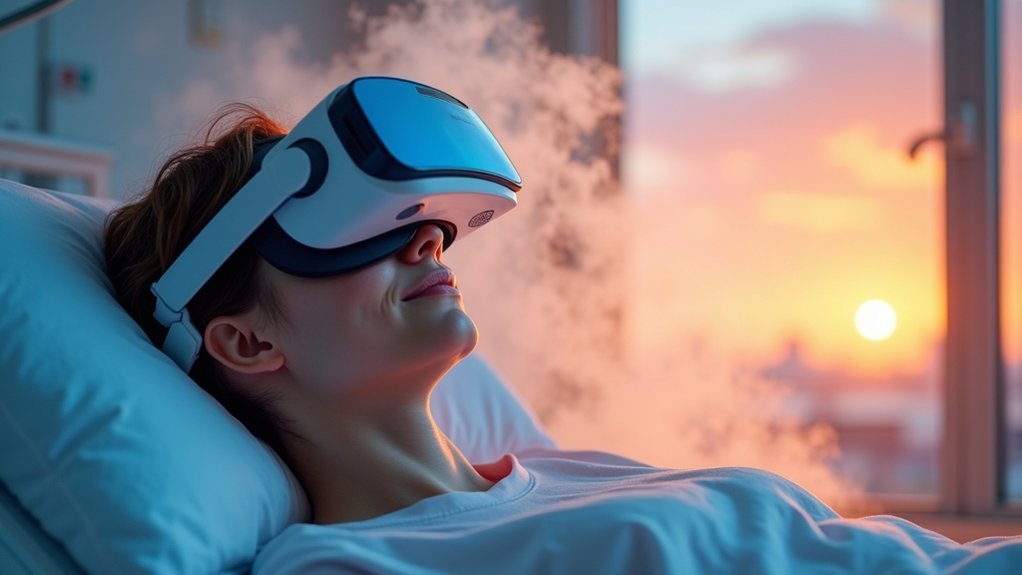
Virtual reality eases your burn pain through immersive distraction during wound dressing changes, transforming painful procedures into engaging experiences like virtual river cruises. You’ll experience up to 79% pain reduction through active gaming elements that redirect your attention from pain signals. Cooling virtual environments with snow-themed landscapes provide psychological relief, while VR serves as a powerful non-opioid alternative that reduces medication dependence. Interactive exercises enhance your range of motion with real-time feedback, and mobile solutions enable at-home pain management, ultimately improving your quality of life and recovery outcomes. Discover how these groundbreaking techniques can revolutionize your healing journey.
Immersive Distraction During Wound Dressing Changes
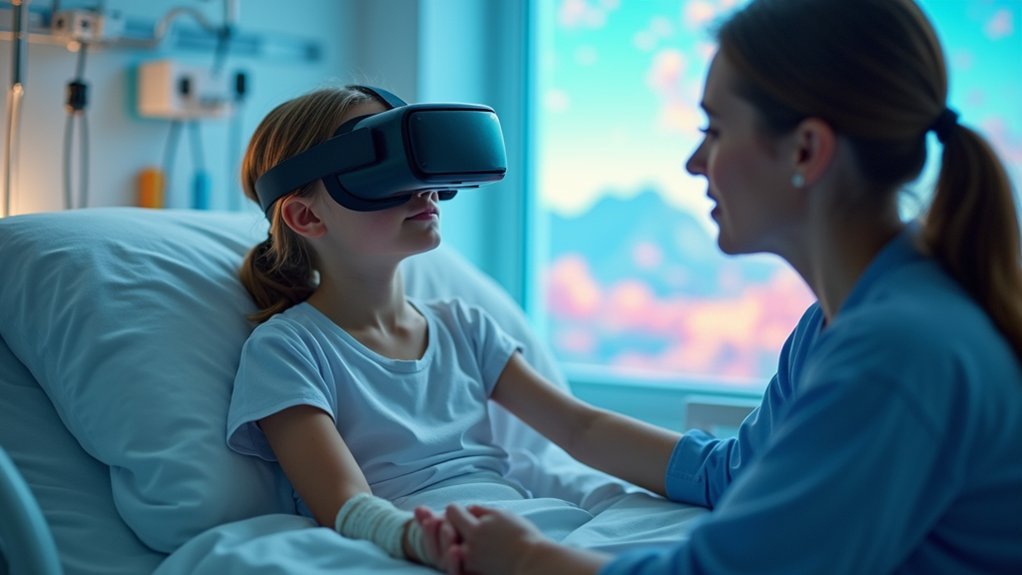
When your child faces the painful process of burn wound dressing changes, virtual reality offers a promising solution that transforms a distressing medical procedure into an engaging experience.
VR technology creates powerful immersion that redirects your child’s attention away from physical discomfort. During pediatric burn care, the “Virtual River Cruise” game has proven particularly effective, allowing young patients to explore digital environments while medical staff performs necessary procedures.
The immersive nature of VR notably reduces pain perception by engaging multiple senses simultaneously. Your child becomes absorbed in the virtual world, making dressing changes more tolerable.
Research demonstrates that active VR participation leads to the lowest pain scores compared to standard care approaches, offering hope for families steering through challenging burn recovery journeys.
Active Gaming Elements Reduce Pain Perception
While passive VR experiences provide meaningful distraction, active gaming elements dramatically amplify pain relief by engaging your child’s body and mind simultaneously.
Active VR transforms painful procedures into interactive adventures where your child becomes an active participant rather than a passive observer.
The immersive nature of active gaming delivers superior results:
- 79% pain reduction in chest burn patients compared to 57% with standard care
- Physical engagement through head tilting and aiming creates powerful cognitive distraction
- Reduced pre-procedural anxiety enhances overall pain perception management
- Fun, engaging experience transforms the rehabilitation process into positive interactions
When your child focuses on exploring virtual environments like the “Virtual River Cruise,” they’re less aware of dressing changes, making procedures more tolerable and recovery more enjoyable.
Cooling Virtual Environments Provide Psychological Relief

When you’re immersed in snow-themed VR environments during burn treatment, your brain experiences a powerful cooling sensation that directly counteracts the burning pain you’re feeling.
These virtual winter landscapes don’t just distract you—they actually modify how your nervous system processes temperature signals, creating genuine psychological relief.
You’ll find that games featuring icy rivers, snowy mountains, or frozen waterfalls can trick your mind into perceiving coolness where there’s actually heat and inflammation.
Snow-Themed Pain Reduction
As you immerse yourself in a snow-covered virtual landscape, your brain receives powerful cooling cues that can dramatically reduce burn pain perception. The “Virtual River Cruise” game demonstrates how snow-themed environments create psychological relief during painful procedures like dressing changes.
When patients engage with these immersive virtual reality experiences, studies show remarkable results:
- 79% pain reduction achieved in chest burn patients using active nature VR
- Lower pain scores consistently reported during treatment sessions
- Increased enjoyment throughout rehabilitation procedures
- Enhanced caregiver satisfaction with therapeutic outcomes
This non-pharmacological approach transforms your treatment experience by distracting from physical discomfort. The serene, cooling virtual environments don’t just entertain—they actively rewire your pain perception, making VR an essential tool in modern burn care management.
Temperature Perception Modification
Your brain’s temperature perception shifts dramatically when you’re exposed to cooling virtual reality environments, creating genuine psychological relief from burn pain. This sophisticated distraction technique redirects your attention away from physical sensations, effectively modifying how you perceive temperature and discomfort.
When you’re immersed in serene, cooling environments during medical procedures like dressing changes, you’ll experience considerably reduced pain intensity compared to traditional methods.
The enthralling VR scenarios engage your mind so completely that your focus shifts from the burning sensations to the virtual experience. This non-pharmacological intervention enhances your overall comfort levels while reducing anxiety during painful treatments.
Studies consistently show that patients report greater satisfaction when cooling environments are integrated into their pain management protocols, making VR an increasingly valuable tool in burn rehabilitation.
Non-Opioid Pain Management Alternative
You’ll find that VR offers a powerful alternative to opioid-based pain management, helping reduce dependency on potentially addictive medications during burn treatment.
The technology works through cognitive distraction mechanisms that redirect your brain’s attention away from pain signals, fundamentally rewiring how you process discomfort.
This non-pharmacological approach can decrease your reliance on traditional pain medications while maintaining effective relief during wound care and rehabilitation.
VR Reduces Opioid Dependency
While traditional burn treatment heavily relies on opioid medications that carry significant addiction risks, virtual reality offers a groundbreaking non-opioid alternative that’s transforming pain management protocols.
You’ll find that VR technology directly addresses opioid dependency concerns while delivering remarkable pain reduction results for burn patients.
Research demonstrates VR’s powerful impact on reducing medication reliance:
- 79% pain reduction achieved in chest burn patients during wound treatment
- Significant decrease in opioid requirements during dressing changes
- Enhanced rehabilitation experiences with reduced anxiety scores
- Effective alternative for both pediatric and adult burn patients
When you implement VR during burn care procedures, you’re not just managing pain—you’re actively contributing to solving the opioid crisis by providing patients with safer, non-addictive pain management solutions.
Cognitive Distraction Mechanisms
Virtual reality’s effectiveness in reducing opioid dependency stems from sophisticated cognitive distraction mechanisms that fundamentally alter how your brain processes pain signals.
When you’re immersed in engaging VR environments, your cognitive processing shifts focus away from painful sensations toward enchanting visual experiences. This cognitive distraction creates measurable pain reduction—studies show 79% decreases in pain scores during nature-based VR sessions compared to 57% in control groups.
VR technology actively engages your mind during procedures like dressing changes, considerably lowering reported pain levels. These immersive experiences don’t just mask discomfort; they promote emotional well-being by providing escapism during distressing treatments.
During rehabilitation, you’ll experience decreased anxiety levels alongside pain relief, creating a more positive healing environment that supports recovery without traditional pharmaceutical interventions.
Enhanced Range of Motion Through Interactive Exercises
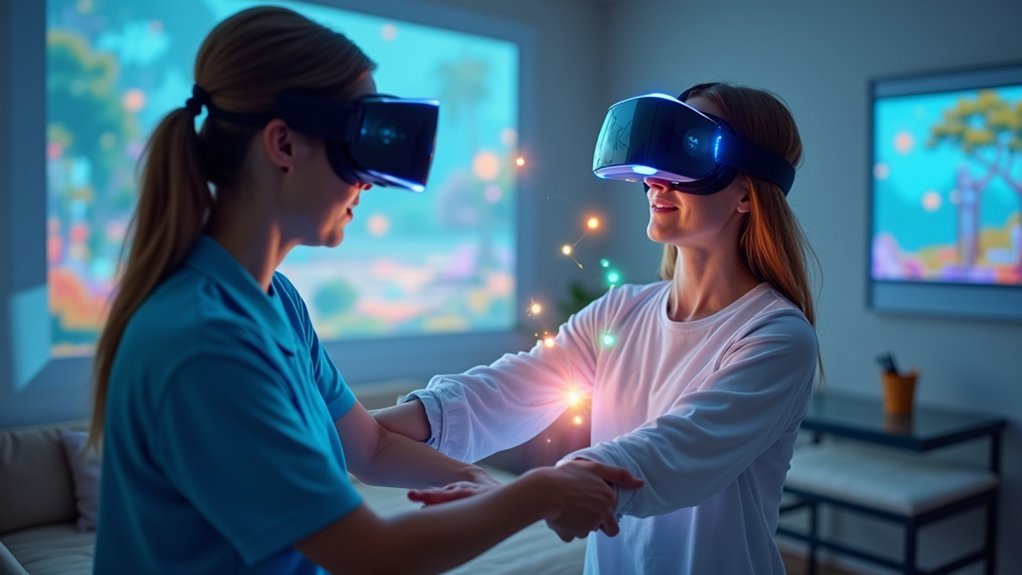
Because burn injuries often result in scar tissue that restricts movement, you’ll find that traditional rehabilitation can be painful and discouraging.
Virtual reality transforms this experience by creating engaging interactive exercises that make burn patients forget they’re working on recovery. You’ll experience significant improvements in range of motion through customizable programs that adapt to your specific needs.
VR rehabilitation offers four key advantages:
- Real-time feedback helps you adjust movements instantly for better outcomes
- Simulated real-life scenarios build confidence while practicing daily activities
- Motivating game-like environments make exercises enjoyable rather than painful
- Standardized improvements show an average gain of 0.72 in mobility measurements
Through these pain relief experiences, you’ll achieve better joint mobility while staying motivated throughout your rehabilitation journey.
Anxiety Reduction During Medical Procedures
Beyond improving physical mobility, VR technology addresses one of the most challenging aspects of burn treatment: the overwhelming anxiety that accompanies medical procedures.
When you’re undergoing dressing changes or other treatments, virtual reality provides powerful cognitive distraction that shifts your focus away from procedural stress. Studies show burn patients experience markedly reduced anxiety levels, with a standardized mean difference of -0.73 in anxiety scores during VR sessions.
The immersive virtual environments engage your mind completely, allowing you to escape the clinical setting mentally.
In randomized trials involving pediatric burn patients, those using active VR games during dressing changes showed lower pain and anxiety scores compared to standard care. This anxiety reduction creates improved emotional states, making medical procedures more tolerable and less traumatic overall.
Improved Quality of Life and Work Performance
As VR rehabilitation transforms your recovery experience, it creates measurable improvements in your overall quality of life that extend far beyond the treatment room.
Virtual reality offers burn patients extensive benefits that enhance both personal well-being and professional capabilities during rehabilitation.
Research demonstrates significant advantages through VR integration:
- Enhanced satisfaction – Studies show improved quality of life ratings with superior overall well-being outcomes.
- Better work performance – You’ll return to daily activities more effectively with enhanced functional capabilities.
- Increased engagement – Higher fun ratings (SMD=2.38) make rehabilitation more enjoyable and sustainable.
- Improved functional abilities – Range of motion gains (SMD=0.72) translate to better real-world performance.
These improvements in pain scores and functional abilities demonstrate how virtual reality creates lasting positive impacts on your recovery journey and future productivity.
Real-Time Feedback Motivates Rehabilitation Progress
When you engage with VR rehabilitation systems, you’ll receive instant feedback that transforms your exercise routine into an interactive experience where progress becomes immediately visible.
This real-time feedback creates a powerful motivation loop that keeps you actively participating in your rehabilitation. Instead of monotonous exercises, virtual environments turn your sessions into engaging activities that feel more like games than medical treatments.
The immediate visual and auditory responses help you adjust your movements instantly, leading to improved functional abilities and enhanced pain reduction.
Your therapist can monitor your performance continuously, providing tailored guidance that optimizes outcomes.
Studies show VR rehabilitation markedly improves range of motion, with patients demonstrating greater engagement when they can see their progress unfold in real-time within these immersive digital spaces.
Personalized Virtual Scenarios for Individual Comfort
The power of personalized virtual scenarios lies in their ability to transport you into immersive environments that genuinely resonate with your individual preferences and comfort zones.
When you’re undergoing painful burn treatments, these customized experiences provide essential cognitive distraction that greatly reduces your perceived pain intensity.
Active VR scenarios where you can interact with your chosen environment deliver superior pain relief compared to passive observation.
Here’s how personalized virtual scenarios enhance your comfort:
- Nature-based themes reduce anxiety during dressing changes
- Adventure scenarios provide engaging cognitive distraction
- Interactive elements increase your sense of control
- Tailored content evokes positive emotional responses
This personalized approach to pain management creates higher satisfaction rates, making your treatment experience more enjoyable and effective.
Mobile Smartphone-Based Solutions for Home Care
You don’t have to stay in the hospital to benefit from VR’s pain-relieving effects during burn treatment.
Portable gaming systems using your smartphone can transform painful at-home dressing changes into manageable experiences through immersive distraction.
These mobile solutions put effective pain management directly in your hands, offering a practical alternative to opioid medications during your recovery at home.
Portable VR Gaming Systems
While traditional VR systems require specialized equipment and clinical settings, portable VR gaming systems now bring effective burn pain relief directly to patients’ homes through smartphone-based solutions.
These mobile platforms offer pediatric burn patients convenient access to distraction therapy during outpatient dressing changes.
The “Virtual River Cruise” game exemplifies how active engagement greatly reduces pain perception:
- Active cognitive processing lowers pain scores more effectively than passive VR experiences
- Smartphone accessibility eliminates barriers to home-based pain management
- Reduced opioid dependence through consistent non-opioid pain control methods
- Enhanced rehabilitation experience with convenient, repeated use during treatment
You’ll find these portable VR gaming systems particularly valuable for managing pain during routine care procedures.
Ongoing research continues evaluating long-term benefits, addressing the critical need for accessible, effective pain management solutions at home.
At-Home Dressing Changes
Building on these portable gaming systems, at-home dressing changes represent the most practical application of mobile VR technology for pediatric burn care.
When your child needs wound care at home, smartphone-based solutions like the “Virtual River Cruise” create immersive distractions that notably reduce pain perception during these challenging procedures.
You’ll find that active VR engagement produces the lowest pain scores compared to traditional methods, making pain management more effective in your home environment.
The technology transforms anxiety-inducing dressing changes into calmer experiences as your child becomes absorbed in virtual environments.
Ongoing research funded by the Ohio Department of Public Safety continues evaluating VR’s effectiveness for burn patients, particularly in outpatient settings.
This accessibility revolution in pediatric health care puts powerful pain management tools directly into your hands.
Frequently Asked Questions
How Does Virtual Reality Help With Pain?
You’ll experience pain relief through VR’s immersive distraction, which redirects your brain’s attention away from physical discomfort. Your mind focuses on engaging virtual environments instead of pain signals, reducing overall suffering.
How to Ease Burn Pain?
You can ease burn pain through cold water application, over-the-counter pain medications, topical treatments like aloe vera, keeping wounds clean and covered, staying hydrated, and seeking medical attention for severe burns.
Is Virtual Reality to Relieve Pain in Burn Patients Undergoing Imaging and Treatment?
Yes, you’ll find virtual reality effectively relieves pain during burn imaging and treatment. You’ll experience up to 79% pain reduction through immersive distraction, making procedures more tolerable while decreasing anxiety.
How Does Virtual Reality Help Phantom Limb Pain?
VR helps you visualize and “move” your missing limb, retraining your brain’s neural pathways. You’ll experience up to 50% pain reduction as the immersive distraction shifts your attention away from phantom sensations.

Leave a Reply