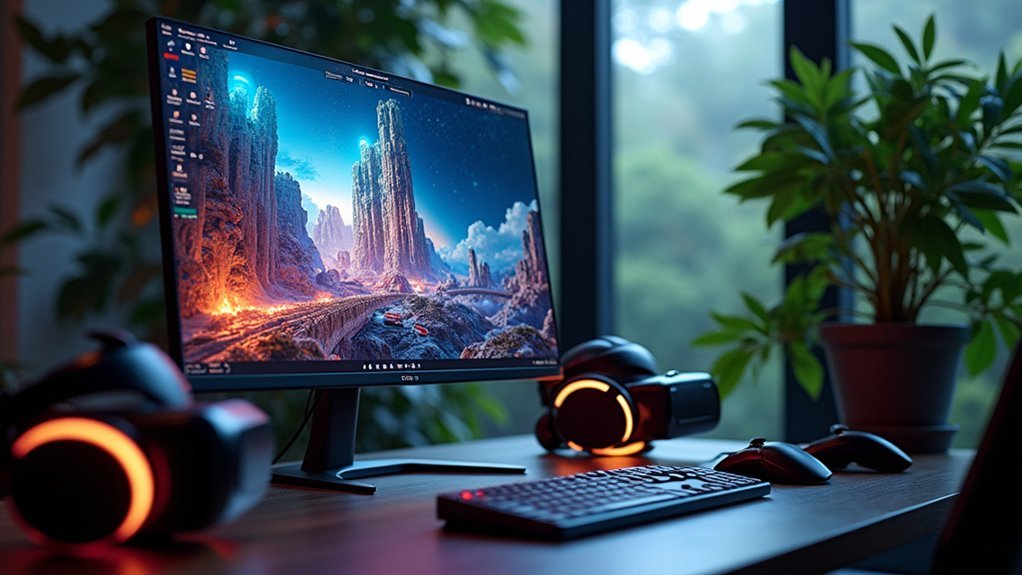
You’ll accelerate your VR development with these seven essential Unreal SDK plugins: VR Expansion Plugin offers advanced locomotion and gripping mechanics with multiplayer support, while Oculus Integration SDK provides Meta-specific features like hand tracking and passthrough capabilities. XR Interaction Toolkit delivers official cross-platform solutions, and MRTK enables rapid prototyping with pre-built components. VRTK provides low-code interaction solutions, XRTK expands AR/MR capabilities, and OpenXR Plugin guarantees future-proof cross-platform compatibility. Each plugin transforms complex VR mechanics into streamlined development workflows that’ll maximize your project’s potential.
VR Expansion Plugin
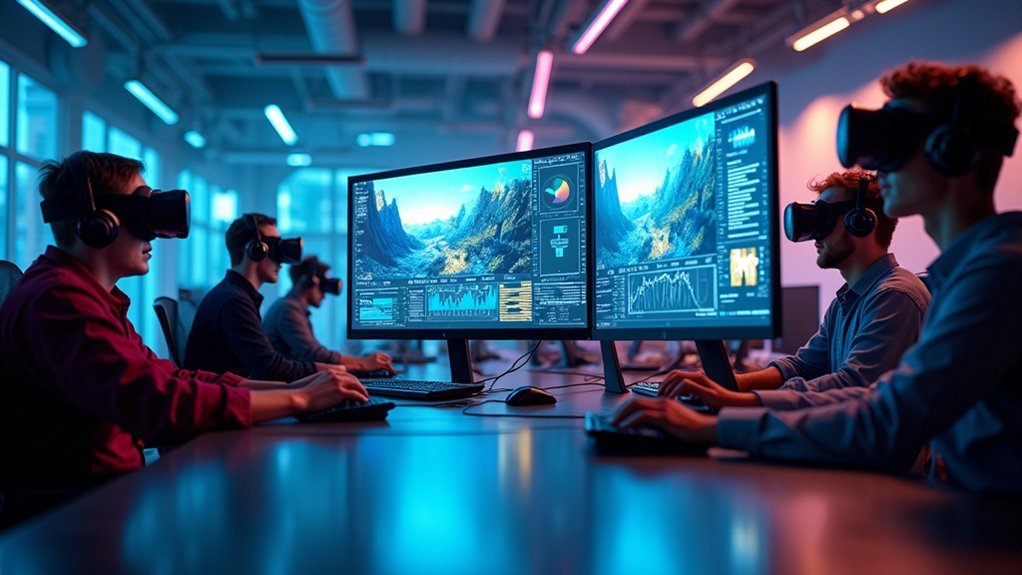
While many VR development frameworks offer basic functionality, the VR Expansion Plugin stands out as a thorough solution that’ll transform your Unreal Engine projects into sophisticated virtual reality experiences.
You’ll get advanced mechanics like locomotion, gripping, and interaction systems right out of the box, whether you’re a beginner or seasoned developer.
The VR Expansion Plugin’s modular design lets you integrate new features seamlessly while supporting multiplayer environments for diverse applications.
Since it’s open source under MIT license, you can customize and modify features to match your project’s needs—just remember to credit the original authors.
You’ll also benefit from extensive documentation and community resources that help troubleshoot issues and enhance your VR development process efficiently.
Oculus Integration SDK
You’ll find the Oculus Integration SDK essential for developing VR experiences specifically tailored to Meta’s ecosystem, offering seamless integration with Quest and Rift devices.
The SDK’s advanced hand tracking capabilities let you create intuitive interactions without traditional controllers, enabling users to manipulate objects naturally with their hands.
With OpenXR platform support, you can build applications that work across multiple VR headsets while still accessing Meta-specific features when available.
Meta Device Integration
When developing VR applications specifically for Meta’s ecosystem, the Oculus Integration SDK stands as the definitive toolkit that reveals your device’s full potential.
This official SDK serves as one of the most extensive plugins for Unreal Engine, delivering seamless access to Meta’s cutting-edge technologies including hand tracking and passthrough capabilities for both VR and AR experiences.
The SDK’s robust framework supports developers through:
- Thorough documentation with detailed tutorials and sample projects for rapid implementation
- Regular compatibility updates ensuring your applications work with the latest Meta hardware releases
- Advanced feature integration including spatial computing and mixed reality functionalities
While the SDK primarily focuses on Meta devices, it’s unmatched for developers committed to creating premium experiences within Meta’s expanding virtual ecosystem.
Advanced Hand Tracking
Since hand tracking represents one of the most transformative features in modern VR development, the Oculus Integration SDK’s advanced hand tracking capabilities deliver unprecedented precision that’ll revolutionize how users interact with your virtual environments.
You’ll get both positional and rotational tracking that enables intuitive object manipulation using natural hand movements.
The SDK integrates seamlessly with Unreal Engine, providing built-in gesture support for grabbing, pointing, and swiping interactions. You can customize these gestures to match your specific application needs, creating more engaging user experiences.
Sample projects and extensive documentation reduce your learning curve greatly, helping you implement hand tracking features efficiently.
Optimized specifically for Meta/Oculus devices, the SDK guarantees smooth performance across compatible hardware while maintaining the high-quality tracking precision that modern VR applications demand.
OpenXR Platform Support
Beyond these device-specific features, the Oculus Integration SDK’s OpenXR platform support extends your development reach across multiple VR ecosystems without compromising functionality.
You’ll find that this standardized approach allows seamless deployment across various VR headsets while maintaining Unreal Engine compatibility.
The SDK’s OpenXR implementation guarantees you’re building future-proof applications that adapt to evolving VR standards. You can leverage Meta’s robust development tools while keeping your projects platform-agnostic.
Key advantages of the Oculus Integration SDK’s OpenXR support include:
- Cross-platform compatibility – Deploy to multiple VR devices with minimal code adjustments
- Standardized API access – Utilize consistent interfaces across different hardware manufacturers
- Future-proofing – Maintain compatibility as new VR platforms emerge in the market
This approach maximizes your project’s potential audience reach.
XR Interaction Toolkit
You’ll find Unity’s XR Interaction Toolkit stands out as the official solution for creating immersive VR experiences with robust support and regular updates.
The toolkit’s modular architecture guarantees you can deploy your applications across multiple XR devices without compatibility headaches.
You can implement complex physics-based interactions like grabbing, throwing, and manipulating objects with pre-built components that handle the heavy lifting for you.
Unity Official Toolkit Support
While the article title mentions Unreal SDK plugins, Unity’s XR Interaction Toolkit stands as the gold standard for official VR development support that many developers compare other solutions against.
You’ll find this all-encompassing toolkit simplifies virtual reality development through reusable components that handle controller interactions, locomotion, and physics-based mechanics seamlessly.
The toolkit’s multi-device compatibility means you won’t need extensive modifications when targeting different hardware platforms.
You’re getting Unity’s official backing with regular updates that guarantee compatibility with emerging XR technologies.
Key advantages include:
- Cross-platform deployment without hardware-specific coding requirements
- Thorough documentation and active community support resources
- Regular updates maintaining cutting-edge XR standards compatibility
When comparing Best Plugins for Unreal against Unity’s official solution, you’ll appreciate how this toolkit sets the benchmark for streamlined virtual reality development workflows.
Multi-Device Platform Compatibility
One standout feature that makes Unity’s XR Interaction Toolkit particularly valuable is its extensive multi-device platform compatibility.
You’ll find that this toolkit supports various XR devices, enabling you to build applications that work seamlessly across different hardware platforms. Whether you’re targeting Oculus, HTC, or Valve headsets, you won’t need separate plugins for each device.
This compatibility means you can develop once and deploy across multiple platforms, saving significant development time and resources.
You’ll appreciate how the toolkit eliminates the complexity of managing different device-specific plugins, streamlining your workflow. The cross-platform support guarantees your VR applications reach broader audiences without requiring extensive modifications or additional development cycles for different hardware configurations.
Physics Interaction Capabilities
Beyond platform compatibility, the XR Interaction Toolkit excels at delivering robust physics interaction capabilities that bring realistic object manipulation to your VR experiences.
You’ll find seamless integration between physics-based interactions and locomotion methods, guaranteeing players can navigate while naturally interacting with objects. The game engine’s toolkit supports customizable grabbing mechanics where you define object properties like mass and friction for enhanced realism.
Key physics interaction features include:
- Complex object manipulation – Implement realistic grabbing, throwing, and pushing using physical properties and forces
- Interactive components – Create sophisticated interactions like opening drawers or pressing buttons with built-in physics constraints
- Customizable mechanics – Define specific physics properties for each object to achieve the exact interaction behavior you want
These capabilities guarantee your VR applications deliver believable, immersive experiences across multiple platforms.
Mixed Reality Toolkit (MRTK)
When you’re developing cross-platform XR applications, Microsoft’s Mixed Reality Toolkit (MRTK) stands out as an essential plugin that extends far beyond its original HoloLens roots.
You’ll find it supports various VR and AR devices, making it invaluable for thorough game development projects.
MRTK accelerates your workflow with pre-built components including spatial awareness, hand tracking, and input simulation. Its modular design lets you customize and extend functionalities to match your specific project requirements, enabling rapid prototyping and seamless iteration.
You’ll appreciate the extensive documentation and sample scenes that demonstrate implementation techniques and best practices.
Microsoft continuously updates MRTK to support emerging technologies and platforms, ensuring you can leverage cutting-edge mixed reality interactions as they become available.
Virtual Reality Toolkit (VRTK)
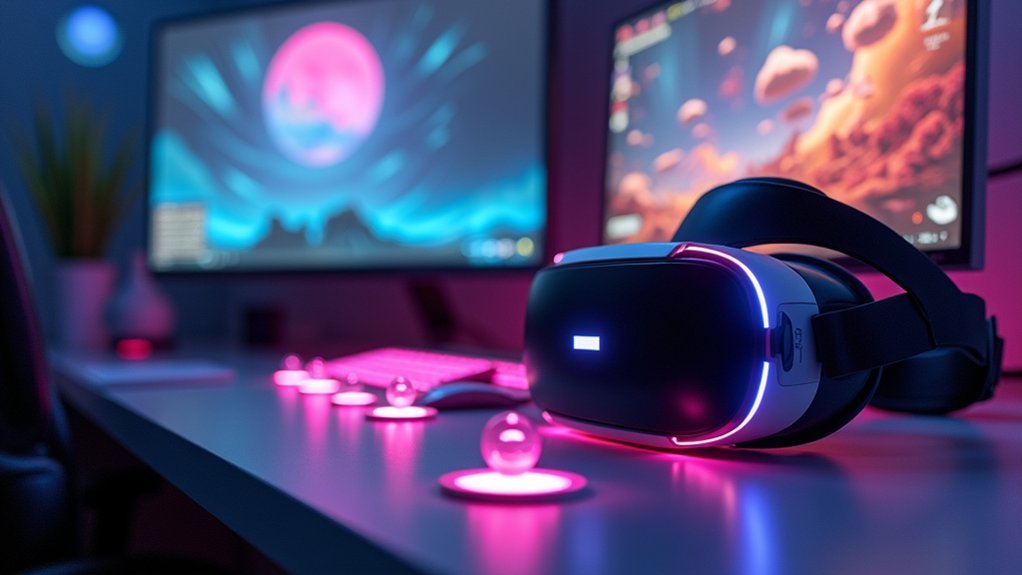
As one of Unity’s pioneering VR development frameworks, the Virtual Reality Toolkit (VRTK) revolutionizes how you’ll approach cross-platform virtual reality creation. This all-encompassing toolkit gives developers the ability to implement complex VR interactions through low-code solutions, dramatically reducing development time while maintaining professional-quality results.
VRTK’s strength lies in its reusable interaction classes that handle common VR mechanics seamlessly:
- Two-hand interaction systems that create immersive experiences through coordinated gesture controls
- Pre-built grabbing and teleportation mechanics that eliminate repetitive coding tasks
- Extensive community support offering tutorials, documentation, and active Discord channels
While VRTK remains beginner-friendly and feature-rich, you should consider that newer SDKs may offer more current technologies.
However, its established ecosystem and proven stability make it valuable for developers seeking reliable VR development foundations.
Extended Reality Toolkit (XRTK)
While VRTK focuses specifically on VR development, the Extended Reality Toolkit (XRTK) expands your development capabilities across the entire spectrum of immersive technologies.
You’ll benefit from XRTK’s modular architecture that lets you integrate only essential components for your game without unnecessary bloat. The toolkit provides robust hand tracking, input management, and UI interaction systems that streamline creating engaging virtual interfaces.
XRTK’s cross-platform compatibility simplifies your development workflow by offering unified frameworks and services that work seamlessly across different XR devices.
Whether you’re developing for VR, AR, or MR platforms, you’ll use consistent tools and APIs. As an open-source solution, XRTK encourages community contributions, continuously enhancing its features and capabilities to support your evolving game development needs.
OpenXR Plugin
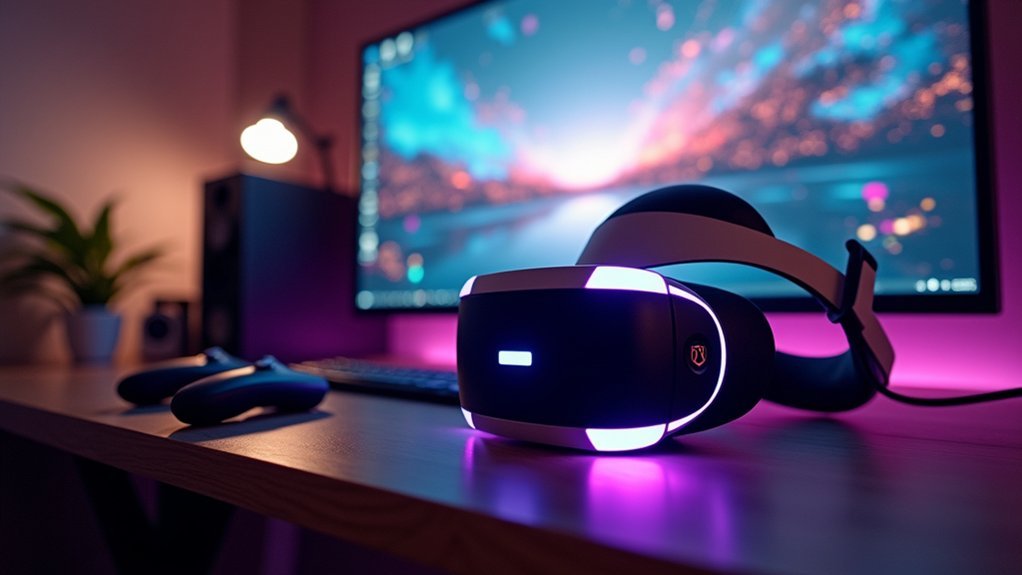
How do you guarantee your VR applications work seamlessly across different headsets and platforms? The OpenXR Plugin for Unreal Engine delivers exactly that solution.
OpenXR Plugin for Unreal Engine enables seamless VR development across all major headsets and platforms with one unified solution.
This unified interface eliminates the need for separate implementations across devices, enabling you to develop once and deploy everywhere.
You’ll access a wide range of XR devices, from Oculus and HTC Vive to Valve Index, through one standardized system. The plugin streamlines input handling, tracking, and rendering while future-proofing your projects against emerging technologies.
Key advantages include:
- Cross-platform compatibility – Build applications that run on multiple VR systems without additional coding
- Standardized interactions – Unified approach to user input and experience design
- Future-ready architecture – Easy integration of new devices and features as they emerge
Extensive documentation and community support guarantee you’ll optimize performance efficiently.
Frequently Asked Questions
Is Unreal Good for VR Development?
You’ll find Unreal Engine excellent for VR development. It offers advanced graphics, user-friendly Blueprint scripting, cross-platform support, and strong community resources that’ll help you create immersive experiences effectively.
What Is the Best Water Plugin for Unreal?
You’ll want Unreal’s built-in Water Plugin as it’s free, reliable, and offers dynamic wave simulations with underwater effects. It integrates seamlessly with other engine tools, making it perfect for realistic water bodies.
What Is the Best VR Headset for Unreal Engine Development?
You’ll find the Meta Quest 2 offers the best balance for Unreal development, providing wireless capabilities and affordability. However, if you’re prioritizing visual fidelity, consider the Valve Index or HTC Vive Pro 2 instead.
How to Increase Unreal Engine Performance?
You’ll boost Unreal Engine performance by optimizing textures with LOD techniques, using profiling tools like Stat Unit, implementing frustum and occlusion culling, adjusting scalability settings, and reducing dynamic lights in scenes.

Leave a Reply