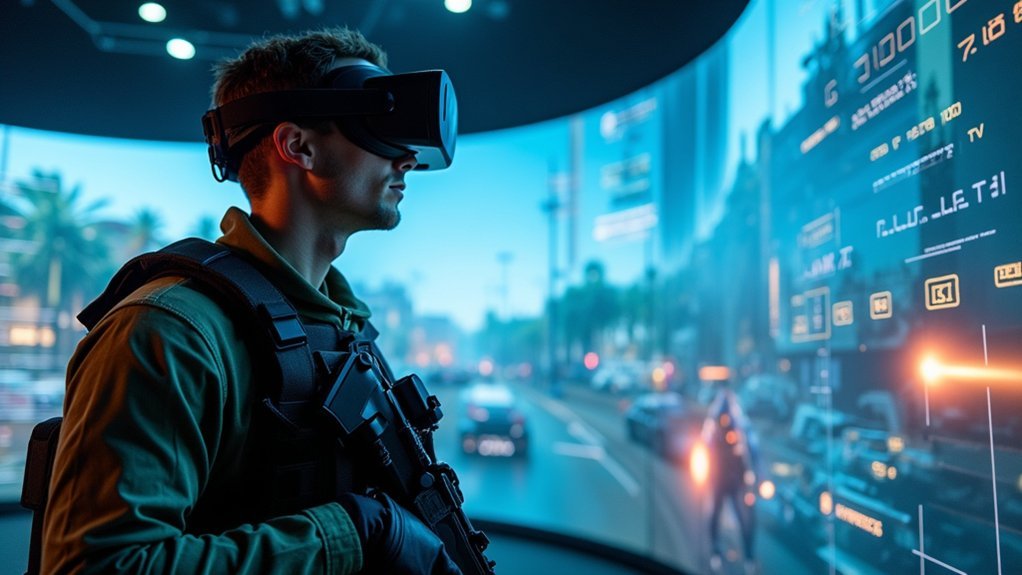
You’ll find that military mixed reality training solutions combine augmented and virtual reality technologies to create immersive combat training environments. These systems, like the IVAS program using ruggedized Microsoft HoloLens headsets, overlay critical battlefield data onto your real-world view while enabling risk-free scenario practice. They’re designed to enhance situational awareness, accelerate skill acquisition, and provide cost-effective training that withstands harsh military conditions. This all-encompassing approach transforms how modern forces prepare for missions.
Understanding Mixed Reality Technology in Military Applications

While traditional military training has relied on live exercises and classroom instruction, mixed reality technology transforms how soldiers prepare for combat by seamlessly blending digital elements with real-world environments.
Mixed reality (MR) integrates augmented reality and virtual reality components, creating immersive training experiences that enhance operational effectiveness. You’ll find that systems like the Integrated Visual Augmentation System (IVAS) utilize ruggedized Microsoft HoloLens headsets to deliver real-time data visualization and communication capabilities.
This military training approach enables you to experience realistic scenarios while maintaining safety protocols. The technology greatly improves situational awareness by overlaying critical information directly into your field of view, allowing for better decision-making during high-pressure situations without the inherent risks of live combat exercises.
Key Components and Technical Infrastructure of Military MR Systems
Because military MR systems demand exceptional reliability and performance in challenging environments, you’ll need robust technical infrastructure that includes several interconnected components.
The Integrated Visual Augmentation System exemplifies this thorough approach using ruggedized augmented reality headsets based on Microsoft’s HoloLens 2 technology.
Your military training infrastructure requires:
- Specialized XR headsets – Ruggedized devices that withstand harsh conditions while delivering enhanced situational awareness
- High-performance servers – Dedicated computing power to process complex scenarios and real-time data
- Robust 5G networks – High-bandwidth, low-latency connectivity enabling seamless training experiences
- Advanced monitoring systems – Heart rate sensors and performance tracking tools for thorough analysis
This technical infrastructure guarantees soldiers learn through realistic simulations while maintaining the reliability essential for military training operations.
Training Benefits and Operational Advantages of Mixed Reality Solutions
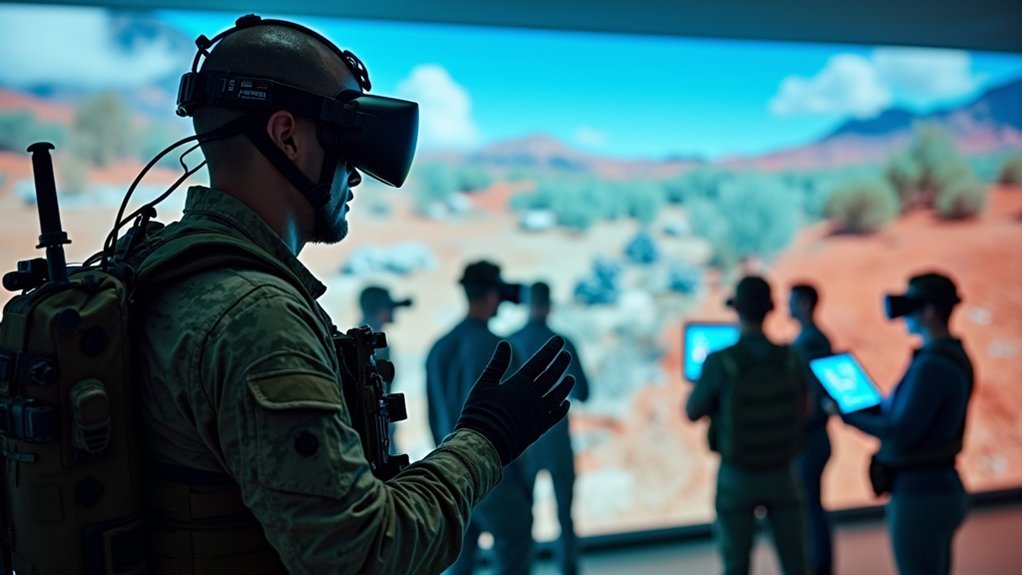
When military personnel engage with mixed reality training solutions, they experience unprecedented operational advantages that transform traditional learning paradigms.
You’ll gain enhanced situational awareness through systems like the Integrated Visual Augmentation System (IVAS), which overlays real-time battlefield data directly onto your field of vision. These training programs allow you to practice in realistic operational environments without physical risks, whether you’re operating tanks, aircraft, or conducting combat missions.
Mixed reality systems enable risk-free combat training in realistic environments while providing real-time battlefield data overlay capabilities.
The gamification elements embedded in MR technology greatly improve your skill retention rates through interactive experiences.
You’ll find that customizable configurations adapt to diverse scenarios, making training both scalable and cost-effective. By engaging with complex equipment in controlled settings, you accelerate skill acquisition while preparing for actual missions with confidence and competency.
Real-World Implementation: IVAS and Other Military MR Programs
These transformative training benefits have moved beyond theoretical concepts into active military deployment through groundbreaking programs that are reshaping modern warfare preparation.
Microsoft’s IVAS represents the most significant advancement in military augmented reality technology. Built on HoloLens 2 headset architecture, you’ll find this system delivers combat-ready mixed reality capabilities that enhance situational awareness during actual military operations.
Key implementation features include:
- Accelerated Development – The U.S. Army compressed IVAS acquisition from 8-10 years to just 36 months.
- Combat Durability – Ruggedized design withstands harsh battlefield conditions.
- Real-Time Integration – Seamless data visualization and soldier communication systems.
- Cross-Branch Adoption – Navy and other military branches implementing similar MR training exercises.
You’re witnessing a fundamental shift where immersive simulations reduce injury risks while dramatically improving skill acquisition across all service branches.
Challenges and Future Developments in Military Mixed Reality Training
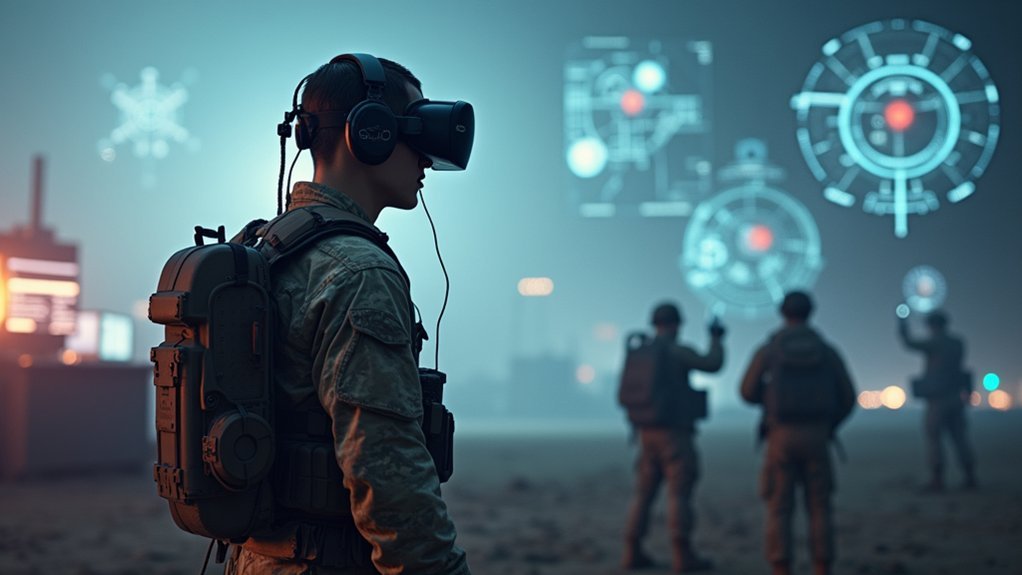
Although IVAS represents a breakthrough in military technology, you’ll encounter significant obstacles that demand immediate attention before widespread deployment becomes viable.
Your training system faces reliability challenges including screen flicker and technical glitches that compromise operational effectiveness. These augmented reality platforms struggle with information overload, potentially overwhelming soldiers during critical missions. Environmental factors severely impact performance—extreme temperatures reduce battery life and limit the IVAS program to eight-hour operational windows.
| Challenge Category | Current Issues | Future Solutions |
|---|---|---|
| Technical Reliability | Screen flicker, glitches | Enhanced hardware refinement |
| Information Processing | Data overload risks | Improved filtering algorithms |
| Environmental Resilience | Temperature sensitivity | Robust component design |
| Power Management | 8-hour battery limitation | Advanced battery technology |
| Security Vulnerabilities | Adversarial targeting | Enhanced connectivity protection |
Future advancements must prioritize connectivity resilience, extended battery technologies, and rigorous testing protocols to guarantee data accuracy in high-stakes combat situations.
Frequently Asked Questions
What Is an Example of Virtual Reality in Military Training?
You’ll experience urban combat scenarios through VR headsets, practicing room-clearing techniques and tactical movements in simulated city environments. You can rehearse dangerous missions repeatedly without physical risk, improving your combat readiness safely.
What Is AR and VR in the Military?
AR and VR in the military enhance your training and operations. AR overlays digital information onto real environments for better situational awareness, while VR creates immersive simulations for safe, realistic practice.
What Is an Example of AR Training?
You’d use the Integrated Visual Augmentation System (IVAS), which overlays digital information onto your field of view, helping you visualize mission objectives, enemy locations, and receive real-time tactical guidance.
How Is Augmented Reality Used in Improving Military Training Programs?
You’ll experience enhanced training through AR’s real-time data overlays, practice high-risk scenarios safely, receive digital instructions for equipment handling, and benefit from improved situational awareness that’s continuously refined based on soldier feedback.



Leave a Reply