
You’ll transform your workplace culture with 10 immersive simulation modules covering cultural competency training, unconscious bias mitigation, inclusive leadership development, accessibility awareness scenarios, harassment prevention programs, LGBTQ+ allyship training, multi-generational collaboration exercises, religious sensitivity simulations, neurodiverse employee development, and inclusive recruitment practices. These data-driven programs deliver 90% knowledge increases, 80% confidence improvements, and 40% fewer workplace misunderstandings through risk-free learning environments. The modules create lasting behavioral change where traditional lecture-based approaches fail, building genuine empathy and psychological safety across your organization.
Cultural Competency and Cross-Cultural Communication Training

When your organization embraces cultural competency training through immersive simulations, you’re equipping employees with essential skills to navigate real-world interactions across diverse scenarios.
Immersive simulations provide your employees with crucial cultural competency skills for navigating diverse real-world workplace interactions effectively.
These simulations create safe environments where your team can practice cross-cultural communication without real-world consequences while receiving instant feedback on their performance.
You’ll see remarkable results: studies show 30% increased employee engagement as workers feel more valued and understood.
Your organization will experience 40% fewer misunderstandings as employees learn to recognize and adapt to different communication styles. The psychological safety these simulations provide allows your team to identify improvement areas confidently.
Companies investing in this training report enhanced collaboration and innovation, with 67% of employees believing diversity drives creative solutions.
Unconscious Bias Recognition and Mitigation Simulations
Through unconscious bias recognition and mitigation simulations, you’re addressing one of the workplace’s most persistent challenges—the hidden prejudices that influence decision-making without your team’s awareness.
This immersive learning approach transforms abstract concepts into tangible experiences your employees can’t ignore.
These scenario-based learning programs deliver three critical benefits:
- Immediate feedback shows real consequences of biased decisions in a risk-free environment
- Enhanced empathy develops through realistic workplace situations that challenge assumptions
- Measurable improvement with 41% better awareness and responsiveness to diversity issues
You’ll see tangible results when employees navigate authentic scenarios that mirror your workplace dynamics.
The immersive learning environment builds genuine understanding rather than surface-level compliance.
Companies implementing these unconscious bias simulations report stronger team dynamics, improved morale, and better retention rates—proving that diversity and inclusion training creates lasting organizational change.
Inclusive Leadership Development Programs
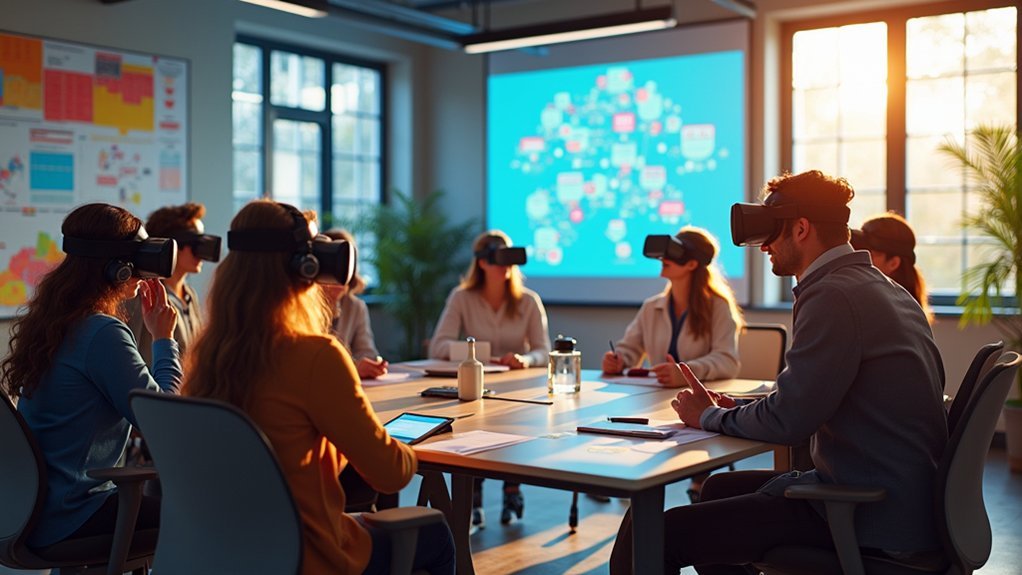
Building awareness around unconscious bias sets the foundation, but your organization needs leaders who can actively create inclusive environments where every team member thrives.
Inclusive leadership development programs leverage immersive simulations to transform how your leaders understand diverse perspectives. These programs place participants in real-world scenarios where they practice managing teams across various backgrounds and abilities.
You’ll see dramatic results from this approach. Participants report an 80% increase in confidence levels after engaging in these immersive training experiences.
Your investment yields measurable returns through improved employee morale and a 27% increase in leadership performance metrics.
These simulations don’t just reduce biases—they prepare your leaders to navigate complex diversity challenges while fostering empathy and collaboration that creates genuinely inclusive workplace cultures.
Accessibility Awareness and Accommodation Scenarios
You can transform your workplace culture by implementing immersive accessibility simulations that put employees directly into the shoes of colleagues with disabilities.
These workplace accommodation scenarios help your teams recognize physical and digital barriers while developing practical solutions for creating inclusive environments.
When you combine hands-on accommodation training with thorough digital accessibility modules, you’ll see measurable improvements in both compliance standards and employee empathy across your organization.
Workplace Accommodation Simulations
When employees encounter colleagues with disabilities in the workplace, many feel uncertain about how to provide appropriate support or implement necessary accommodations.
Workplace accommodation simulations address this challenge by creating immersive learning methods that replicate real-life scenarios. These simulations enable you to practice identifying and implementing solutions in a safe environment, building confidence through hands-on experience.
Effective learning through these immersive experiences delivers measurable results:
- Enhanced retention – Experiential learning achieves up to 75% information retention rates
- Improved competence – Employees gain practical skills for addressing accommodation needs
- Legal compliance – Organizations meet accessibility requirements while promoting inclusivity
You’ll find these simulations transform uncertainty into competence, creating workplace environments where all employees feel valued and supported.
This approach fosters genuine empathy while developing practical accommodation skills.
Digital Accessibility Training
Digital accessibility training expands these simulation-based learning principles into the technological domain, where employees navigate the same digital barriers that colleagues with disabilities encounter daily.
Through these immersive training experiences, you’ll understand how screen readers interact with poorly coded websites or experience the frustration of inaccessible mobile applications.
This digital accessibility training goes beyond compliance checkboxes. You’ll practice real accommodation scenarios, learning to create inclusive digital environments that boost employee engagement markedly.
Organizations implementing extensive accessibility programs see 30% increases in team collaboration and satisfaction.
Analytics from your immersive training sessions reveal knowledge gaps, enabling customized modules that address specific needs.
You’ll develop practical skills to support colleagues effectively while fostering genuine inclusion throughout your organization’s digital landscape.
Workplace Harassment Prevention and Response Training
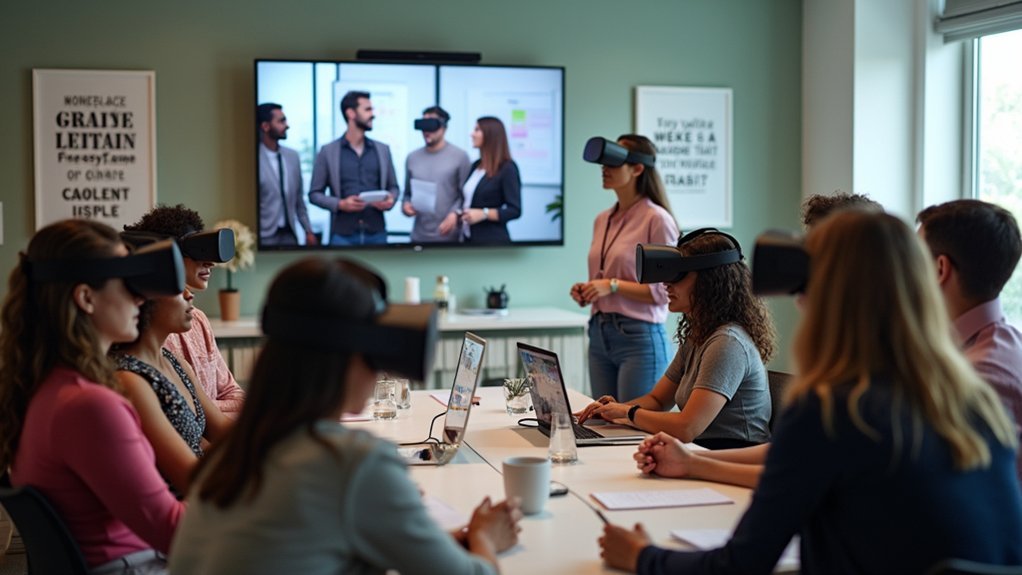
Although traditional lecture-based harassment training often fails to create lasting behavioral change, immersive simulation training transforms how you’ll recognize and respond to workplace harassment situations.
Through immersive learning, you’ll experience realistic scenarios that prepare you for any real-world situation you might encounter.
Through realistic practice scenarios, you’ll develop the skills and confidence needed to handle challenging workplace situations effectively.
This thorough workplace harassment prevention approach delivers measurable results:
- Knowledge Enhancement – You’ll achieve a 90% increase in understanding harassment policies and intervention strategies through hands-on practice.
- Confidence Building – Your employee confidence in addressing harassment situations improves by up to 80% through repeated scenario practice.
- Real-Time Learning – You’ll receive instant feedback on your decisions, helping you understand the nuances and impact of different responses.
Companies implementing these training modules report significant reductions in harassment incidents.
Neurodiversity Integration and Support Modules
While traditional training often overlooks the diverse cognitive styles that make teams stronger, neurodiversity integration modules create customized learning experiences that reveal every employee’s potential.
You’ll discover how immersive learning environments can be tailored with specific sensory accommodations, allowing neurodiverse team members to navigate realistic workplace scenarios comfortably. Through gamification elements, you’ll see motivation and knowledge retention increase by up to 75%, making learning more engaging and effective.
These modules provide safe spaces where your neurodiverse employees can practice soft skills and social interactions without real-world pressure, building confidence for actual workplace situations.
You’ll benefit from data analytics that identify individual strengths and learning patterns, enabling personalized learning pathways that foster genuine inclusion and maximize each employee’s unique contributions to your organization.
LGBTQ+ Ally Development and Safe Space Creation
You’ll develop authentic allyship skills through immersive role-play scenarios that challenge you to respond effectively to discriminatory behavior and support LGBTQ+ colleagues.
These interactive simulations teach you to recognize microaggressions and practice intervention techniques in realistic workplace situations.
You’ll also learn evidence-based strategies for creating psychologically safe environments where LGBTQ+ team members feel valued and supported.
Building Authentic Allyship Skills
How can organizations transform workplace culture through authentic LGBTQ+ allyship that extends beyond surface-level gestures? The answer lies in immersive learning experiences that place participants directly into real-world scenarios, fostering genuine empathy and understanding.
Effective allyship skills development requires three critical components:
- Experiential simulations that allow employees to navigate complex LGBTQ+ workplace situations, improving knowledge retention by up to 75%
- Community-informed training incorporating direct feedback from LGBTQ+ individuals to guarantee authenticity and relevance
- Safe spaces creation where all employees feel genuinely supported and valued
This thorough approach considerably boosts employee engagement and satisfaction.
When you implement these immersive simulation techniques, you’re not just checking boxes—you’re building a workplace culture where authentic allyship thrives and meaningful inclusion becomes the foundation of organizational success.
Creating Psychologically Safe Environments
When employees can authentically express themselves without fear of retaliation or judgment, organizations release the true potential of LGBTQ+ allyship development.
Psychological safety forms the foundation where meaningful conversations about diversity flourish, encouraging employees to engage openly with DEI initiatives.
Immersive simulations excel at creating these safe environments by removing real-world consequences while maintaining authentic scenarios. You’ll practice maneuvering through sensitive conversations, receive instant feedback, and self-correct behaviors without damaging actual relationships.
This risk-free setting accelerates learning and builds confidence.
Your inclusive training becomes more effective when participants feel secure enough to ask difficult questions and admit knowledge gaps.
Organizations implementing these psychologically safe approaches report higher employee morale and retention rates.
The combination of safety and immersive technology transforms allyship skills from theoretical concepts into practical, everyday behaviors that genuinely support LGBTQ+ colleagues.
Multi-Generational Workforce Collaboration Exercises
The multi-generational workplace presents unique challenges that require strategic training solutions to bridge communication gaps between Baby Boomers, Generation X, Millennials, and Generation Z.
Immersive simulations transform how your learning and development teams approach multi-generational workforce training by creating realistic scenarios where employees navigate age-related differences collaboratively.
These targeted collaboration exercises deliver measurable results:
- Enhanced team performance – Organizations experience a 30% increase in team performance metrics through realistic role-play scenarios.
- Reduced workplace conflict – Companies see a 20% reduction in generational conflict-related issues.
- Improved collaboration skills – Participants develop empathy and mutual respect essential for cross-generational teamwork.
You’ll strengthen workplace culture by incorporating feedback and analytics from these exercises, allowing your team to tailor future training modules that address specific generational challenges within your organization.
Religious and Cultural Sensitivity Training Scenarios
You’ll find that cross-cultural communication practices become second nature when you’re immersed in realistic workplace scenarios that challenge your assumptions and biases.
These training modules place you in situations where you must navigate religious accommodation requests, from prayer time scheduling to dietary restrictions during company events.
You’ll practice responding to sensitive cultural differences with empathy while maintaining professional boundaries and legal compliance.
Cross-Cultural Communication Practices
Although workplace diversity continues to expand globally, many employees still struggle with cross-cultural communication challenges that can undermine team cohesion and productivity.
You can transform your employee training approach through immersive learning simulations that create realistic scenarios for practicing cross-cultural communication skills.
Your organization will benefit from implementing these proven strategies:
- Interactive Role-Play Scenarios – Deploy immersive simulations that let employees navigate sensitive religious and cultural conversations in safe environments.
- Data-Driven Development – Use analytics from training sessions to identify knowledge gaps and create personalized learning pathways.
- Enhanced Engagement Methods – Leverage immersive technology to achieve 20-fold increases in training engagement and retention.
Research demonstrates that companies using these immersive approaches see 41% improvements in communication skills, directly impacting workplace inclusivity and team effectiveness.
Religious Accommodation Scenarios
When employees face religious accommodation requests, immersive training scenarios help them navigate these conversations with confidence and cultural competence.
You’ll practice real-world situations through role-play exercises that build your interpersonal skills while fostering religious sensitivity. These immersive learning environments let you explore complex workplace dynamics without fear of making mistakes, creating safe spaces for growth and self-correction.
Your organization benefits from incorporating successful case studies that demonstrate how proper religious accommodation improves employee morale and retention.
Research confirms that companies investing in thorough DEI training see measurable returns through enhanced workplace culture and increased employee engagement.
Through these realistic simulations, you’ll develop the skills needed to create inclusive environments where diverse beliefs are respected and valued.
Inclusive Recruitment and Hiring Practice Simulations
As organizations endeavor to build more diverse teams, inclusive recruitment and hiring practice simulations have emerged as powerful tools that transform how HR professionals approach candidate evaluation.
These immersive learning environments enable you to recognize and mitigate unconscious biases while fostering equitable hiring processes.
Virtual simulations offer three key advantages:
- Safe Practice Environment – You can refine interviewing techniques and evaluate candidates from diverse backgrounds without real-world consequences.
- Real-World Scenarios – Immersive challenges enhance empathy and collaboration among recruitment teams, improving candidate experiences.
- Measurable Impact – Organizations see up to 30% increases in diverse candidate hiring rates.
Through data collection and performance analysis, you’ll continuously improve recruitment strategies while establishing diversity metrics that promote lasting cultural change throughout your organization.
Frequently Asked Questions
What Is the Average Cost per Employee for Implementing Immersive Simulation Training?
You’ll typically spend between $1,000 to $5,000 per employee for immersive simulation training implementation. Your costs depend on technology complexity, content development, hardware requirements, and training duration you’re planning for your workforce.
How Long Does It Take to Develop Custom Inclusive Training Modules?
You’ll typically need three to six months for custom development, depending on complexity and content scope. Simple modules require shorter timelines, while extensive programs with multiple scenarios and interactive elements take longer to create effectively.
What Technical Equipment and Software Are Required for Immersive Simulation Training?
You’ll need VR headsets, high-performance computers with dedicated graphics cards, motion tracking sensors, and specialized software platforms like Unity or Unreal Engine. Don’t forget audio equipment and reliable network infrastructure for seamless experiences.
How Do You Measure ROI and Effectiveness of Inclusive Simulation Programs?
You’ll measure ROI through pre-post assessments, behavioral change metrics, engagement analytics, and cost-per-learner calculations. Track completion rates, knowledge retention, workplace incidents, and employee satisfaction scores to demonstrate your program’s effectiveness and financial impact.
Can These Training Modules Integrate With Existing Learning Management Systems?
You’ll find most training modules easily integrate with existing LMS platforms through standard protocols like SCORM, xAPI, and LTI. They’ll seamlessly track progress, scores, and completion rates within your current system.



Leave a Reply