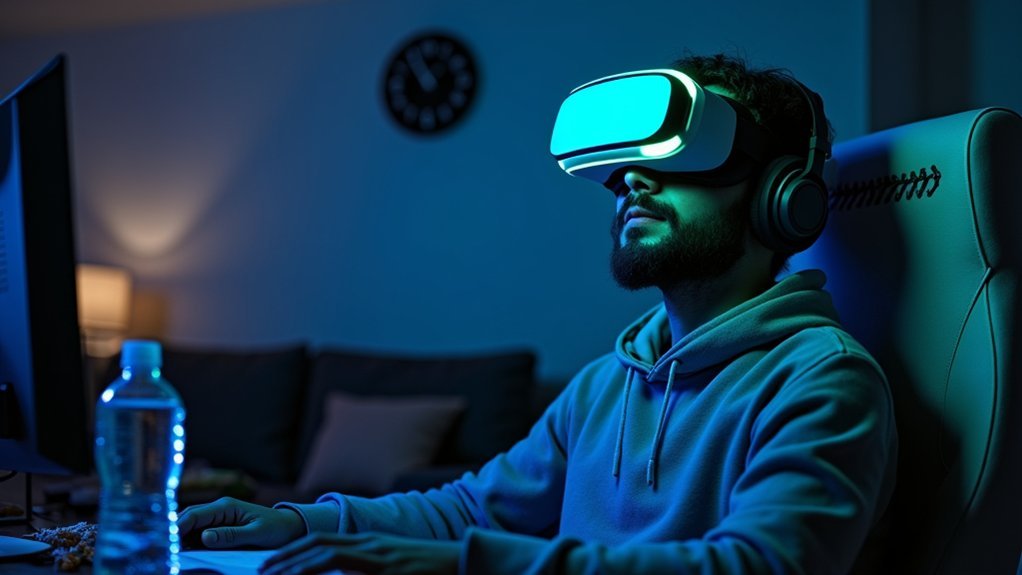
You should take regular breaks during VR gaming to prevent motion sickness symptoms like nausea, dizziness, and eyestrain caused by conflicting signals between your visual and vestibular systems. Breaking every 30 minutes for 10-15 minutes protects against eye strain and improves cognitive performance, with six-minute walking breaks enhancing reaction times and executive function by over 70%. Active movement breaks outperform passive rest, maintaining mental clarity while preventing disorientation that could lead to accidents in your physical space.
Understanding VR Motion Sickness and Its Symptoms

When you slip on a VR headset and immerse yourself in a virtual world, your brain receives conflicting messages that can trigger an uncomfortable condition known as VR motion sickness. This happens because your visual system perceives movement while your vestibular system senses you’re stationary, creating a sensory mismatch that confuses your brain.
You’ll experience symptoms like nausea, dizziness, headaches, disorientation, and eyestrain. Fast-moving graphics and display latency worsen these effects. If you’ve had motion sickness, inner ear problems, or migraines before, you’re more susceptible.
Children under 13 face higher risks. The mild nausea can linger for hours after gaming sessions, potentially causing drowsiness. Taking frequent breaks becomes essential to prevent these symptoms from ruining your virtual adventures.
Physical Health Risks of Extended VR Gaming Sessions
When you spend hours in VR without breaks, you’re putting your body at risk for several uncomfortable and potentially dangerous side effects.
Motion sickness symptoms can hit you hard during extended sessions, causing nausea and dizziness that may worsen rather than improve if you keep playing.
Your eyes also take a beating from prolonged VR use, leading to soreness and focusing problems similar to staring at screens for too long.
Motion Sickness Symptoms
Although virtual reality creates immersive gaming experiences, it can trigger uncomfortable motion sickness symptoms that considerably impact your gaming session. When you’re immersed in VR experiences, conflicting signals between your visual and vestibular systems can cause nausea, dizziness, headaches, and eyestrain.
These symptoms intensify during high-speed movements or disorienting scenarios, making you feel increasingly uncomfortable. Extended gaming sessions beyond 30 minutes considerably increase your risk of developing cybersickness.
You’ll notice symptoms escalate quickly, often forcing you to remove your headset immediately. The disorientation becomes so severe that you might struggle to identify your physical surroundings.
Regular breaks during VR experiences help prevent these debilitating symptoms from developing, allowing you to maintain spatial awareness and enjoy gaming without the unpleasant side effects of motion sickness.
Eye Strain Effects
Beyond motion sickness, prolonged VR gaming sessions create significant eye strain that can affect your vision for hours after you’ve finished playing. Your eyes work overtime focusing on displays positioned mere inches away, leading to discomfort, dryness, blurred vision, and difficulty focusing.
These symptoms don’t disappear when you remove your headset—they can persist long afterward, impacting your daily activities.
You’ll experience relief by following the 30-minute rule: take a break for 10 to 15 minutes after every half-hour of VR play. While adjusting your headset’s focus settings helps reduce strain, consistent breaks remain your best defense.
Since researchers are still studying VR’s long-term effects on vision, protecting your eye health through regular breaks isn’t just recommended—it’s essential.
Cognitive Benefits of Regular Movement Breaks
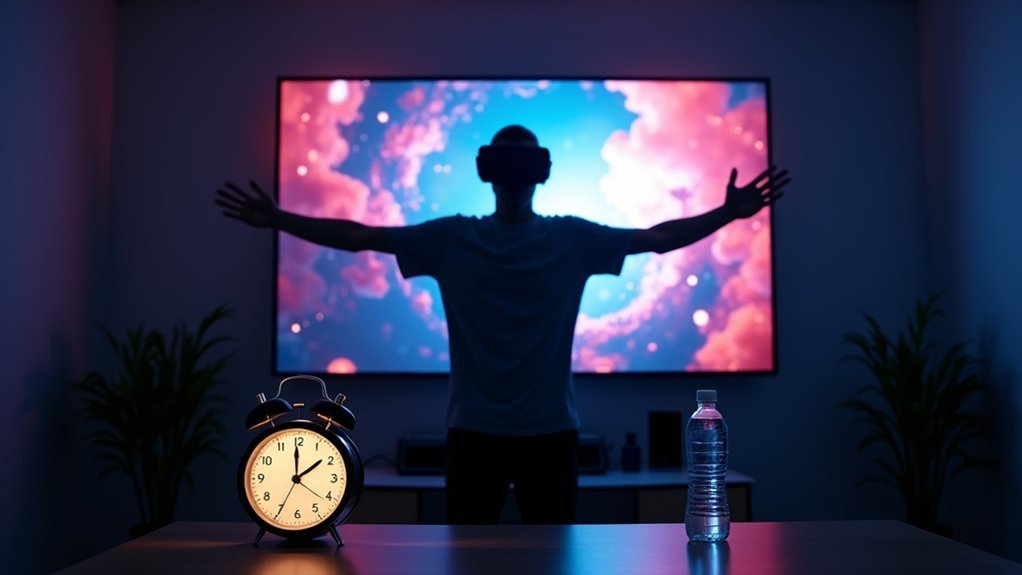
While you’re immersed in virtual worlds, your brain craves the cognitive boost that comes from stepping away and moving your body.
Research shows that taking six-minute walking breaks delivers remarkable cognitive benefits that directly enhance your gaming performance through regular movement.
When you incorporate active breaks into your VR sessions, you’ll experience:
- Faster reaction times – Walking breaks greatly improve your response speed compared to continuous play or passive rest.
- Enhanced executive function – Your decision-making and problem-solving abilities sharpen after movement breaks.
- Improved mental clarity – Walking helps clear your mind and reduce pressure, boosting focus.
Over 70% of gamers report better abilities after walking breaks, while resting often leads to lethargy that hurts performance.
Optimal Break Frequency and Duration for VR Users
You’ll need to follow specific timing guidelines to maximize your VR experience while minimizing physical discomfort.
Most experts recommend taking 10-15 minute breaks after every 30 minutes of gameplay to prevent eye strain, muscle tension, and motion sickness.
Your individual recovery needs may vary greatly, with some sessions requiring breaks lasting anywhere from 30 minutes to several hours depending on how your body responds to the virtual environment.
Recommended Break Intervals
Since VR gaming can quickly overwhelm your sensory system, establishing a structured break schedule becomes essential for maintaining comfort and preventing adverse symptoms.
You’ll want to follow these recommended intervals to minimize VR side effects:
- Standard Break Pattern: Take 10-15 minute breaks every 30 minutes of gameplay to reduce muscle and eye strain.
- Extended Recovery: Rest for 30 minutes to several hours if you experience mild nausea, allowing your eyes, brain, and stomach to recover.
- Timer Reminders: Use a timer to prompt regular breaks, helping you assess your physical and mental well-being during sessions.
Your break duration may vary based on individual tolerance levels. Some users need longer rests to fully recover from symptoms, so listen to your body’s signals.
Session Length Guidelines
Although individual tolerance varies considerably, most VR users should limit their initial gaming sessions to 30-60 minutes before taking substantial breaks. Following proper session length guidelines helps prevent discomfort and maintains enjoyment throughout your VR experience.
| Session Duration | Recommended Break Length | Signs to Stop | Notes |
|---|---|---|---|
| 30 minutes | 10-15 minutes | Mild eye strain | Ideal for beginners |
| 60 minutes | 30+ minutes | Slight dizziness | Maximum for most users |
| Beyond 60 minutes | Several hours | Nausea symptoms | Not recommended |
| When you feel sick | Until symptoms subside | Any discomfort | Stop immediately |
Regular breaks allow your eyes, brain, and stomach to recover properly. As you build tolerance through consistent exposure and appropriate break schedules, you’ll enhance your overall gaming experience while minimizing adverse effects.
Recovery Time Factors
While the general 30-minute rule provides a solid foundation, several personal factors influence how frequently you’ll need breaks and how long those breaks should last.
Your individual tolerance determines ideal recovery patterns. Consider these key factors:
- Experience Level – Beginners should start with 5-10 minute sessions and shorter breaks, gradually building tolerance over time.
- Symptom Severity – If you experience nausea or dizziness, extend breaks to 10-15 minutes until symptoms completely subside.
- Physical Comfort – Monitor eye strain and muscle tension to adjust break frequency accordingly.
Don’t rush back into VR if mild nausea persists, as it can linger for hours. Your recovery time varies based on personal sensitivity levels.
Regular breaks help build long-term tolerance while preventing uncomfortable symptoms that could ruin your gaming experience.
Active vs. Passive Break Strategies
When it comes to taking breaks during VR gaming sessions, you’ll find that not all break strategies deliver the same benefits. Active breaks involving walking or light exercises greatly outperform passive breaks in enhancing your gaming performance.
Research from New York Tech’s Center for eSports Medicine shows that active breaks improve cognitive functions like reaction time and executive function, while passive breaks often leave you feeling lethargic and unfocused.
Over 70% of competitive gamers reported enhanced abilities after taking active walking breaks during their sessions. In contrast, passive breaks involving sitting or lying down can decrease your focus when returning to VR games.
Active breaks also help mitigate health risks from prolonged sedentary behavior, supporting both mental clarity and physical well-being during extended gaming.
Warning Signs That Indicate You Need an Immediate Break
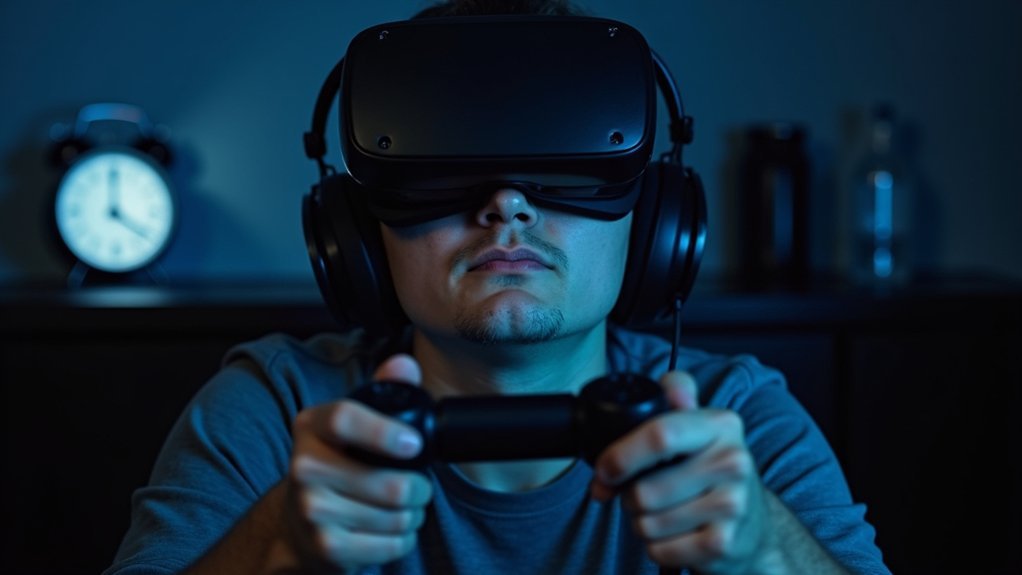
Even though taking regular breaks is important, certain warning signs demand you stop VR gaming immediately rather than waiting for your next scheduled break.
If you experience discomfort like dizziness or disorientation, take off the headset right away to prevent injuries. Nausea signals VR motion sickness and requires an immediate pause before symptoms intensify. Eye soreness or focusing difficulties indicate you’ve pushed your vision too far and need rest.
Watch for these critical warning signs:
- Severe symptoms – Headaches or seizure-like effects require stopping VR activity and consulting healthcare professionals.
- Spatial confusion – Loss of physical environment awareness after extended use increases accident risk.
- Visual strain – Persistent eye discomfort can lead to long-term vision problems.
Your safety trumps gaming progress every time.
Long-Term Health Prevention Through Proper VR Habits
Beyond addressing immediate warning signs, developing consistent VR habits protects your long-term health and guarantees you can enjoy virtual reality gaming for years to come.
When you take breaks every 30 minutes, you’re preventing cumulative eye strain that could permanently affect your vision. These regular pauses also combat sedentary behavior patterns that make you feel sluggish and contribute to cardiovascular problems over time.
Establishing proper hydration and dietary routines during VR sessions prevents chronic fatigue and cognitive decline. Walking breaks reconnect you with the physical world while boosting circulation and mental clarity.
Consistent break habits train your body to recover efficiently from VR immersion, reducing motion sickness susceptibility. These preventive measures assure VR remains an enjoyable, sustainable hobby rather than a health liability.
Frequently Asked Questions
How Often Should You Take Breaks While Playing VR?
You should take breaks every 30 minutes of VR play, resting for 10-15 minutes each time. Monitor your symptoms closely and stop immediately if you’re feeling nauseous or dizzy.
Is It Okay to Play VR Every Day?
You can play VR daily, but you’ll risk motion sickness and eye strain. Limit sessions to 30-60 minutes with 10-15 minute breaks. Monitor your body’s reactions since daily use can decrease your tolerance over time.
What Happens if You Spend Too Much Time on VR?
You’ll experience motion sickness, nausea, dizziness, and headaches from conflicting sensory signals. Extended VR sessions cause eye strain, disorientation, loss of spatial awareness, and increase seizure risks, especially if you’re light-sensitive.
How Many Hours a Day Should I Play VR?
You shouldn’t play VR for more than one to two hours daily. Start with shorter sessions and take frequent breaks. New users should limit initial sessions to five minutes, gradually increasing as tolerance builds.


Leave a Reply