
You’ll find the best VR results with budget 360 cameras by choosing the Insta360 X3 at $299.99 or the Kandao QooCam 3 at $199. Both deliver professional 5.7K video quality with advanced 6-axis stabilization that prevents motion sickness in viewers. The GoPro Max offers excellent durability but costs more at $499.99. These cameras capture immersive spherical footage that meets VR standards, and their companion apps simplify editing for content creators of all skill levels who want to explore deeper possibilities.
Understanding 360-Degree Camera Technology for VR Content

When you’re diving into VR content creation, 360-degree cameras become your gateway to capturing immersive experiences that transport viewers into entirely new worlds.
These devices use multiple ultra-wide lenses to record panoramic footage from every angle, creating the foundation for compelling virtual reality content.
Budget-friendly options like the Insta360 X3 and GoPro Max prove you don’t need expensive equipment to produce professional results.
They’ll capture high-quality video at 5.7K resolution, meeting the minimum standards for crisp VR applications.
What makes these cameras particularly valuable is their companion apps, which simplify editing and reframing processes.
You can easily adjust perspectives, crop specific viewpoints, and enhance footage without complex software, making VR content creation accessible regardless of your technical expertise.
Key Features That Make Budget 360 Cameras VR-Ready
Although budget constraints might tempt you to compromise on features, certain specifications remain non-negotiable for creating quality VR content.
You’ll need budget 360 cameras with at least 5.7K video resolution to guarantee immersive experiences that won’t disappoint viewers. Dual fisheye lenses are essential for capturing complete spherical perspectives that VR demands.
Stabilization technology becomes vital when you’re shooting VR content. Look for 6-axis stabilization to assure smooth playback and comfortable viewing experiences.
Don’t overlook the importance of user-friendly editing software – models like the Insta360 X3 include intuitive programs that streamline your content creation process.
Waterproof capabilities expand your creative possibilities considerably. With cameras offering protection up to 10 meters, you can explore underwater environments and weather-challenging situations for truly unique VR experiences.
Insta360 X3: Best Overall Budget Choice for VR Creation
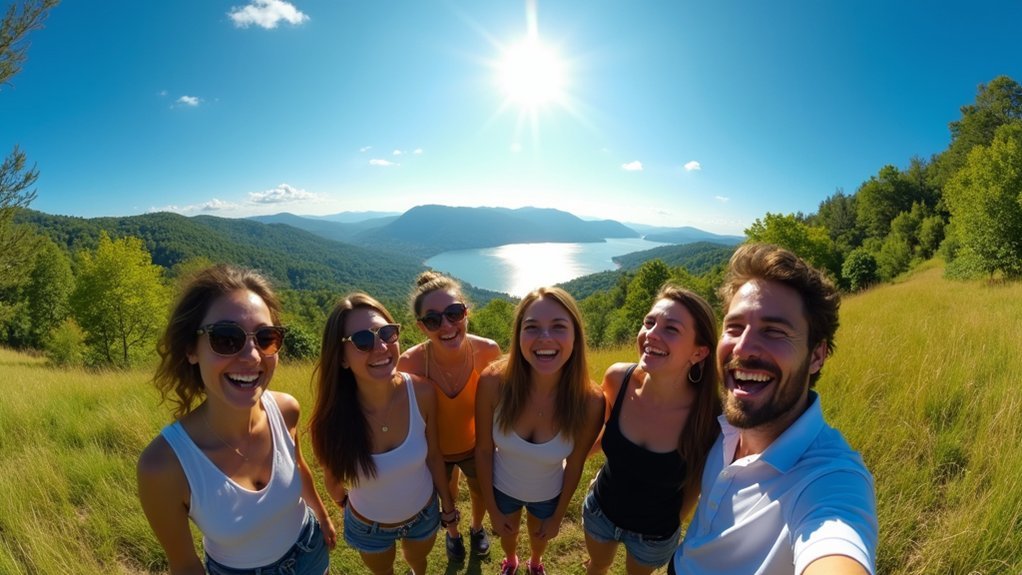
Despite fierce competition in the budget 360 camera market, the Insta360 X3 stands out as the clear winner for VR content creation.
This budget-friendly option delivers exceptional 5.7K video resolution at 30fps, ensuring your VR footage maintains crisp detail and immersive quality. You’ll capture breathtaking 72MP stills that translate beautifully into virtual reality experiences.
The X3’s advanced 6-axis stabilization eliminates shaky footage, producing professional-grade results essential for seamless VR viewing.
Advanced 6-axis stabilization technology delivers rock-solid footage, creating the smooth, professional-quality results that VR experiences demand.
You can confidently shoot underwater adventures with its 10-meter waterproof rating, expanding your creative possibilities across diverse environments.
At $299.99, you’re getting remarkable value that combines powerful VR creation capabilities with user-friendly operation.
The Insta360 X3 proves you don’t need expensive equipment to produce compelling virtual reality content.
GoPro Max: Rugged Design Meets VR Capabilities
While the X3 excels in overall value, adventure enthusiasts who prioritize durability will find the GoPro Max perfectly suited for extreme conditions. You’ll capture high-resolution footage with 5.6K stitched video and 16.6MP stills, ensuring your VR content meets professional standards. The waterproof design withstands submersion up to 5 meters, while Hypersmooth video stabilization eliminates shake during intense activities.
| Feature | Specification | VR Benefit |
|---|---|---|
| Video Quality | 5.6K stitched | Cinema-quality VR |
| Waterproof Rating | 5 meters | Underwater VR capture |
| Stabilization | Hypersmooth | Smooth VR playback |
| Photo Resolution | 16.6MP | Detailed VR stills |
| Shooting Modes | Standard + 360° | Versatile content creation |
Voice commands enable hands-free operation, letting you focus on adventures while the versatile camera handles both traditional and 360-degree shooting modes effortlessly.
Kandao QooCam 3: Most Affordable Entry Point for VR
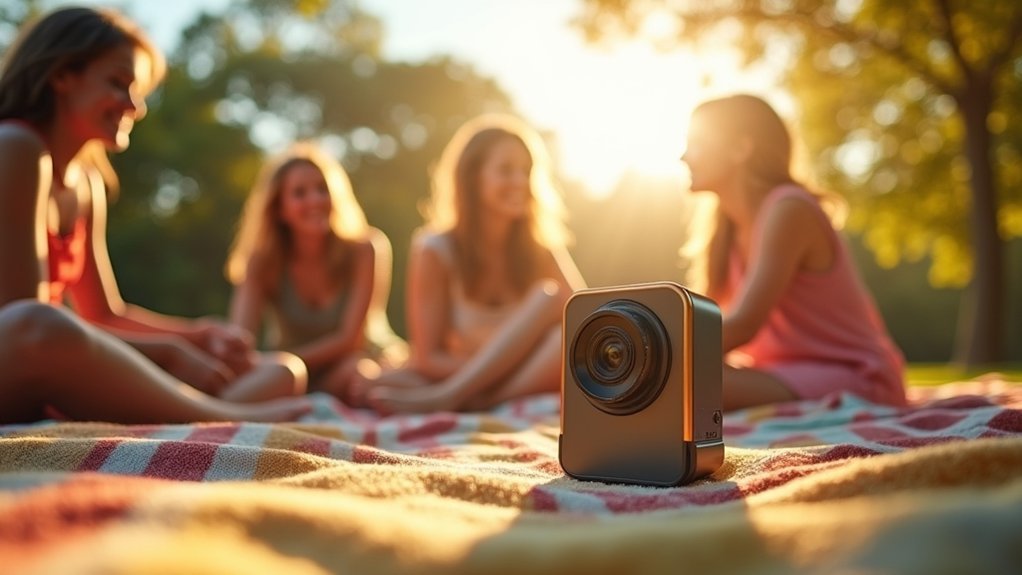
Under $300, the Kandao QooCam 3 delivers exceptional value for newcomers entering the VR content creation space. This affordable camera doesn’t compromise on quality, featuring dual lenses that capture stunning 5.7K video and 64MP still images perfect for VR photography.
You’ll appreciate its compact design and user-friendly interface that makes 360-degree content creation accessible from day one.
The Kandao Qoocam 3’s standout features include:
- Competitive pricing that makes VR content creation budget-friendly
- Impressive low-light performance for shooting in challenging environments
- High-resolution output with 5.7K video and 64MP photos
- Comprehensive software support for seamless editing and sharing
Whether you’re testing VR waters or starting your content journey, this camera provides professional-quality results without breaking your budget.
Video Resolution Requirements for Quality VR Experiences
Understanding video resolution becomes essential when you’re aiming to create compelling VR content that truly immerses your audience.
You’ll need a minimum of 5K video resolution to guarantee sufficient detail and clarity in your VR environment. Without this baseline, viewers will notice pixelation and reduced immersion quality.
The Insta360 X3 delivers 5.7K resolution at $299.99, making it one of the most accessible budget-friendly options for creators entering VR production. This resolution exceeds the 5K minimum requirement, guaranteeing your immersive VR content maintains professional quality standards.
The Insta360 X3’s 5.7K resolution at $299.99 delivers professional VR quality while remaining accessible for budget-conscious creators.
Higher resolutions like 8K provide enhanced realism, but they come with increased costs.
For budget-conscious creators, 5.7K cameras offer the perfect balance between affordability and quality, delivering the resolution needed for engaging VR experiences.
Photo Quality Comparison Across Budget Models
When you’re comparing photo quality across budget 360 cameras, megapixel count tells only part of the story.
While the Insta360 X3 leads with 72MP photo resolution and the Kandao Qoocam 3 delivers impressive 64MP stills, you’ll find that real-world performance varies considerably across these budget models.
Here’s how these cameras stack up for 360 photography:
- Insta360 X3 – 72MP photos with excellent processing for immersive content creation
- Kandao Qoocam 3 – 64MP stills offering solid performance for VR applications
- GoPro Max – 16.6MP photos but superior durability and action-oriented features
- Ricoh Theta SC2 – Smartphone-quality spherical images, though limited video resolution capabilities
The Insta360 X3 and Kandao Qoocam 3 consistently deliver the best balance of photo quality and usability for beginners.
Battery Life and Storage Considerations for VR Shoots
Battery life becomes your primary concern once you start shooting longer VR sessions, where even the best budget 360 cameras won’t last beyond 80 minutes of continuous recording. You’ll need to plan accordingly, especially since recording conditions like low-light environments can drain batteries faster.
| Camera Model | Battery Life | Max Resolution | Storage Type |
|---|---|---|---|
| Insta360 X3 | 70 minutes | 5.7K video | micro SD |
| GoPro Max | 78 minutes | 5.6K video | micro SD |
| Budget Alt | 65 minutes | 4K video | micro SD |
For storage, you’ll need high-capacity micro SD cards rated UHS-I U3 minimum. The Insta360 X3’s 72MP photos and 5.7K video create massive files, so invest in fast, spacious cards. Always pack extra batteries and charging solutions for extended VR content creation sessions.
Stabilization Technology Impact on VR Immersion
You’ll find that hardware stabilization systems in budget 360 cameras directly determine how smooth and watchable your VR content becomes.
When your camera lacks proper stabilization, viewers experience jarring movements that can quickly trigger motion sickness and force them to stop watching.
The difference between basic digital stabilization and advanced 6-axis hardware systems becomes critical when you’re capturing dynamic scenes that need to maintain viewer comfort.
Hardware Stabilization Systems
Although budget 360 cameras now pack sophisticated stabilization tech, the real game-changer lies in how hardware stabilization systems directly impact your VR immersion quality.
Modern budget 360 cameras like the Insta360 X3 and GoPro Max prove you don’t need expensive equipment for professional-level results.
Here’s how hardware stabilization systems enhance your VR content:
- 6-axis stabilization greatly reduces motion blur and jitters during filming.
- Advanced video stabilization maintains viewer engagement by eliminating disorienting shake.
- Seamless stitching capabilities create fluid shifts between different viewing angles.
- Motion sickness prevention through stable 360-degree footage that won’t nauseate viewers.
The GoPro Max’s HyperSmooth technology exemplifies how effective stabilization transforms raw footage into comfortable viewing experiences.
You’ll achieve smoother results during dynamic activities, ensuring your immersive experience captivates audiences rather than causing discomfort.
Motion Sickness Prevention
Three critical factors determine whether your VR content triggers motion sickness in viewers: visual stability, frame consistency, and smooth motion tracking. When you’re using budget 360 cameras, stabilization technology becomes essential for preventing these uncomfortable symptoms.
Cameras like the Insta360 X3 and GoPro Max deliver 6-axis stabilization that greatly reduces shaky footage, creating smoother visuals that won’t nauseate your audience.
You’ll find that high-quality stabilization minimizes visual distortion and lag—two primary culprits behind VR discomfort. This technology proves particularly valuable during low-light performance scenarios where camera shake becomes more pronounced.
Advanced features like GoPro Max’s Hypersmooth maintain fluidity in dynamic scenes, helping viewers navigate virtual spaces without disorientation. By selecting budget 360 cameras with reliable stabilization, you’ll create an immersive experience that keeps viewers engaged longer without adverse effects.
Low Light Performance Testing for Indoor VR Content
When testing budget 360 cameras indoors, low light performance becomes the defining factor that separates exceptional VR content from mediocre footage.
You’ll find that the Insta360 One RS consistently outperforms other budget models, delivering superior brightness and clarity for indoor VR content creation.
Here’s what you need to know about low light performance testing:
- Insta360 One RS excels with high dynamic range, producing vibrant colors and minimal noise.
- GoPro Max struggles with distortion issues in dimly lit environments.
- Insta360 X3 delivers less sharp images despite being user-friendly and waterproof.
- Testing conditions across various indoor lighting scenarios consistently favor the One RS for clearer, more detailed 360-degree footage.
Choose cameras with superior low-light capabilities to guarantee your VR content maintains professional quality.
Software and Editing Tools for VR Post-Production
You’ll need reliable editing software to transform your raw 360 footage into polished VR content.
Free apps like Insta360 Studio and GoPro’s Quik offer user-friendly interfaces that handle stitching and basic edits without breaking your budget.
For more advanced features like keyframe editing and precise movement control, you can upgrade to professional software options that provide greater creative flexibility.
Free VR Editing Apps
After capturing stunning 360-degree footage with your budget camera, you’ll need reliable editing software to transform raw clips into polished VR experiences.
These free VR editing apps deliver professional results without breaking your budget.
Top Free Options for 360 Video Editing:
- Insta360 Studio – Offers intuitive reframing tools, music integration, and multiple export formats for seamless workflow management.
- VeeR Editor – Cross-platform app featuring filters, changes, and customizable text overlays to enhance your immersive content.
- VideoStitch – Provides powerful stitching capabilities for combining multi-camera footage into seamless 360-degree videos.
- Adobe Premiere Rush – Versatile editor supporting 360-degree video editing with professional-grade features and user-friendly interface.
These applications guarantee you’ll create compelling VR content that rivals expensive alternatives.
Professional Software Options
While free editing apps provide solid foundations for VR content creation, professional software options reveal advanced capabilities that can transform your 360-degree footage into truly cinematic experiences. Adobe Premiere Pro and Final Cut Pro lead the market with thorough 360-degree video editing features, while specialized programs like Insta360 Studio excel at seamless spherical video stitching.
| Software | Key Features | Best For |
|---|---|---|
| Adobe Premiere Pro | Motion tracking, VR effects | Professional workflows |
| Insta360 Studio | Seamless stitching, real-time preview | 360-camera users |
| Final Cut Pro | Native VR support, interactive elements | Mac-based editing |
These professional tools offer real-time previewing, motion tracking, and interactive elements integration. Most importantly, they support VR headsets during editing, letting you experience your content exactly as viewers will.
Waterproof Capabilities for Outdoor VR Adventures
When you’re planning outdoor VR adventures that involve water exposure, waterproof capabilities become essential for protecting your investment and capturing uninterrupted footage.
The Insta360 X3 leads with impressive 10-meter waterproof protection, making it ideal for deep water activities and extreme weather conditions.
Meanwhile, the GoPro Max offers 5-meter waterproof capabilities, perfect for snorkeling and beach adventures.
Key waterproof features for outdoor VR adventures include:
- Deep water protection – Insta360 X3’s 10-meter rating vs GoPro Max’s 5-meter capability
- High-resolution recording – 5.7K video resolution maintains quality underwater
- Reliable storage – Both cameras use Micro SD cards for ample high-resolution VR footage storage
- Versatile environments – Capture content in rain, snow, or aquatic settings without damage concerns
These waterproof capabilities guarantee you’ll never miss capturing immersive content during challenging outdoor conditions.
Price-to-Performance Analysis of Top Budget Models
When you’re evaluating budget 360 cameras for VR, you’ll find that specifications don’t always translate directly to value.
The Insta360 X3 delivers exceptional bang for your buck at $299.99 with its 5.7K video and 72MP photos, while the Kandao Qoocam 3 undercuts it considerably at $199 with nearly identical specs.
You’ll need to weigh these raw numbers against real-world performance factors like low-light capabilities and build quality to determine which camera offers the best value per dollar for your specific VR projects.
Budget Camera Specifications
Although budget 360 cameras once meant compromising on quality, today’s models deliver impressive specifications that rival higher-end options.
You’ll find exceptional video quality across this price range, with most cameras offering 5.7K resolution that’s perfect for immersive VR experiences.
Here are key specifications to take into account:
- Video Resolution: The Kandao Qoocam 3 and Insta360 X3 both capture 5.7K video, while GoPro Max delivers 5.6K footage.
- Photo Quality: Insta360 X3 leads with 72MP photo resolution, ideal for detailed virtual tours.
- Special Features: GoPro Max offers rugged durability and voice commands for hands-free operation.
- Low-Light Performance: Kandao Qoocam 3 excels in challenging lighting conditions.
These budget cameras include user-friendly editing software, making VR content creation accessible for beginners.
Value Per Dollar
Everyone wants maximum bang for their buck when investing in 360 cameras, and the current budget market delivers compelling options that punch well above their weight class. When analyzing price-to-performance ratios among top contenders, the Insta360 X3 emerges as the standout performer, delivering 5.7K video and 72MP photos at $299.99. The Kandao Qoocam 3 matches this as a budget-friendly option, offering similar high-resolution outputs with excellent low-light performance at approximately $299.
| Camera | Price | Video Quality | Value Score |
|---|---|---|---|
| Insta360 X3 | $299.99 | 5.7K | Excellent |
| Kandao Qoocam 3 | $299.00 | 5.7K | Excellent |
| GoPro Max | $499.99 | 5.6K | Good |
| Ricoh Theta SC2 | $299.95 | Limited | Fair |
Both the Insta360 X3 and Kandao Qoocam 3 maximize your investment potential.
Choosing the Right Budget Camera for Your VR Projects
Since budget cameras have become increasingly capable, you’ll find several excellent options that can deliver professional-quality VR content without breaking the bank.
Your choice depends on your specific VR content creation needs and shooting conditions.
Consider these key factors when selecting your budget 360 camera:
- Video Resolution Requirements – The Insta360 X3 and Kandao QooCam 3 both offer 5.7K recording, while the GoPro Max provides 5.6K capture for professional image quality.
- Shooting Environment – Choose the GoPro Max for rugged, waterproof action scenarios or prioritize the QooCam 3’s superior low-light performance for indoor projects.
- Photography Focus – The Ricoh Theta SC2 excels at high-quality 360-degree stills for VR applications.
- Editing Workflow – Both Insta360 and GoPro include user-friendly editing software.
Frequently Asked Questions
Can a 360 Camera Be Used for VR?
You can definitely use a 360 camera for VR since it captures full spherical footage. You’ll get immersive experiences from all angles, especially with cameras offering 5.7K resolution and good stabilization features.
Who Is the Rival of Insta360?
You’ll find Insta360’s main rivals are GoPro with their Max model, Ricoh featuring the Theta X, and Kandao’s Qoocam 3. Each competitor targets different strengths like durability, high-resolution stills, or affordability.
What Is the Disadvantage of a 360 Camera?
You’ll face several disadvantages with 360 cameras: poor low-light performance, visible stitching seams, limited battery life, potential shaky footage, and a steep learning curve for editing specialized software.
What Is the Difference Between VR Camera and 360 Camera?
You’ll find VR cameras capture stereoscopic depth for immersive headset experiences, while 360 cameras record flat panoramic footage. VR cameras offer real-time stitching and interactivity, whereas 360 cameras prioritize portability and accessibility.

Leave a Reply