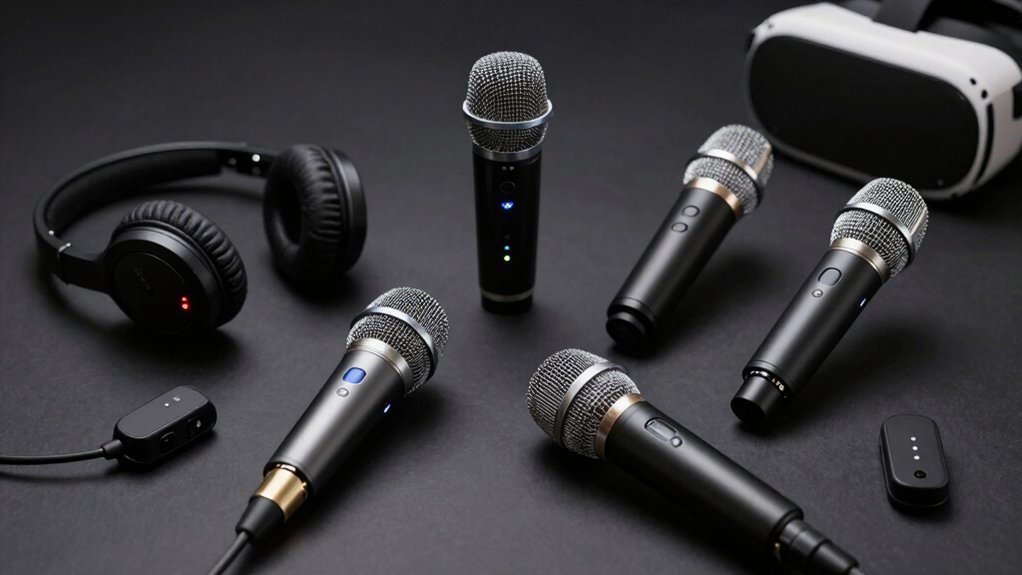
You’re creating VR content that demands crystal-clear audio, but you’re stuck choosing between dozens of microphone options. The right gear can make or break your immersive storytelling—yet most creators don’t know which features actually matter. We’ll walk you through seven microphones that’ve earned their place in 2026’s competitive landscape, starting with what sets them apart.
| Mini Mic Pro Wireless Lavalier Microphone for Devices |  | Best Plug-and-Play | Audio Quality: Studio-quality audio with crystal-clear recording | Noise Cancellation: Wind protection with foam and dead cat cover | Wireless Range: Direct plug-and-play (no Bluetooth range limitation) | CHECK ON AMAZON | Read Our Analysis |
| Antlion Audio ModMic Wireless Attachable Boom Microphone | 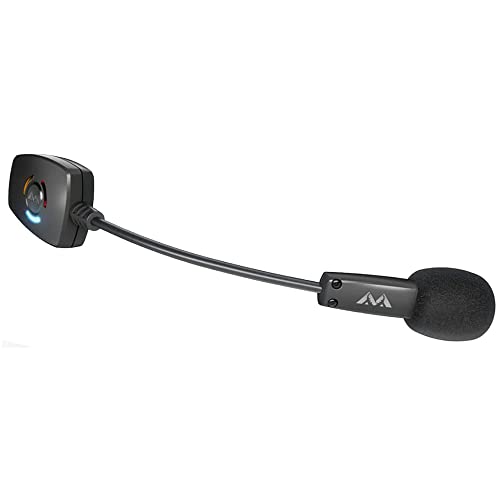 | Best for Gamers | Audio Quality: 16-bit 48 kHz sample rate, six times better than standard Bluetooth | Noise Cancellation: Dual mic modes with noise-canceling option | Wireless Range: Approximately 34ms transmit speed via USB-A dongle | CHECK ON AMAZON | Read Our Analysis |
| Wireless Mini Lavalier Microphone 2-Pack with Noise Reduction | 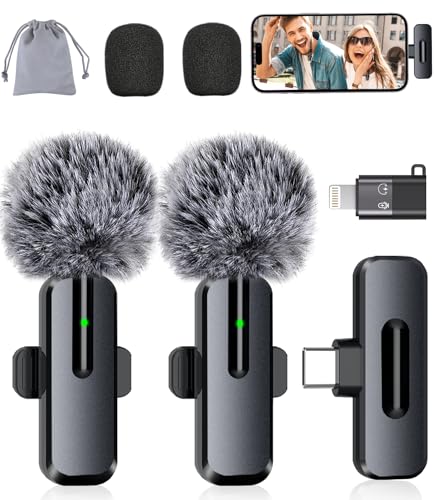 | Best Value Pack | Audio Quality: Studio-quality sound with broadcast-ready vocal clarity | Noise Cancellation: High-density sponge, deadcat covers, advanced DSP | Wireless Range: Direct plug-and-play (no Bluetooth range limitation) | CHECK ON AMAZON | Read Our Analysis |
| Hollyland Lark A1 Wireless Microphone for iPhone/Android |  | Best Long Battery | Audio Quality: 48kHz/24-bit studio-grade with 120dB SPL handling | Noise Cancellation: 3-level intelligent noise cancellation (weak/medium/strong) | Wireless Range: 200m (650ft) wireless range with anti-interference | CHECK ON AMAZON | Read Our Analysis |
| DJI Mic 3 Wireless Microphone (2 TX + 1 RX) |  | Best Multi-Channel | Audio Quality: Adaptive gain control with crystal-clear audio | Noise Cancellation: Three voice tones and two noise-cancelling levels | Wireless Range: Dual-band anti-interference for lossless transmission | CHECK ON AMAZON | Read Our Analysis |
| DJI Mic Mini Wireless Lavalier Microphone (1TX+1RX) |  | Best Compact Design | Audio Quality: 48 kHz sampling, 120 dB SPL distortion-free audio | Noise Cancellation: Two noise cancellation levels (basic/strong) | Wireless Range: 400m max transmission range | CHECK ON AMAZON | Read Our Analysis |
| PQRQP 3-in-1 Wireless Microphone for iPhone/Android/Camera |  | Budget-Friendly Pick | Audio Quality: Crystal-clear audio with noise-cancelling technology | Noise Cancellation: Windproof cotton cover with noise-cancelling technology | Wireless Range: 328 feet transmission distance (2.4G wireless) | CHECK ON AMAZON | Read Our Analysis |
More Details on Our Top Picks
Mini Mic Pro Wireless Lavalier Microphone for Devices
Want studio-quality audio without wrestling with complicated setups? The Mini Mic Pro delivers. This wireless lavalier mic works instantly with your iPhone, iPad, Android, or laptop—no apps, no Bluetooth hassles. Just plug in using the included USB-C or Lightning adapter and you’re recording.
You’ll get crystal-clear audio that cuts through background noise, making it ideal for outdoor VR content. The lightweight design clips easily to your shirt, and you can charge your device while recording thanks to the rechargeable battery’s 6-hour runtime. Wind protection keeps your audio pristine in any condition.
- Audio Quality:Studio-quality audio with crystal-clear recording
- Noise Cancellation:Wind protection with foam and dead cat cover
- Wireless Range:Direct plug-and-play (no Bluetooth range limitation)
- Battery Life:Up to 6 hours per charge
- Device Compatibility:iPhone, iPad, Android, laptop (USB-C and Lightning)
- Form Factor:Lavalier clip-on, under an ounce
- Additional Feature:Simultaneous device charging capability
- Additional Feature:Included wind protection accessories
- Additional Feature:Plug-and-play, no apps needed
Antlion Audio ModMic Wireless Attachable Boom Microphone
Are you tired of being tethered to your desk by a bulky microphone cable? The Antlion Audio ModMic Wireless attaches magnetically to your headphones, VR visor, or any flat surface, giving you complete freedom. With 16-bit 48 kHz audio quality—six times better than standard Bluetooth—you’ll capture pristine sound for streaming and content creation. You’ll toggle between unidirectional noise-canceling and high-fidelity recording modes depending on your needs. The ~34ms transmit speed keeps you lag-free during competitive gaming. Compatible with Windows, Mac, Linux, PS4, and PS5, this versatile mic works across Discord, Teams, and any communication platform, making it ideal for creators who demand professional audio without compromise.
- Audio Quality:16-bit 48 kHz sample rate, six times better than standard Bluetooth
- Noise Cancellation:Dual mic modes with noise-canceling option
- Wireless Range:Approximately 34ms transmit speed via USB-A dongle
- Battery Life:Battery-powered (specific duration not detailed)
- Device Compatibility:Windows, Mac OS, Linux, PS4, PS5, mobile devices
- Form Factor:Attachable boom microphone with magnetic clasp
- Additional Feature:Dual microphone mode switching
- Additional Feature:Magnetic clasp attachment system
- Additional Feature:16-bit 48kHz sample rate
Wireless Mini Lavalier Microphone 2-Pack with Noise Reduction
If you’re juggling multiple recording sessions across platforms—YouTube, TikTok, interviews, and vlogs—you’ll appreciate that this 2-pack gives you the flexibility to outfit yourself and a co-host or guest without breaking the bank. You’ll get studio-quality sound with high-sensitivity capture and broadcast-ready vocal clarity. The plug-and-play connection via USB-C and Lightning adapters means you’re recording instantly without apps or Bluetooth hassle. Wind and noise reduction technology handles busy streets and outdoor environments effectively. At just 0.2 oz each, these lavalier mics won’t weigh you down, and their 16-hour battery life keeps you covered through marathon recording days. The rotating 360° clip adapts to any clothing or gear setup you need.
- Audio Quality:Studio-quality sound with broadcast-ready vocal clarity
- Noise Cancellation:High-density sponge, deadcat covers, advanced DSP
- Wireless Range:Direct plug-and-play (no Bluetooth range limitation)
- Battery Life:Up to 16 hours of recording time
- Device Compatibility:iPhone, iPad, Android, laptop (USB-C and Lightning)
- Form Factor:2-pack lavalier clip-on, 0.2 oz each
- Additional Feature:16-hour battery life
- Additional Feature:Real-time headphone monitoring
- Additional Feature:360° rotating clip design
Hollyland Lark A1 Wireless Microphone for iPhone/Android
The Hollyland Lark A1 delivers studio-grade audio capture at 48kHz/24-bit resolution, making it your best bet for mobile content creation on iPhone 17/16/15 and Android devices. You’ll appreciate its 200m wireless range and anti-interference technology for dropout-free transmission across wide scenes. The system handles sudden 120dB SPL noises without distortion, capturing crisp highs and deep lows essential for cinematic content. With three-level intelligent noise cancellation and adaptive filters, you’re covered for outdoor filming and live streams. Customizable EQ presets and reverb modes let you sculpt your sound precisely. The impressive 54-hour battery life means you’ll shoot all day without charging anxiety, making this 2TX + USB-C RX setup ideal for vloggers, podcasters, and VR creators.
- Audio Quality:48kHz/24-bit studio-grade with 120dB SPL handling
- Noise Cancellation:3-level intelligent noise cancellation (weak/medium/strong)
- Wireless Range:200m (650ft) wireless range with anti-interference
- Battery Life:Up to 54 hours battery life
- Device Compatibility:iPhone 17/16/15, Android (USB-C RX)
- Form Factor:Magnetic mini lavalier transmitter design
- Additional Feature:200m wireless transmission range
- Additional Feature:Customizable EQ and reverb
- Additional Feature:54-hour battery endurance
DJI Mic 3 Wireless Microphone (2 TX + 1 RX)
Looking to capture pristine audio across multiple speakers simultaneously? The DJI Mic 3 delivers professional-grade wireless audio with dual transmitters and one receiver. You’ll appreciate its 32-bit float internal recording, which prevents clipping during unpredictable moments. The system supports up to four channels and syncs with seven additional receivers for expansive multi-voice capture—perfect for podcasts or group interviews. Its adaptive gain control automatically balances audio across varying environments, while dual-band anti-interference ensures lossless transmission. With three voice tones, two noise-cancelling levels, and 28-hour battery life, you’re equipped for extended VR content shoots anywhere.
- Audio Quality:Adaptive gain control with crystal-clear audio
- Noise Cancellation:Three voice tones and two noise-cancelling levels
- Wireless Range:Dual-band anti-interference for lossless transmission
- Battery Life:Up to 28 hours of filming
- Device Compatibility:iPhone, Camera, Android ecosystems
- Form Factor:2 TX + 1 RX kit, compact pocket-sized
- Additional Feature:Multi-voice capture capability
- Additional Feature:32-bit float internal recording
- Additional Feature:Dual-band anti-interference technology
DJI Mic Mini Wireless Lavalier Microphone (1TX+1RX)
Want a wireless mic that seamlessly integrates with your existing DJI gear? The DJI Mic Mini delivers professional audio in an ultralight package. Its transmitter weighs just 10 grams, making it virtually unnoticeable during VR content creation. You’ll capture crisp, distortion-free sound at 48 kHz sampling with 120 dB SPL capability. Dual noise cancellation levels—Basic and Strong—adapt to your environment, while automatic limiting prevents audio clipping. With 400-meter transmission range and 10-hour battery life, you’re equipped for extended shooting sessions. Direct DJI ecosystem compatibility eliminates extra gear, streamlining your setup and keeping your VR production workflow efficient.
- Audio Quality:48 kHz sampling, 120 dB SPL distortion-free audio
- Noise Cancellation:Two noise cancellation levels (basic/strong)
- Wireless Range:400m max transmission range
- Battery Life:Approximately 10 hours per transmitter/receiver
- Device Compatibility:iPhone, Camera, Android, DJI ecosystem devices
- Form Factor:1 TX + 1 RX, ultralight (~10g transmitter)
- Additional Feature:Direct DJI ecosystem connectivity
- Additional Feature:400m maximum transmission range
- Additional Feature:Automatic limiting prevents clipping
PQRQP 3-in-1 Wireless Microphone for iPhone/Android/Camera
Need a wireless mic that won’t weigh you down during marathon content creation sessions? The PQRQP 3-in-1 delivers crystal-clear audio with noise-cancelling technology and ultra-low-latency transmission up to 328 feet. You’ll get 18 hours of battery life across two mics, making it ideal for extended VR content shoots. Its universal receiver works seamlessly with iPhones, Android devices, cameras, and laptops—no cable switching needed. The included pop filter and windproof cotton cover ensure professional-quality sound, while reverb and mute functions give you creative control. At just 7.4 ounces, this lavalier mic won’t fatigue you during all-day recording sessions.
- Audio Quality:Crystal-clear audio with noise-cancelling technology
- Noise Cancellation:Windproof cotton cover with noise-cancelling technology
- Wireless Range:328 feet transmission distance (2.4G wireless)
- Battery Life:18 hours total battery life (9h per mic)
- Device Compatibility:iPhone, iPad, Android, laptop, PC, cameras (3-in-1 receiver)
- Form Factor:Lavalier clip-on design, 7.4 oz total
- Additional Feature:328-foot transmission distance
- Additional Feature:Universal 3-in-1 receiver design
- Additional Feature:Three adjustable audio settings
Factors to Consider When Choosing Microphones for VR Content
When you’re selecting a microphone for VR content, you’ll want to prioritize audio quality standards that capture crisp, clear sound without distortion. You’ll also need to evaluate wireless range requirements for your setup, noise cancellation capabilities to eliminate background interference, and comfort features since you’re wearing the mic during extended recording sessions. Finally, you’ll need to verify device compatibility so your microphone works seamlessly with your iPhone, Android, camera, or other VR equipment.
Audio Quality Standards
Because VR content demands immersive audio that matches its visual intensity, you’ll want to prioritize microphones that capture sound with precision and clarity. Look for devices offering at least 48 kHz sampling rate and 24-bit depth to ensure detailed, dynamic sound reproduction. You’ll need low latency—around 34 ms or less—to keep audio synchronized with real-time visuals and interactions. Choose microphones that handle wide dynamic ranges up to 120 dB SPL without distortion, preventing clipping during sudden on-screen effects. Unidirectional mics with noise reduction capabilities help isolate dialogue from complex VR environments. Real-time DSP features like wind reduction, reverb control, and EQ presets let you shape audio on-the-fly, adapting to your immersive scenes instantly.
Wireless Range Requirements
How far should your microphone transmit without dropping the signal? You’ll want to consider your specific VR environment’s demands. Most quality wireless mics offer ranges between 200 to 400 meters in open spaces, but obstacles like walls and equipment significantly reduce effective distance. Line-of-sight clearance remains your best ally for reliable transmission.
However, extended range comes with trade-offs. Longer distances can drain battery life faster and may introduce latency—problematic in immersive VR experiences. If you’re using multiple transmitters, channel interference becomes a concern that limits usable range per device.
Assess your actual recording space honestly. You probably don’t need maximum advertised range; instead, prioritize stable transmission within your typical setup to maintain consistent audio quality without performance compromises.
Noise Cancellation Capabilities
While wireless range ensures you can move freely through your VR space, what you capture during that movement matters just as much—and that’s where noise cancellation steps in. You’ll want a mic with multi-level noise reduction options—weak, medium, or strong—so you can adapt to different environments. Real-time DSP technology minimizes ambient street noise, wind, and room echo without compromising vocal clarity, keeping your immersion intact. Consider dual-mode mics that switch between unidirectional noise-canceling and higher-fidelity recording modes. Wind protection like dead cat covers and high-density sponge reduces outdoor interference. Don’t overlook transmission latency and sample rates (16-bit/48 kHz)—they ensure noise-reduced audio syncs perfectly with your VR visuals, preventing jarring audio-visual misalignment.
Comfort and Wearability
You’ll quickly discover that comfort makes or breaks extended VR recording sessions. Lightweight designs under an ounce keep fatigue at bay during marathon shoots, while clip-on lavalier mics and discreet magnetic transmitters minimize bulk and camera visibility in your content.
Adjustable mounting options—clips, throat attachments, and wind protection—maintain stable placement as your head moves and spatial tracking activates. This stability prevents shifting noise that ruins audio quality during rapid VR movements.
Battery life matters too. Models supporting 16–54 hours of continuous operation eliminate frequent recharging interruptions, letting you focus on creating rather than managing logistics. When your gear feels invisible and performs reliably for hours, you’ll capture better content and enjoy the creative process more.
Device Compatibility Needs
What connection types does your VR setup actually support? You’ll need to verify whether your headset uses USB-C, Lightning, or 3.5mm jacks to avoid adapters that introduce latency or degrade audio. Check if the microphone connects directly to your VR device or requires an external recorder, dongle, or PC intermediary—this matters significantly for seamless recording.
Consider your workflow across platforms. If you’re capturing VR content on Windows, macOS, Android, and iOS, confirm the microphone supports all your devices. For wireless options, prioritize sub-50 ms latency to maintain audio-visual synchronization in immersive environments. This ensures your dialogue and sound effects stay perfectly aligned with on-screen action, delivering the professional quality your audience expects.
Battery Life Endurance
Once you’ve locked down your device compatibility and connection setup, battery performance becomes your next priority—especially for extended VR shoots where swapping gear mid-session disrupts momentum. You’ll want explicit battery life figures per transmitter and receiver to accurately plan your recording sessions. Look for systems offering pass-through charging so your recording device stays powered throughout long shoots. If you’re capturing multi-person VR perspectives, check whether the pack includes multiple transmitters with individual battery specs—this directly impacts how long you can record before recharging. Power-saving features like auto-sleep and intelligent gain conservation extend endurance significantly. Finally, compare total runtime against recharge time to ensure practicality for field use and portability demands.
Attachment and Mounting Options
How your microphone physically connects to your VR setup directly affects recording quality and shooter mobility. Lavalier and clip-on mics attach hands-free to your clothing or gear, capturing stable audio during active VR movements. Attachable boom or modular mics mount directly to your headset or visor, offering versatile positioning and directional pickup for varied content needs.
Quick-attach mechanisms and magnetic clasps dramatically reduce setup time, letting you swap mics rapidly between recording sessions. Wireless systems with extended transmission ranges eliminate cable constraints that restrict your movement and headset freedom.
You’ll also want compatibility across multiple devices—phones, tablets, laptops, and adapters like USB-C or Lightning. This seamless integration ensures your microphone works effortlessly within your entire VR recording ecosystem.
Budget and Value
Finding the right microphone for VR content creation means balancing upfront investment against the features that’ll actually serve your workflow. You’ll want to evaluate whether each option’s cost aligns with essential capabilities like wireless range, battery longevity, and multi-channel support for your specific projects.
Low-latency transmission—ideally 34 ms or less—is critical for maintaining lip-sync accuracy in VR scenes, so prioritize systems that deliver this performance without requiring expensive additional gear. Check what adapters come included; USB-C, Lightning, or USB-A compatibility ensures seamless integration across your VR capture setup without surprise expenses.
Built-in noise reduction, wind protection, and DSP features provide substantial value by eliminating costly external accessories. Finally, consider future-proofing through multi-mic channel support and interoperability with other VR recording equipment, ensuring your investment remains relevant as your production demands evolve.
Frequently Asked Questions
What Is the Average Lifespan of Wireless Microphone Batteries for Extended VR Recording Sessions?
You’ll typically get 4-8 hours of battery life from wireless microphone batteries during extended VR recording sessions, depending on the model and usage intensity. You should always carry spares for uninterrupted content creation.
How Do Wireless Microphones Perform in High-Interference Environments With Multiple VR Devices?
You’ll encounter signal dropout and audio interference when operating wireless mics near multiple VR devices. They’re susceptible to 2.4GHz band congestion. You’ll need dual-band systems or frequency-hopping technology to maintain reliable performance in high-interference environments.
Are Wireless VR Microphones Compatible With Legacy VR Headsets and Older Systems?
You’ll find that most modern wireless VR microphones don’t work with legacy headsets because they use incompatible connection protocols. You’d need older wireless models or adapters to guarantee compatibility with your outdated VR systems.
What Warranty and Technical Support Options Do Microphone Manufacturers Typically Provide?
You’ll typically receive one to three-year warranties covering defects, plus email and phone support. Premium manufacturers offer extended plans, replacement guarantees, and dedicated technical teams. You should check individual policies before purchasing your microphone.
How Much Latency Do Wireless Microphones Introduce During Real-Time VR Streaming or Recording?
You’ll typically encounter 5-20 milliseconds of latency with modern wireless microphones during VR streaming. You’d notice that 2.4GHz models introduce less delay than older frequency bands. You’re looking at minimal impact on most real-time applications.

Leave a Reply