You’re looking to build your VR setup, but you’re drowning in options. Should you prioritize GPU power over CPU performance? What’s the sweet spot for RAM and storage? The five systems we’ve highlighted for 2026 answer these questions differently. Each brings distinct advantages that’ll reshape how you experience virtual worlds. Let’s examine which one suits your needs.
| CyberPowerPC Gamer Xtreme VR Gaming PC (GXiVR8040A17) |  | Best Overall | GPU: NVIDIA GeForce RTX 5060 Ti 16GB | RAM: 16GB DDR5 | Storage: 1TB PCIe 4.0 NVMe SSD | CHECK ON AMAZON | Read Our Analysis |
| CyberPowerPC Gamer Xtreme VR Gaming PC (GXiVR8060A40) |  | Best Value | GPU: NVIDIA GeForce RTX 5060 8GB | RAM: 16GB DDR5 | Storage: 1TB PCIe 4.0 NVMe SSD | CHECK ON AMAZON | Read Our Analysis |
| MSI Codex Z2 Gaming Desktop (A8NVL-446US) | 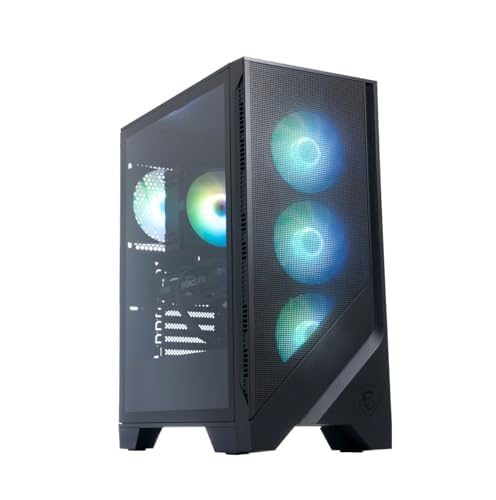 | Best Performance | GPU: NVIDIA GeForce RTX 5060 | RAM: 32GB DDR5 | Storage: 1TB m.2 NVMe SSD | CHECK ON AMAZON | Read Our Analysis |
| MSI Codex Z2 Gaming Desktop AMD R7 RTX 5070 |  | Best Graphics | GPU: NVIDIA GeForce RTX 5070 | RAM: 32GB DDR5 | Storage: 2TB m.2 NVMe SSD | CHECK ON AMAZON | Read Our Analysis |
| ViprTech Rebel 4.0 Gaming PC (RTX 4060 32GB RAM) |  | Best for Creators | GPU: NVIDIA GeForce RTX 4060 8GB | RAM: 32GB DDR4 3200MHz | Storage: 1TB NVMe SSD | CHECK ON AMAZON | Read Our Analysis |
More Details on Our Top Picks
CyberPowerPC Gamer Xtreme VR Gaming PC (GXiVR8040A17)
Looking for a VR-ready powerhouse that won’t drain your wallet? The CyberPowerPC Gamer Xtreme VR Gaming PC delivers exceptional performance at a competitive price point. You’ll get an Intel Core i7-14700F with 20 cores paired with an NVIDIA RTX 5060 Ti 16GB—a combination that handles demanding VR titles effortlessly. The 16GB DDR5 RAM and 1TB PCIe 4.0 SSD ensure smooth gameplay and quick load times. You’re covered with WiFi 6, Bluetooth 5.3, and multiple USB ports for seamless connectivity. The tempered glass case with custom RGB lighting looks stunning on any desk. Plus, you receive a keyboard, mouse, and lifetime tech support included.
- GPU:NVIDIA GeForce RTX 5060 Ti 16GB
- RAM:16GB DDR5
- Storage:1TB PCIe 4.0 NVMe SSD
- Operating System:Windows 11 Home
- RGB Lighting:Custom RGB lighting
- Warranty & Support:1-year parts & labor + free lifetime tech support
- Additional Feature:Intel Core i7-14700F processor
- Additional Feature:2x USB-C 3.2 connectivity
- Additional Feature:Keyboard and mouse included
CyberPowerPC Gamer Xtreme VR Gaming PC (GXiVR8060A40)
Want a VR-ready system that won’t drain your wallet? The CyberPowerPC Gamer Xtreme VR Gaming PC delivers solid performance with its Intel Core i5-13400F processor and GeForce RTX 5060 8GB GPU. You’ll get smooth VR experiences paired with 16GB DDR5 RAM and a speedy 1TB PCIe 4.0 SSD. The B760 chipset ensures stability, while WiFi 6 and Bluetooth 5.3 keep you connected. Multiple USB ports accommodate your peripherals easily. With Windows 11 Home, included keyboard and mouse, plus lifetime tech support, you’re getting excellent value. It’s a practical choice for VR enthusiasts seeking dependable performance without premium pricing.
- GPU:NVIDIA GeForce RTX 5060 8GB
- RAM:16GB DDR5
- Storage:1TB PCIe 4.0 NVMe SSD
- Operating System:Windows 11 Home
- RGB Lighting:Custom RGB lighting
- Warranty & Support:1-year parts & labor + free lifetime tech support
- Additional Feature:Intel Core i5-13400F processor
- Additional Feature:7.1 Channel audio system
- Additional Feature:WiFi Ready capability
MSI Codex Z2 Gaming Desktop (A8NVL-446US)
If you’re after a VR-ready system that won’t break the bank, the MSI Codex Z2 delivers solid performance without sacrificing build quality. The AMD Ryzen R7-8700F processor pairs seamlessly with an RTX 5060 GPU, handling VR applications and modern games effortlessly. You’ll appreciate the 32GB DDR5 memory and 1TB NVMe SSD for fast load times. The cooling system—featuring an ARGB air cooler and four strategically placed fans—maintains optimal temperatures during extended sessions. Built-in RGB lighting is customizable through MSI Center software, letting you personalize your setup. Windows 11 Home comes preinstalled, though MSI recommends Pro for business users. This desktop strikes an excellent balance between affordability and performance for VR enthusiasts.
- GPU:NVIDIA GeForce RTX 5060
- RAM:32GB DDR5
- Storage:1TB m.2 NVMe SSD
- Operating System:Windows 11 Home
- RGB Lighting:Built-in RGB lighting with MSI LED button
- Warranty & Support:Not specified
- Additional Feature:AMD Ryzen R7-8700F processor
- Additional Feature:Four system cooling fans
- Additional Feature:MSI LED button customization
MSI Codex Z2 Gaming Desktop AMD R7 RTX 5070
The MSI Codex Z2 Gaming Desktop AMD R7 RTX 5070 delivers serious VR performance without the premium price tag—perfect for gamers who won’t compromise on processing power or thermal reliability. You’ll appreciate the Ryzen R7-8700F paired with RTX 5070 graphics handling demanding VR titles effortlessly. The 32GB DDR5 RAM and 2TB NVMe SSD ensure smooth gameplay and quick loading times. Four cooling fans plus an ARGB air cooler keep temperatures in check during extended sessions. RGB lighting customization through the MSI LED button and Center software adds personalization. With Windows 11 Home and USB Type-C connectivity, you’re getting a capable, upgradeable machine ready for immersive gaming today.
- GPU:NVIDIA GeForce RTX 5070
- RAM:32GB DDR5
- Storage:2TB m.2 NVMe SSD
- Operating System:Windows 11 Home
- RGB Lighting:Built-in RGB lighting with MSI LED button
- Warranty & Support:Not specified
- Additional Feature:AMD Ryzen R7-8700F processor
- Additional Feature:2TB m.2 NVMe SSD
- Additional Feature:USB Type-C connectivity
ViprTech Rebel 4.0 Gaming PC (RTX 4060 32GB RAM)
ViprTech’s Rebel 4.0 stands out as an excellent choice for gamers who won’t compromise on both performance and value. You’re getting an AMD Ryzen 7 processor paired with an RTX 4060, 32GB DDR4 RAM, and a blazing-fast 1TB NVMe SSD that boots up to 30x faster than traditional drives. The genuine Windows 11 Pro system handles high-FPS gaming, streaming, video editing, and VR seamlessly. You’ll appreciate the hand-built construction in the USA, extensive stress-testing, and RGB-lit black case. With WiFi and Bluetooth connectivity, this VR-ready powerhouse delivers reliable performance backed by a free one-year warranty.
- GPU:NVIDIA GeForce RTX 4060 8GB
- RAM:32GB DDR4 3200MHz
- Storage:1TB NVMe SSD
- Operating System:Windows 11 Pro
- RGB Lighting:Built-in RGB lighting (controllable via case button)
- Warranty & Support:1-year warranty
- Additional Feature:AMD Ryzen 7 4.1GHz Turbo
- Additional Feature:Hand-built in USA
- Additional Feature:Optimized streaming performance
Factors to Consider When Choosing a VR-Ready Gaming PC
When you’re shopping for a VR-ready gaming PC, you’ll need to prioritize GPU performance and processor power to handle demanding virtual environments smoothly. You should also evaluate your RAM capacity, storage speed, and cooling systems since VR applications generate significant heat and require rapid data access. Finally, you’ll want to verify that your chosen system supports the display outputs your VR headset demands, whether that’s HDMI, DisplayPort, or proprietary connections.
GPU Performance Requirements
How essential is your graphics card to VR gaming success? It’s everything. You’ll need a mid-to-high range GPU like the RTX 5060 class paired with 8–16 GB of VRAM to handle VR headsets’ dual 2160p-like rendering demands. The difference between an 8GB and 16GB variant dramatically affects frame rates and stability in demanding titles. Higher memory bandwidth and modern GPUs (RTX 4060–5070 or RX 7000-class) deliver smoother experiences at elevated resolutions and detail levels. Your GPU’s clock speed and core counts directly impact VR readiness—more cores and higher boost clocks mean better performance. Don’t overlook cooling and power supply; sustaining high VR frame rates requires adequate thermal management to prevent throttling.
Processor Power Needs
Your processor is just as critical as your GPU for VR success. You’ll want at least 6–12 CPU cores with strong single-core boost performance to maintain smooth framerates in demanding VR titles. Modern games leverage multi-core architectures, making 12th–13th generation Intel or Ryzen 7000 series processors ideal for handling intensive workloads without stuttering.
Clock speed directly impacts latency-sensitive VR experiences. Higher base and boost clocks reduce frame times and minimize motion sickness risk by delivering responsive gameplay. You’ll also benefit from robust multi-threading when streaming or running background tasks alongside VR applications.
Pairing a capable CPU with a balanced GPU eliminates bottlenecks, ensuring consistent performance across various resolutions and room-scale experiences throughout your VR sessions.
RAM and Storage Capacity
Why does RAM matter so much for VR performance? You’ll want at least 16GB as your baseline, though 32GB gives you breathing room for multitasking and demanding titles. DDR5 RAM outperforms DDR4 with faster speeds and higher bandwidth, delivering smoother gameplay and quicker texture streaming—crucial for VR immersion.
For storage, a 1TB NVMe SSD is standard, letting you build a substantial VR library while maintaining fast load times. You’ll appreciate the speed difference when launching applications and loading environments.
Dual-channel RAM configurations maximize bandwidth, improving frame times and responsiveness—both essential for comfortable VR experiences. The good news? You’re not locked into your initial specs. Upgrading RAM and storage later extends your system’s usefulness as new games and VR applications emerge.
Thermal Management Systems
Thermal management isn’t an afterthought in VR-ready gaming PCs—it’s fundamental to sustained performance. You’ll want systems featuring four-fan cooling setups with three front intake fans and one rear exhaust fan that work together to maintain optimal component temperatures during extended VR sessions.
Look for ARGB air coolers paired with multiple fans, which enhance thermal dissipation while offering visual customization. Case design matters too—tempered side panels combined with strategically positioned front intake and rear exhaust airflow optimize cooling efficiency.
MSI Codex Z2 models exemplify this approach, featuring dedicated cooling layouts with ARGB fans and software-controlled airflow management. This combination ensures your system stays cool under intensive loads, preventing thermal throttling and maintaining the consistent performance VR demands.
Display Output Compatibility
While keeping your system cool prevents performance drops, ensuring you’ve got the right display connections prevents VR headset compatibility issues altogether. Most VR-ready gaming PCs feature multiple video outputs—typically one HDMI and two DisplayPort connections—giving you flexibility for your headset and high-refresh-rate monitors. You’ll want to verify your VR headset’s required input matches these ports or invest in an appropriate adapter. Some models include USB-C 3.2 ports that support certain VR peripherals, so check your system’s compatibility. While WiFi 6 and Bluetooth 5.3 enhance wireless peripherals, they won’t improve display output compatibility. Prioritize wired connections for your headset to maintain optimal latency and performance.
Connectivity Options Available
How well you can connect your peripherals and devices directly impacts your VR gaming experience. You’ll want USB-C 3.2 ports for fast headset data transfer and charging, alongside multiple USB-A options (both 2.0 and 3.2) for controllers, trackers, and accessories. Ethernet connectivity paired with WiFi 6 ensures stable, low-latency connections essential for seamless VR performance. Video outputs matter too—models offering 1x HDMI and 2x DisplayPort give you flexibility for multi-monitor setups and VR displays. Bluetooth 5.3 enables wireless peripherals without cluttering your desk. Check port distribution carefully; adequate spacing prevents cable conflicts during intense gaming sessions. These connectivity features collectively reduce lag, improve responsiveness, and enhance your overall VR immersion.
Budget and Value Proposition
Once you’ve confirmed your PC has the right connectivity for your VR setup, you’ll need to balance performance capabilities with your spending limits. Higher budgets unlock more powerful GPUs like RTX 5060/5070 and faster CPUs, delivering smoother VR experiences but at increased cost. You’ll find 16GB of RAM sufficient for entry-level VR gaming, though 32GB future-proofs your system for demanding titles and multitasking.
Storage matters too—a 1TB NVMe SSD significantly reduces load times and accommodates larger VR libraries. Premium cooling systems maintain consistent performance without throttling, maximizing your investment’s longevity. Don’t overlook bundled peripherals and included software licenses, as these reduce your total cost of ownership. Evaluate what features align with your budget to ensure genuine value for your VR gaming needs.
Warranty and Support Coverage
What’s often overlooked when budgeting for a VR-ready gaming PC is the protection plan that backs your investment. Most listed systems offer a standard 1-year parts and labor warranty with lifetime free tech support, ensuring you’re covered if hardware fails during critical VR sessions.
You’ll want to verify whether your warranty includes peripherals like keyboards and mice, as this affects overall value. Importantly, check what’s excluded—software issues and accidental damage typically aren’t covered, which matters for VR-ready configurations subjected to intense heat stress.
Consider whether expanded coverage options justify the extra cost for your setup. Since robust cooling and build quality directly impact component longevity during demanding VR use, understanding your warranty’s heat-related coverage becomes essential before purchasing.
Frequently Asked Questions
What Is the Minimum Internet Speed Required for Optimal VR Gaming Performance?
You’ll want at least 100 Mbps download speeds for ideal VR gaming. However, you should aim for 150-300 Mbps if you’re streaming or playing competitive online titles. You’ll experience smoother gameplay with higher bandwidth available.
How Often Should I Upgrade My Vr-Ready PC to Maintain Compatibility With New Games?
You should upgrade your VR-ready PC every 3-5 years to maintain compatibility with new games. However, you can extend this timeline by upgrading individual components like your graphics card or RAM when you notice performance drops.
Can I Use a Vr-Ready Gaming PC for Non-Gaming Applications Like Video Editing?
You can absolutely use a VR-ready gaming PC for video editing. You’ll benefit from its powerful GPU, high RAM, and fast processor—all essential for smooth rendering, real-time previews, and handling complex editing tasks efficiently.
What Cooling Solutions Are Best for Preventing Thermal Throttling During Extended VR Sessions?
You’ll want liquid cooling systems or high-end air coolers with multiple fans. They’re essential for maintaining optimal temperatures during extended VR sessions. You shouldn’t ignore proper case airflow and thermal paste application either.
Are Vr-Ready PCS Backward Compatible With Older Generation Virtual Reality Headsets?
You’ll find that most modern VR-ready PCs support older headsets through their established connection standards and driver compatibility. However, you should verify your specific headset’s requirements, as some legacy models may need additional adapters or software updates for full functionality.