
You’ll discover that virtual reality therapy is transforming pediatric healthcare by creating immersive digital environments that dramatically reduce pain and anxiety during medical procedures. Your child can experience distress levels dropping from severe 10-out-of-10 ratings to virtually zero while undergoing treatments like blood draws or wound care. VR technology also enhances rehabilitation outcomes, supports children with autism spectrum disorder, and improves mental health treatment for adolescents through specialized exposure therapy programs that boost engagement and compliance beyond traditional methods.
Understanding VR Therapy Technology for Pediatric Care
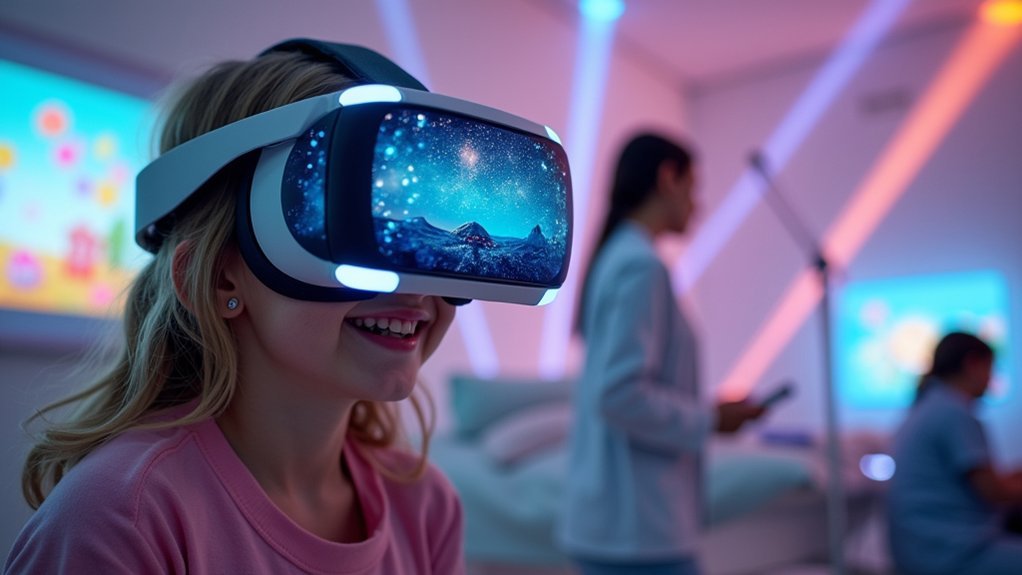
Although traditional medical procedures can overwhelm young patients with fear and discomfort, virtual reality therapy transforms their experience by immersing them in interactive digital environments that effectively distract from pain and anxiety.
When you implement VR therapy in pediatric settings, you’re utilizing cutting-edge technology that creates customized immersive experiences specifically designed for children’s developmental needs.
Healthcare providers can now offer pediatric patients specialized VR headsets that transport them into engaging virtual worlds during medical procedures.
You’ll find that this technology doesn’t just entertain—it actively reduces pain perception by redirecting attention away from discomfort.
The immersive experiences you provide through VR therapy enable significant pain reduction, with some children reporting dramatic decreases in anxiety levels from severe distress to complete comfort during treatments.
Pain and Anxiety Reduction Through Immersive Virtual Environments
The immersive nature of VR environments creates powerful psychological shifts that markedly alter how young patients experience pain and anxiety during medical procedures. When you implement VR therapy, you’ll witness remarkable anxiety reductions – studies show children’s distress levels dropping from severe 10-out-of-10 ratings to virtually zero.
VR therapy transforms pediatric medical experiences, reducing children’s anxiety from severe 10-out-of-10 distress ratings to virtually zero through immersive psychological shifts.
These immersive environments transport patients away from clinical settings, effectively managing pain and anxiety across blood draws, dental treatments, and wound care procedures.
You’ll find that patient engagement increases considerably when children use applications like Relaxation-VR, which targets ages 4-16 with measurable improvements in happiness scores.
Healthcare professionals report higher satisfaction rates and improved procedural efficiency. The enhanced clinical experience extends beyond emotional benefits – you’ll observe shorter venipuncture times and streamlined workflows, demonstrating VR’s extensive impact on pediatric care delivery.
VR Applications for Medical Procedures and Hospital Settings
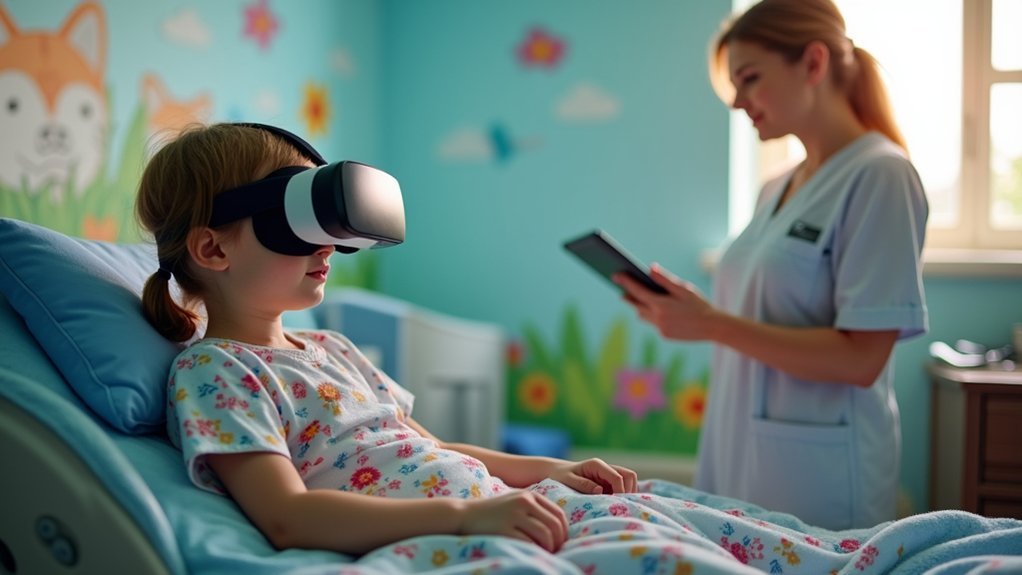
When healthcare teams integrate VR technology into their medical procedures, they’re transforming traditional treatment environments into engaging, calming spaces that dramatically improve patient outcomes.
You’ll find that pediatric patients using virtual reality (VR) as a distraction tool experience remarkable anxiety reduction, with scores dropping from 10-out-of-10 to as low as 0-out-of-10 during blood draws and wound care.
The CHARIOT program at Lucile Packard Children’s Hospital Stanford demonstrates how immersive virtual environments create enhanced patient experiences across all units.
You’re seeing child life specialists trained to implement this technology effectively, resulting in increased cooperation and reduced fear among young patients.
These VR applications for medical procedures don’t just improve comfort—they’re enhancing clinical efficiency by reducing venipuncture times and creating more positive hospital experiences overall.
Enhancing Mental Health Treatment for Adolescents With VR
Beyond physical comfort during medical procedures, VR therapy opens new pathways for addressing the complex mental health challenges that adolescents face today. Virtual reality (VR) environments provide immersive settings where you can engage more effectively in exposure therapy for PTSD and anxiety disorders. Since adolescents naturally embrace VR technology, they’re more receptive to these therapeutic interventions than traditional approaches.
During therapy sessions, VR creates meaningful connections that facilitate difficult conversations about trauma and emotions. School-based implementations show promising results for stress reduction and emotional regulation among students with complex needs.
| VR Mental Health Applications | Adolescent Benefits |
|---|---|
| Exposure therapy environments | Reduced anxiety responses |
| Trauma processing simulations | Enhanced therapeutic engagement |
| Stress management scenarios | Improved emotional regulation |
| Social interaction practice | Increased treatment receptivity |
Supporting Children With Autism Spectrum Disorder Through Virtual Reality
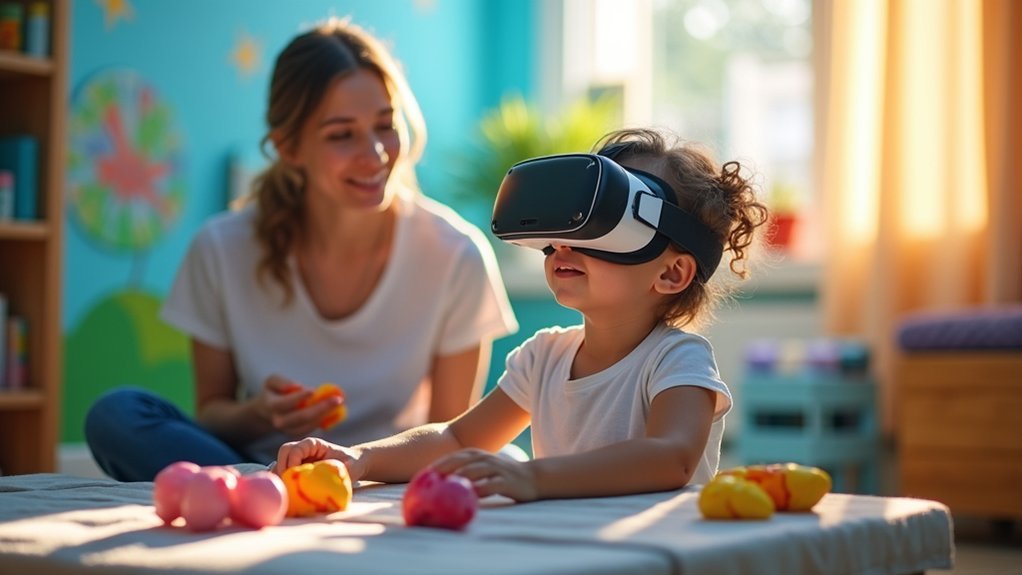
You’ll discover that VR therapy offers three transformative approaches for children with autism spectrum disorder that can greatly enhance their developmental progress.
Through specialized social skills training programs, sensory processing support systems, and innovative communication development tools, you’re able to provide targeted interventions that address core challenges these children face.
These VR-based therapeutic methods create safe, controlled environments where children can practice essential life skills while building confidence and reducing anxiety associated with real-world social interactions.
Social Skills Training
As virtual reality technology advances, it’s revolutionizing how therapists help children with Autism Spectrum Disorder develop essential social skills. Through immersive environments, you’ll find children practicing real-life scenarios like initiating conversations and responding to social cues without real-world pressure.
These virtual safe spaces allow kids to build confidence while reducing anxiety about peer interactions.
Social skills training through VR shows remarkable results. Children demonstrate significant improvements in emotion recognition and appropriate social responses. The controlled environment lets them rehearse challenging situations repeatedly until they’re comfortable.
Gamification elements make learning enjoyable and engaging. You’ll see increased participation as children actively work through social scenarios. This approach transforms traditional therapy into interactive experiences that motivate continued learning while fostering meaningful friendships and stronger social communication skills.
Sensory Processing Support
When children with Autism Spectrum Disorder struggle with sensory overload, virtual reality provides a groundbreaking solution that’s transforming therapeutic approaches.
You’ll find that VR creates controlled immersive environments where children with ASD can gradually process sensory information without overwhelming stimulation. These therapeutic purposes allow you to customize experiences based on each child’s specific sensory needs and tolerance levels.
Through virtual reality, you’re enabling these young patients to practice sensory processing skills in safe, predictable settings.
The controlled nature of VR environments helps reduce anxiety while building confidence for real-world social interaction. You’ll notice improved communication outcomes as children become more comfortable processing sensory input.
This innovative approach bridges the gap between therapy and practical application, giving children essential tools for managing sensory challenges in everyday situations.
Communication Development Tools
Building on this foundation of sensory comfort, virtual reality opens new pathways for developing communication skills in children with ASD. VR creates immersive environments where you’ll find your child practicing social interactions without real-world anxiety. These customized programs simulate everyday scenarios, allowing safe exploration of social cues and responses.
Research shows significant improvements in cognitive abilities through VR therapy:
- Increased confidence in face-to-face conversations
- Reduced behavioral challenges during social encounters
- Enhanced understanding of nonverbal communication cues
- Improved engagement through gamified learning experiences
- Higher therapy adherence rates compared to traditional methods
You’ll notice your child’s newfound willingness to participate in social situations. The controlled virtual settings build essential communication foundations that translate into real-world success, transforming how children with ASD navigate their social environment.
Physical Rehabilitation and Motor Skills Development Using VR
Physical rehabilitation for young patients has transformed dramatically with virtual reality technology creating immersive environments that turn therapeutic exercises into engaging adventures.
You’ll find that VR therapy delivers measurable improvements in motor skills, particularly for adolescents with Cerebral Palsy who experience enhanced balance and coordination. These immersive environments utilize gamification elements that boost your child’s participation and compliance during therapy sessions.
Research shows you can expect significant cognitive growth alongside physical improvements when your young patient engages with VR rehabilitation scenarios.
Children report higher satisfaction levels compared to traditional methods, making physical rehabilitation more enjoyable. The technology’s ability to foster both motor coordination and strength development creates extensive therapeutic outcomes that support your child’s overall recovery process effectively.
Evidence-Based Research on Pediatric VR Therapy Outcomes
While anecdotal success stories capture attention, rigorous scientific evidence provides the foundation you need to trust VR therapy for your child’s treatment.
Clinical trials consistently demonstrate that virtual reality therapy transforms outcomes for pediatric patients across multiple conditions.
Research reveals VR applications deliver measurable improvements in health interventions:
- Pain and anxiety levels drop dramatically, with some children experiencing complete anxiety elimination during medical procedures
- Cognitive abilities and social communication skills markedly improve in children with Autism Spectrum Disorder
- Motor function and balance enhance considerably in adolescents with Cerebral Palsy
- Medical procedure times decrease while healthcare professional satisfaction increases
- Happiness levels rise during treatments, creating positive healthcare experiences
These randomized controlled trials provide concrete evidence that VR therapy isn’t just promising—it’s proven effective for young patients.
School-Based VR Interventions for Adolescent Well-being
Beyond treating medical conditions, VR therapy has expanded into educational environments where your teenager spends most of their day.
School-based VR interventions now target adolescent well-being through mindfulness and emotion regulation techniques designed for stress reduction. These programs create an immersive environment where students can practice structured or self-selected coping strategies.
Recent field testing with 14 participants shows teenagers tolerate and enjoy these virtual reality experiences. Those with complex emotional and attention challenges demonstrate particularly notable benefits, suggesting broader applications for school mental health programs.
The co-designed approach gives students personal agency while maintaining therapeutic structure.
You’ll find these VR interventions especially effective because they boost engagement through interactive technology.
Ongoing pilot testing continues evaluating long-term effects, with adolescent feedback driving program improvements.
Overcoming Implementation Challenges in Pediatric VR Programs
You’ll face significant technical integration barriers when implementing pediatric VR programs, from ensuring hardware compatibility with existing hospital systems to managing software updates across multiple devices.
Your staff won’t be ready to effectively use VR therapy without thorough training that covers both technical operation and age-appropriate therapeutic techniques.
You can’t simply introduce VR equipment and expect immediate success – proper integration requires careful planning and substantial investment in both technology infrastructure and human resources.
Technical Integration Barriers
Although VR therapy shows tremendous promise for pediatric patients, healthcare facilities face substantial technical barriers that can derail implementation efforts. Your facility’s success depends on addressing these critical obstacles:
- High hardware costs – Premium VR systems strain already tight healthcare budgets, leaving children without access to life-changing therapy.
- Space constraints – Limited physical areas force difficult choices between essential equipment and innovative VR setups.
- Staff training gaps – Without trained personnel, expensive technology sits unused while young patients suffer.
- Complex interfaces – Intimidating controls discourage both providers and children from embracing the technology.
- Integration complexity – Technical incompatibilities create frustrating delays in patient care.
However, technology allows facilities to overcome these hurdles through user-friendly designs, thorough training programs, and financial assistance partnerships that make implementation achievable.
Staff Training Requirements
While technical barriers can seem intimidating, your facility’s greatest challenge lies in making certain your staff can confidently operate VR technology with pediatric patients. Successful implementation requires thorough staff training that covers both technical proficiency and patient care protocols.
The CHARIOT program exemplifies this approach, training 29 child life specialists in immersive virtual reality applications. Your training curriculum should address hardware operation, software navigation, and customization techniques for individual patient needs.
| Training Component | Duration | Focus Area |
|---|---|---|
| VR Hardware Basics | 2 hours | Equipment setup/safety |
| Software Navigation | 3 hours | Program selection/customization |
| Patient Integration | 4 hours | Therapeutic applications |
| Assessment Methods | 1 hour | Measuring effectiveness |
Ongoing training makes certain staff stay current with advancing VR capabilities. Regular feedback collection from your team helps refine techniques and maintains treatment effectiveness.
Future Advancements and Expanding Applications in Youth VR Therapy
As technology continues to evolve at breakneck speed, virtual reality therapy for young patients stands poised for revolutionary breakthroughs that’ll transform pediatric healthcare.
You’ll witness unprecedented accessibility as costs plummet, making therapeutic VR systems available in every clinic. Specialized games targeting therapeutic needs will boost engagement and motivation beyond current capabilities.
Future developments you can expect include:
Breakthrough innovations in virtual reality therapy will revolutionize how we treat and heal young patients across all medical specialties.
- Pain-free procedures – Advanced VR serving as the ultimate distraction tool during medical interventions
- Enhanced autism support – Breakthrough applications for Autism Spectrum Disorder improving social communication
- Immersive training – Medical students achieving superior learning outcomes through realistic patient scenarios
- Personalized therapy – AI-driven VR adapting to individual pediatric therapy requirements
- Cognitive breakthroughs – Revolutionary treatments unveiling new potentials in young minds
These advancements promise transformative healing experiences.
Frequently Asked Questions
What Is the Success Rate of Virtual Reality Exposure Therapy?
You’ll find virtual reality exposure therapy achieves impressive success rates, with research showing up to 60% reduction in fear responses for phobias and 30% decrease in PTSD symptoms for veterans.
What Is the Future of Virtual Reality Therapy?
You’ll see VR therapy become more affordable and AI-powered for personalized treatments. You’ll experience new therapeutic games, expanded AR integration in hospitals, and enhanced educational training for occupational therapists through immersive technology.
Does Insurance Cover VR Therapy?
You’ll find insurance coverage for VR therapy varies considerably by provider. Some plans now cover it for PTSD, chronic pain, and anxiety, but you’ll likely need documentation proving medical necessity from your healthcare provider.
Which Disorder Below Would Benefit From Virtual Reality Exposure Therapy?
You’d find VRET most beneficial for phobias, autism spectrum disorder, PTSD, and chronic pain management. It’s particularly effective for anxiety-related conditions where you need safe, controlled exposure to feared situations or enhanced social skills development.