Virtual reality transforms your elderly care experience by creating immersive therapeutic environments that boost cognitive function and emotional well-being. You’ll find VR headsets transport seniors to familiar, comforting spaces while engaging them in memory games and physical rehabilitation exercises. It’s proven effective for dementia care, with 80% of seniors reporting improved mood and reduced anxiety. VR also combats social isolation through meaningful virtual connections. As healthcare facilities embrace this technology, you’ll discover how it’s reshaping treatment approaches across multiple care dimensions.
Understanding Virtual Reality Technology in Healthcare Settings
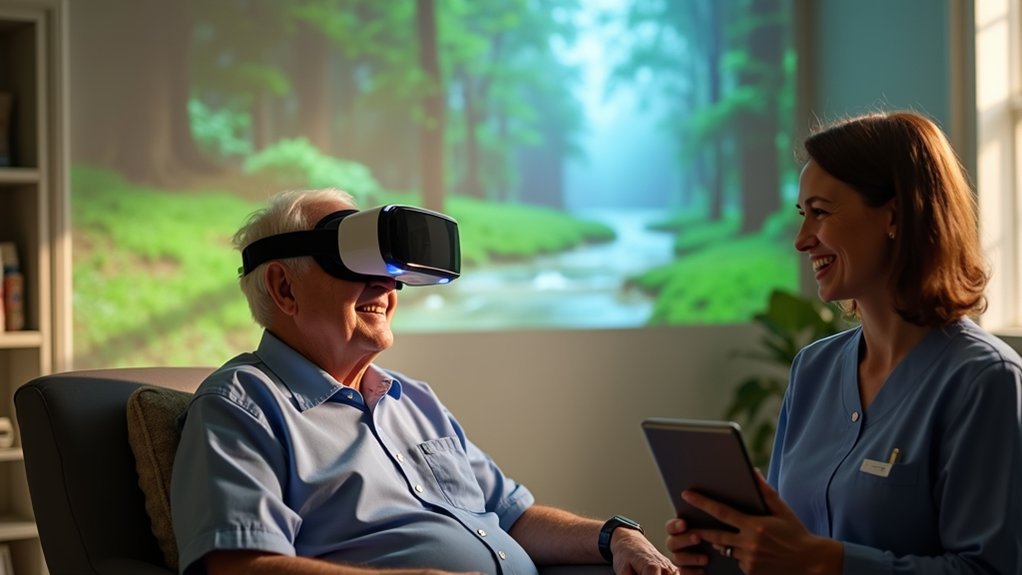
As technology continues to reshape healthcare delivery, virtual reality has emerged as a groundbreaking tool that’s transforming how we approach elderly care.
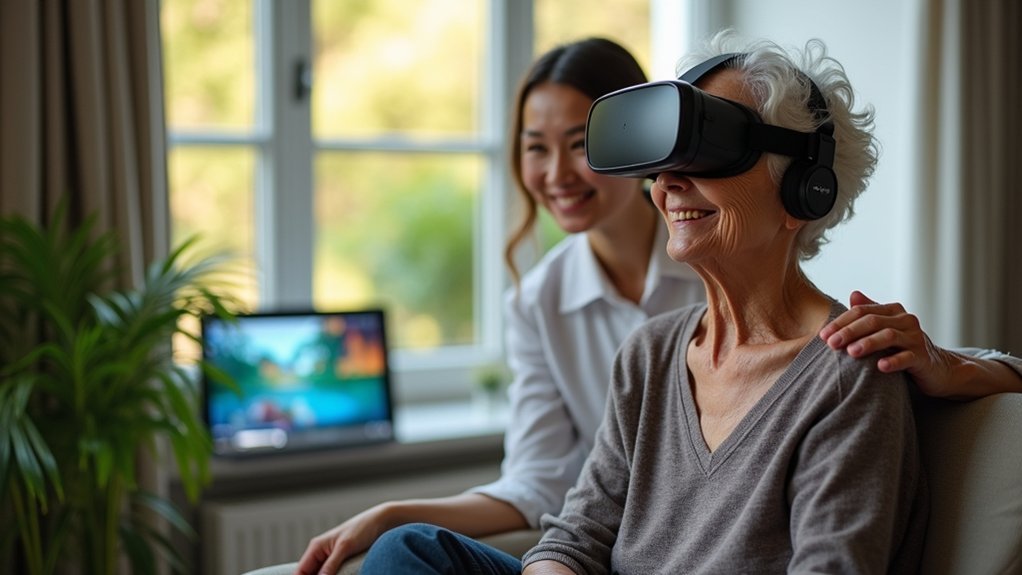
VR technology creates immersive environments where seniors engage in therapeutic activities designed to boost cognitive function and emotional well-being. In healthcare settings, you’ll find specialized headsets transporting patients to familiar, comforting spaces that trigger memory recall and emotional connections.
VR headsets transport elderly patients to familiar, comforting spaces that trigger powerful memory recall and meaningful emotional connections.
This innovative approach establishes controlled environments perfect for rehabilitation programs. You can implement personalized therapy that tracks measurable progress while providing non-pharmacologic intervention for pain management and isolation.
The technology doesn’t just entertain—it actively enhances mood, motivation, and cognitive abilities. When you integrate VR into elderly care, you’re offering patients engaging experiences that distract from discomfort while promoting meaningful therapeutic outcomes.
Physical and Cognitive Rehabilitation Through Immersive Experiences
When seniors step into virtual reality rehabilitation programs, they discover that recovery becomes an engaging journey rather than a tedious routine.
VR transforms physical rehabilitation by creating immersive experiences that motivate you to participate actively in exercises, considerably boosting mobility, strength, and balance outcomes.
Cognitive rehabilitation through VR offers targeted interventions that enhance your mental capabilities:
- Memory games strengthen recall abilities and attention skills, particularly beneficial for dementia care
- Navigation tasks promote multisensory processing while improving cognitive function
- Personalized nostalgic environments foster emotional well-being and deeper engagement
You’ll find that VR effectively reduces pain perception during therapy sessions, keeping you distracted from discomfort.
This enhanced therapy engagement leads to better motor skills development and overall rehabilitation success, making your recovery experience both effective and enjoyable.
Addressing Social Isolation and Mental Health Challenges
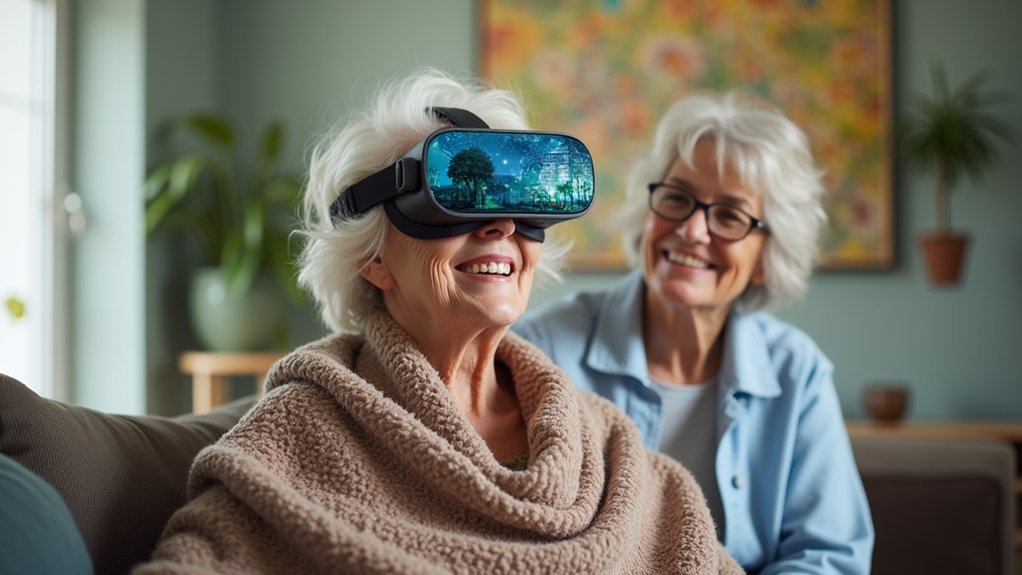
Beyond the physical benefits of VR rehabilitation, this technology offers powerful solutions for the emotional challenges that many seniors face daily. When you’re dealing with social isolation, Virtual Reality creates meaningful connections through engaging VR applications like Alcove and Zen Zone.
You’ll find that 80% of seniors report improved emotional well-being after VR experiences.
VR therapy effectively addresses mental health concerns by allowing you to revisit meaningful places from your past. This nostalgia-driven approach helps improve mood while reducing symptoms that impact your daily life.
Through virtual journeys to cherished locations from your past, VR therapy harnesses the healing power of nostalgia to elevate mood and wellness.
You can reduce anxiety and depression through immersive experiences that transport you beyond care facility walls.
Reality becomes more vibrant when you share VR experiences with others, fostering relationships that combat loneliness and enhance your overall mental health journey.
Specialized VR Applications for Dementia and Memory Care
While traditional therapies rely on conversation and cognitive exercises, specialized VR applications like MyndVR and Rendever create immersive memory bridges that reach deep into your past.
These innovative tools transform dementia care by allowing you to revisit significant places from your life, triggering powerful emotional responses that help recall memories previously thought lost.
The specialized VR applications deliver three key benefits for memory care:
- Anxiety reduction – Immersive experiences provide calming effects that increase relaxation during therapy sessions.
- Enhanced caregiver interactions – Your improved emotional well-being creates better communication opportunities with care providers.
- Cognitive improvements – Early studies show VR reveals neural pathways affected by dementia, leading to better cognitive function and improved mood after sessions.
This technology reconnects you with your identity through familiar environments.
Overcoming Implementation Barriers and Future Developments
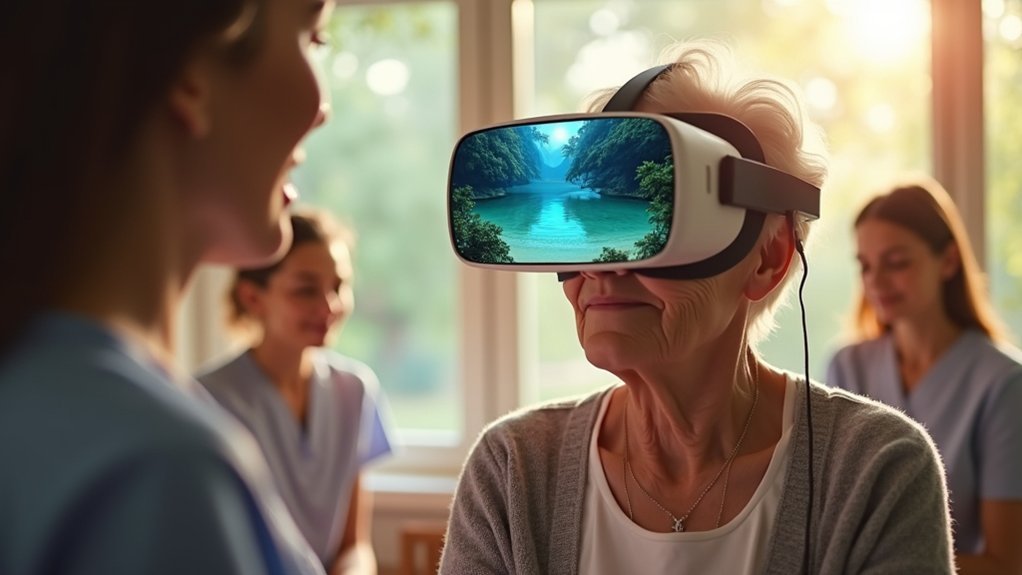
Despite VR’s proven benefits in memory care, several practical challenges prevent widespread adoption in elderly care facilities.
You’ll find accessibility challenges pose significant hurdles, as seniors with physical and cognitive limitations need user-friendly designs tailored to their specific needs. High equipment costs and custom content creation expenses make VR therapy programs financially challenging for many facilities.
Training for seniors and staff becomes essential for overcoming learning curve difficulties. You must address motion sickness and other side effects to guarantee user comfort and acceptance.
The key lies in collaboration between technology developers and healthcare professionals, who can work together to create solutions that meet elderly care requirements. Through ongoing partnerships, you can expect continued advancement in addressing these implementation barriers and developing more accessible VR applications.
Frequently Asked Questions
How Virtual Reality in Healthcare Transforms Treatment?
You’ll experience immersive treatments that reduce pain, anxiety, and depression while improving rehabilitation outcomes. VR transforms healthcare by providing engaging, non-pharmacologic interventions that enhance physical therapy, cognitive training, and mental health treatments.
How Is VR Technology Curing Loneliness in Seniors?
You’ll find VR technology creates immersive social platforms where you can interact with others, revisit meaningful places from your past, and participate in shared experiences that greatly reduce isolation and improve your emotional well-being.
Is VR Good for the Elderly?
Yes, VR’s excellent for you if you’re elderly. You’ll experience improved mood, reduced isolation, enhanced cognitive engagement, pain relief, and increased physical activity. Eighty percent of seniors find VR enjoyable and beneficial.
How Is VR Used in Rehabilitation and Therapy?
You’ll use VR for engaging physical therapy that improves mobility and balance. It provides cognitive exercises for memory enhancement, reduces pain perception during sessions, and lets you practice daily living skills safely.