
Virtual storytelling tools matter because they eliminate technical barriers that once kept you from creating immersive narratives. You’ll find drag-and-drop interfaces, templates, and guided workflows that let you focus on your story rather than complex coding. These platforms offer affordable options with free tiers, multimedia integration, and supportive communities that accelerate your learning. With user-friendly designs and interactive tutorials, you can build confidence quickly while exploring new career opportunities in this growing field that’s projected to expand 23% through 2031, and there’s much more to discover.
Essential Features of Virtual Storytelling Platforms for Beginners

When you’re starting your journey into digital storytelling, the right platform can make all the difference between feeling overwhelmed and creating compelling narratives with confidence.
Choosing the right beginner-friendly platform transforms digital storytelling from an overwhelming technical hurdle into an empowering creative journey.
Virtual storytelling platforms designed for beginners prioritize user-friendly interfaces that minimize your learning curve, letting you focus on crafting engaging stories rather than wrestling with complex digital storytelling tools.
Essential features include multimedia integration capabilities that allow you to seamlessly incorporate images, audio, and video into your narratives.
You’ll benefit from templates and guided workflows that structure your content effectively without requiring design expertise.
Collaboration tools enable real-time teamwork and peer feedback, while cloud-based storage guarantees you can access and share your projects across devices.
These features transform storytelling from a technical challenge into an accessible creative outlet.
How VR Content Creation Tools Lower the Barrier to Entry
As VR technology continues to evolve, content creation tools have transformed from complex, code-heavy platforms into accessible drag-and-drop environments that you can master without programming knowledge.
These virtual storytelling tools eliminate the need for advanced technical skills, letting you focus on crafting immersive experiences rather than wrestling with complicated interfaces.
You’ll find that VR content creation platforms now offer pre-built templates and assets, enabling quick production of professional-quality stories.
Affordable software options remove financial barriers, while integrated tutorials and community support accelerate your learning curve.
User-friendly applications have sparked numerous online courses and workshops, creating collaborative environments where you can develop your storytelling skills alongside fellow creators who share insights and encouragement.
Building Confidence Through User-Friendly Virtual Reality Interfaces

While technical barriers once intimidated aspiring VR storytellers, today’s user-friendly interfaces transform hesitation into excitement as you discover how naturally you can navigate these digital environments.
Virtual reality storytelling tools now feature intuitive design elements like drag-and-drop functionality and pre-built templates that let you create compelling narratives without technical expertise.
Interactive tutorials guide you through each step, building your storytelling skills while you experiment with different creative approaches.
The immersive nature of these platforms lets you watch your ideas materialize in vivid, three-dimensional spaces, boosting your confidence as a creator.
Seeing your creative vision come alive in immersive 3D space transforms storytelling from intimidating challenge into empowering artistic experience.
You’ll find yourself focusing on narrative content rather than wrestling with complex software, releasing your creativity and transforming uncertainty into genuine enthusiasm for digital storytelling.
Cost-Effective Solutions for New Virtual Storytellers
Budget constraints shouldn’t prevent you from exploring virtual storytelling, as numerous platforms offer free tiers and affordable subscription models that put professional-grade creation tools within reach. These cost-effective solutions enable newcomers to launch creative projects without expensive equipment or advanced technical skills.
| Free Features | Premium Benefits |
|---|---|
| Basic templates | Advanced multimedia elements |
| Standard audio library | Professional video integration |
| Community tutorials | Priority support access |
| Limited storage space | Unlimited project capacity |
Virtual storytelling tools streamline production workflows, letting you focus on developing compelling narratives rather than wrestling with complex software. Built-in templates and intuitive interfaces eliminate learning curves, while online resources provide thorough tutorials. These platforms foster collaborative communities where you can enhance your storytelling skills through peer feedback and shared experiences, making professional-quality virtual storytelling achievable regardless of budget.
Learning Resources and Community Support for VR Beginners
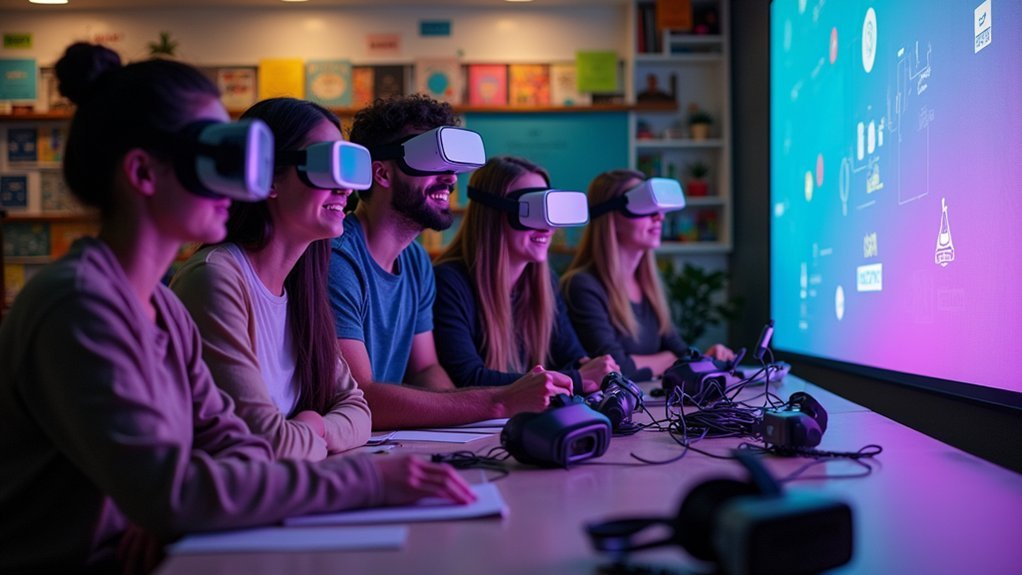
You’ll find that accessing quality learning platforms is essential for mastering VR storytelling techniques and software fundamentals.
Building connections within creator communities accelerates your learning curve through shared experiences and collaborative problem-solving.
These supportive networks provide the guidance and feedback you need to transform from a curious beginner into a confident virtual storyteller.
Essential VR Learning Platforms
The foundation of successful VR storytelling begins with choosing the right learning platform that matches your skill level and creative goals. Essential VR learning platforms like Oculus Quest, HTC Vive, and Pico provide user-friendly interfaces and extensive educational content libraries specifically designed for newcomers exploring virtual storytelling experiences.
These platforms offer interactive tutorials that guide you through fundamental storytelling techniques while you learn by doing. You’ll discover immersive learning experiences that build confidence naturally through hands-on practice.
Community support forums connect you with experienced users who share insights and troubleshoot challenges.
Additionally, online communities like AltspaceVR and VRChat let you practice storytelling skills in real-time, receiving immediate feedback from diverse audiences in engaging virtual environments.
Building Supportive Creator Communities
While mastering VR storytelling technology forms the technical foundation, connecting with fellow creators accelerates your learning journey exponentially.
Online communities provide essential peer support through forums, social media groups, and dedicated platforms where you’ll share experiences and exchange practical tips about virtual storytelling tools.
These collaboration opportunities create immersive learning experiences that extend beyond technical tutorials:
- Mentorship programs connect you with experienced storytellers who offer personalized guidance and constructive feedback on your projects.
- Community-driven content libraries provide accessible resources like templates, assets, and open-source software for experimentation.
- Collaborative projects allow you to practice skills while building meaningful relationships with other creators.
This inclusive creative process guarantees you’re never learning alone, fostering confidence and rapid skill development through shared knowledge and mutual encouragement.
Overcoming Technical Challenges With Simplified Creation Workflows
Because virtual storytelling platforms now feature intuitive drag-and-drop interfaces, you can easily integrate multimedia elements like images, videos, and audio without needing extensive technical knowledge.
These simplified creation workflows eliminate technical barriers that once prevented newcomers from expressing their creativity digitally.
Virtual storytelling tools include guided workflows with step-by-step tutorials, helping you become proficient quickly while minimizing learning curves.
User-friendly templates and presets streamline your process, enabling you to create polished stories in considerably less time than traditional methods require.
AI-powered features further enhance your experience by automating complex tasks like script generation and video editing.
These intuitive interfaces let you focus on crafting compelling narratives rather than wrestling with complicated software, ultimately boosting your engagement and satisfaction throughout the creative process.
Career Opportunities Unlocked by VR Storytelling Skills
Mastering these accessible VR storytelling tools positions you for exciting career prospects across multiple industries. The virtual storytelling field is experiencing explosive growth, with multimedia artists projected to see 23% job growth through 2031. Your digital storytelling skills become valuable assets across diverse sectors.
Here are three key career paths you can pursue:
- Educational Technology Specialist – Design immersive experiences for learning environments, where 83% of educators report VR enhances student engagement remarkably.
- Digital Marketing Content Creator – Develop compelling brand narratives using VR technologies to create memorable consumer experiences that drive engagement and sales.
- User Experience Designer – Craft intuitive virtual environments that blend storytelling elements with functional design, meeting the growing demand for narrative-driven interfaces.
These career opportunities span entertainment, education, and marketing sectors.
Best Practices for Creating Your First Virtual Reality Story
When you’re ready to create your first VR story, you’ll need to select the right platform that matches your technical skills and creative vision.
Start by mapping out your story structure with clear beginning, middle, and end points that work within VR’s unique spatial environment.
Focus on designing user experiences that leverage VR’s immersive capabilities while keeping navigation intuitive for newcomers to the medium.
Choose Your VR Platform
Several VR platforms offer distinct advantages for first-time storytellers, but your choice will greatly impact your creative process and final audience reach.
When you choose your VR platform, prioritize compatibility with popular devices like Oculus Quest, HTC Vive, and PlayStation VR to maximize accessibility.
Consider these essential factors:
- Development Environment – Select user-friendly tools like Unity or Unreal Engine that provide thorough tutorials and seamless integration of interactive elements for your narrative experience.
- Content Support – Confirm your platform accommodates your desired storytelling format, whether it’s 360-degree video or interactive environments with spatial audio capabilities.
- Community Access – Leverage community resources and forums for troubleshooting, collaboration opportunities, and insights that’ll enhance your immersive storytelling skills and emotional engagement techniques.
Plan Your Story Structure
Although virtual reality offers limitless creative possibilities, you’ll need a solid foundation before diving into immersive storytelling. Your digital storytelling success depends on establishing a clear story structure with defined beginning, middle, and end segments that flow seamlessly together.
Focus your narrative structure around a central theme that guides every element of your interactive stories. Balance your pacing carefully—alternate between high-energy moments and reflective pauses to prevent sensory overload while maintaining engagement.
Incorporate choice-driven elements that allow viewers to influence outcomes, creating deeper emotional investment in your story. When integrating multimedia elements like visuals, audio, and interactivity, make certain each component serves your core narrative rather than overwhelming it.
This thoughtful approach transforms simple concepts into compelling VR experiences that resonate with audiences.
Design Immersive User Experiences
Once you’ve mapped out your story structure, designing immersive user experiences becomes your next critical challenge in VR storytelling.
Your digital storytelling initiatives must prioritize user engagement through carefully crafted interactive elements that give users meaningful agency in your narrative structure.
Here’s how to create compelling immersive user experiences:
- Integrate meaningful choices – Design interactive elements that genuinely influence your storyline, allowing users to shape their journey through your virtual reality storytelling experience.
- Prioritize high-quality visuals and spatial audio – These technical elements dramatically enhance presence and realism, making your virtual environment more emotionally compelling.
- Test with real users early – Gather feedback on usability and emotional impact during development, enabling you to refine your narrative for maximum user engagement and immersion.
Frequently Asked Questions
Why Is Digital Storytelling Important?
You’ll enhance engagement through multimedia elements, develop essential literacy skills, and create emotional connections that improve comprehension. Digital storytelling lets you share diverse perspectives creatively while preparing for modern workforce demands.
What Are the 5 C’s of Storytelling?
You’ll use Context, Character, Conflict, Climax, and Conclusion to craft compelling narratives. These elements help you establish setting, develop relatable individuals, create tension, reach turning points, and deliver satisfying resolutions that engage your audience emotionally.
Why Is Visual Storytelling Important?
You’ll retain 65% more information when stories include visuals versus text alone. Visual storytelling engages your emotions, captures attention effectively, and helps you understand complex ideas quickly through images and graphics.
What Are the 5 P’s of Storytelling?
You’ll master storytelling by focusing on five key elements: Purpose defines your story’s intent, People are your characters, Plot structures your narrative arc, Place sets your scene, and Point of View shapes perspective.