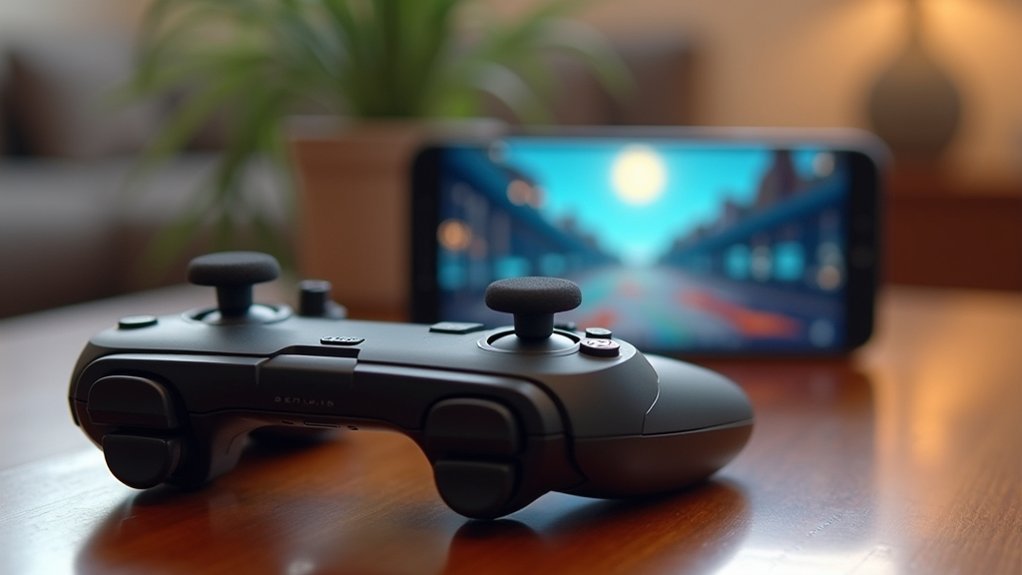
Phone-compatible VR controllers revolutionize your virtual reality experience by replacing awkward gaze-based navigation with intuitive hand movements and precise button controls. You’ll find these controllers make VR accessible to mainstream users, with proven success among over 5 million Samsung Gear VR owners. They’re cost-effective, starting at just $10 for basic setups, and seamlessly integrate with your existing smartphone ecosystem. You’ll enjoy enhanced comfort, superior tracking precision, and the ability to manipulate virtual objects effortlessly, transforming how you’ll discover the full potential of mobile VR technology.
Understanding Phone-Compatible VR Controllers and Their Core Functions
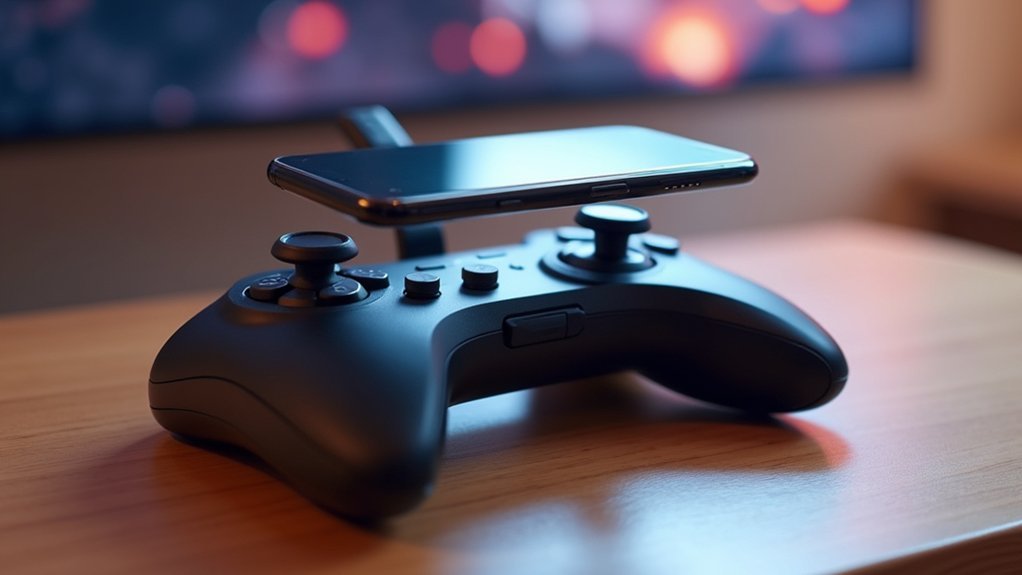
When you’re exploring virtual reality on your phone, compatible VR controllers transform how you interact with digital environments by replacing basic gaze-based navigation with intuitive hand movements.
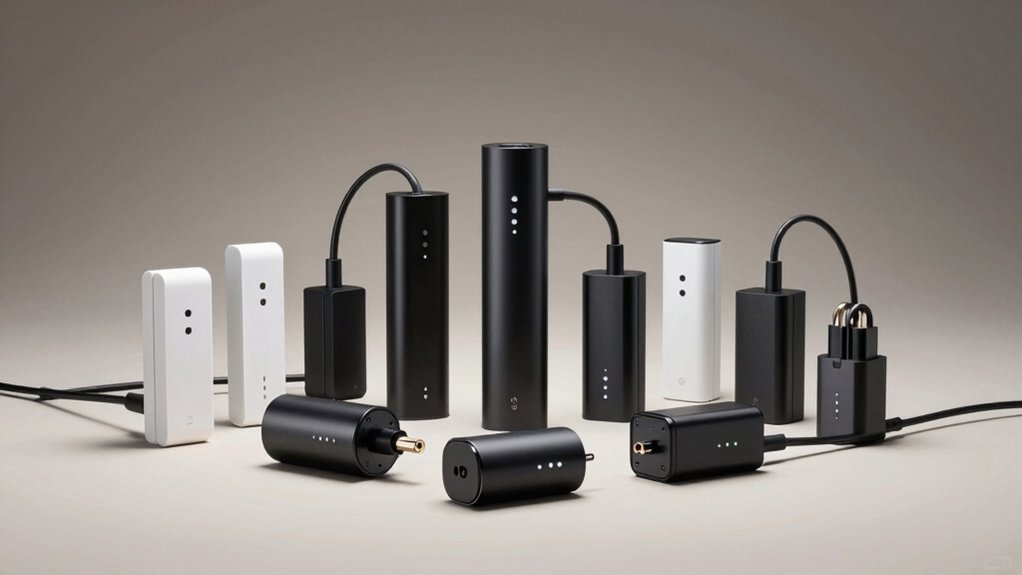
Phone-compatible VR controllers feature essential components like buttons, triggers, and thumbsticks that enable precise actions and smooth navigation within virtual spaces. You’ll find these controllers create a notably more immersive experience compared to traditional gaze-based methods.
Phone-compatible VR controllers with buttons, triggers, and thumbsticks deliver precise control and notably more immersive experiences than basic gaze-based navigation.
The hand tracking capabilities allow you to manipulate objects, select menu items, and control movement naturally. This enhanced interactivity dramatically improves your user experience by making VR content more engaging and accessible.
You can pair one controller with multiple Android devices, making them practical for group activities or events where multiple users need seamless access to VR applications.
Enhanced User Interaction and Navigation Capabilities
Beyond basic gaze controls, phone-compatible VR controllers enable sophisticated interaction methods that let you manipulate virtual objects with natural hand movements.
You’ll find dragging and dropping items becomes effortless, while precise input options give you complete control over your virtual environment. These enhanced controls eliminate the frustration of traditional gaze-based navigation, letting you seamlessly move through menus and applications without removing your headset.
The controllers transform basic VR experiences into immersive VR environments where you can adjust volume, access settings, and interact with complex interfaces intuitively.
Whether you’re gaming, exploring educational content, or attending virtual events, phone-compatible VR controllers deliver the responsive interaction you need for truly engaging experiences that feel natural and fluid.
Accessibility Benefits for Mainstream VR Adoption
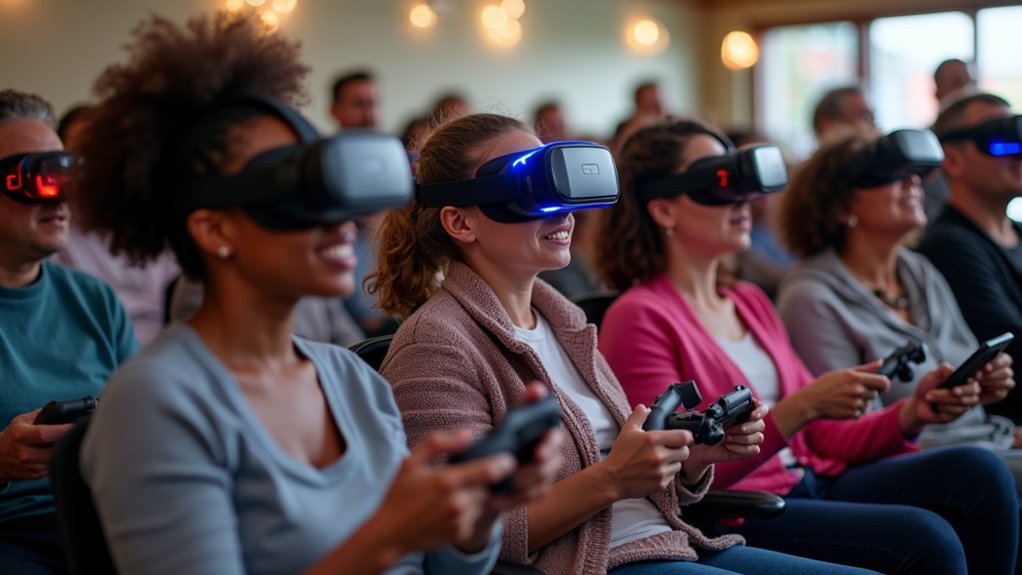
Phone-compatible VR controllers break down barriers that previously kept mainstream users away from virtual reality experiences.
You’ll find these controllers dramatically reduce the learning curve, making VR accessible to non-tech-savvy individuals who might’ve felt intimidated by complex systems. With over 5 million Samsung Gear VR units sold, it’s clear that phone-compatible controllers have proven their effectiveness in attracting everyday users seeking affordable, functional solutions.
You can easily share one controller across multiple Android devices, creating communal experiences that encourage group participation.
This sharing capability transforms VR from a solitary activity into an inclusive social experience. The simplified navigation and interaction these controllers provide means you don’t need technical expertise to enjoy immersive virtual worlds, making VR truly accessible to mainstream users regardless of their technological background.
Cost-Effective Entry Point Into Immersive Technology
You can enter the VR world without breaking the bank by choosing phone-compatible controllers that cost as little as $10 for basic Google Cardboard setups.
Your existing smartphone becomes the display and processing power, eliminating the need for expensive standalone headsets while still accessing quality VR experiences.
These affordable hardware options let you explore immersive technology at a fraction of traditional VR costs, with premium phone-compatible systems like Samsung Gear VR available for around $100.
Affordable VR Hardware Options
Accessibility has revolutionized the VR landscape, with affordable VR hardware options now making immersive technology available to virtually anyone with a smartphone. You can start your VR journey with Google Cardboard for just $10, transforming your mobile phone into an immersive display. Samsung Gear VR offers enhanced experiences around $100 for compatible devices.
| Hardware Option | Price Range | Key Features |
|---|---|---|
| Google Cardboard | $10 | Basic smartphone VR, ultra-affordable |
| Samsung Gear VR | $100 | Enhanced mobile VR, wide app support |
| Oculus Quest 2 | $299 | Standalone headset, high-resolution display |
These budget-friendly options eliminate financial barriers, allowing you to explore virtual worlds without expensive equipment. You’ll discover that quality VR experiences don’t require premium investments, making immersive technology truly inclusive.
Smartphone Integration Benefits
While expensive standalone headsets continue to dominate headlines, smartphone integration offers the most practical pathway into VR technology by transforming devices you already own into powerful immersive platforms.
You’ll maximize your mobile investment while accessing diverse VR applications without purchasing costly dedicated hardware. These VR systems leverage your smartphone’s processing power and display capabilities, delivering compelling immersive experience through affordable solutions like Google Cardboard and Gear VR.
With over 5 million Gear VR units sold, smartphone integration has proven its market viability by making VR accessible to broader audiences.
You can seamlessly navigate and manipulate applications within any virtual environment using your phone as a controller. This approach eliminates financial barriers that prevent casual users from exploring VR, encouraging experimentation and engagement while maintaining exceptional user experience quality.
Seamless Integration With Existing Mobile Ecosystems

Because phone-compatible VR controllers integrate directly with your existing mobile ecosystem, you’ll find that shifting between traditional smartphone use and virtual reality becomes remarkably fluid.
Your phone’s familiar interface extends into virtual worlds, letting you perform everyday actions like adjusting volume or dragging objects with the same intuitive gestures you already know.
These VR controllers leverage your smartphone’s processing power and app library, eliminating the need for expensive dedicated hardware.
You can access your favorite mobile games and applications within the immersive experience, creating a bridge between real-world interactions and virtual environments.
This integration means you’re not learning entirely new systems – you’re simply expanding how you interact with your existing digital ecosystem through enhanced spatial controls.
Performance Advantages Over Traditional Input Methods
You’ll notice phone-compatible VR controllers deliver superior tracking precision that captures your hand movements with remarkable accuracy compared to basic gaze controls or smartphone taps.
These controllers drastically cut input latency, ensuring your actions translate instantly into the virtual world without the frustrating delays you’d experience with traditional methods.
The ergonomic design fits naturally in your hands, reducing fatigue and strain that often occurs when you’re forced to rely on awkward head gestures or prolonged touchscreen interactions.
Enhanced Tracking Precision
Although traditional gaze-based input methods have served as the foundation for basic VR interactions, phone-compatible controllers deliver considerably superior tracking precision that transforms how you interact with virtual environments. Advanced sensors capture your precise hand movements with exceptional accuracy, creating an immersive experience that rivals dedicated VR systems.
| Feature | Traditional Input | Phone-Compatible Controllers |
|---|---|---|
| Movement Detection | Basic gaze tracking | Advanced motion sensors |
| Response Time | Higher latency | Reduced input latency |
| Interaction Types | Limited pointing | Complex manipulation |
| Feedback System | Visual only | Haptic + visual feedback |
| Gaming Performance | Basic controls | Enhanced tracking for VR games and apps |
This enhanced tracking enables complex actions like multi-tasking and precise object manipulation, considerably improving your performance across various applications.
Reduced Input Latency
When you’re traversing fast-paced virtual environments, input latency becomes the critical factor that determines whether your movements feel natural or frustratingly delayed.
Phone-compatible controllers deliver reduced input latency through advanced sensors and optimized Bluetooth connections, achieving up to 20 millisecond improvements over traditional methods. This enhancement transforms your virtual hands into responsive extensions of your physical movements, creating a seamless immersive experience.
Unlike wired controllers that introduce lag, these wireless solutions provide near-instantaneous tracking that translates your hand movements with minimal delay.
You’ll notice smoother gameplay and more precise control, especially during fast-paced gaming sessions. Research confirms that this lower latency directly correlates with improved satisfaction and deeper engagement, making every gesture feel authentic and immediate.
Improved User Ergonomics
Beyond responsive tracking, phone-compatible VR controllers revolutionize comfort through their ergonomic design that naturally fits your hand’s contours.
These lightweight devices eliminate the strain and discomfort you’d experience with gaze-based inputs during extended sessions. You’ll find their intuitive button layout simplifies navigation while reducing fatigue, letting you engage longer without physical stress.
The enhanced user ergonomics of VR controllers enable precise actions that traditional methods can’t match. You can effortlessly drag and drop objects, navigate smoothly with thumbsticks, and perform complex interactions with remarkable accuracy.
This ergonomic advantage transforms how you interact with virtual environments, creating a more immersive experience that feels natural rather than forced. Your extended sessions become comfortable and engaging instead of tiresome and awkward.
Future Potential and Market Impact of Mobile VR Controllers
Since mobile VR controllers have already proven their worth with over 5 million Gear VR users experiencing enhanced interactivity, they’re positioned to reshape the entire VR landscape in unprecedented ways.
You’ll see these mobile VR controllers drive innovation across gaming and education sectors, creating more intuitive immersive experiences that attract tech-savvy consumers. The competitive advantage they provide helps brands like Samsung strengthen their market presence against rivals like Google Daydream.
You can expect shared experiences to become commonplace as one controller pairs with multiple Android devices, boosting user engagement at events and gatherings.
This versatility will fuel investment and development, leading to breakthrough applications that expand mobile VR’s reach beyond current limitations and establish new industry standards.
Frequently Asked Questions
Can I Use My Phone as a VR Controller?
Yes, you can use your phone as a VR controller through compatible apps that connect via Bluetooth or Wi-Fi. However, you’ll experience limited functionality and precision compared to dedicated VR controllers.
How Does Virtual Reality Work With Phones?
Your phone’s screen displays split images while its gyroscope and accelerometer track head movements. When you place it in a VR headset, specialized lenses create depth perception, transforming flat images into immersive three-dimensional experiences.
Does Samsung Gear VR Need a Phone?
Yes, you’ll need a compatible Samsung smartphone for the Gear VR to work. It can’t function without one since it relies entirely on your phone’s processing power, display, and sensors.
How Do I Make My Phone VR Compatible?
You’ll need a smartphone with high-resolution display and gyroscope sensors. Purchase a VR headset like Google Cardboard, download compatible VR apps, and consider getting a controller for better navigation and interaction.