You’ll find seven leading SDK solutions dominating image recognition: Amazon Rekognition SDK offers robust VR capabilities with real-time object detection and facial recognition. Google ARCore integrates Cloud Vision for intelligent AR experiences, while Microsoft’s Mixed Reality Toolkit provides spatial awareness for HoloLens. OpenCV delivers 2500+ optimized algorithms for real-time processing. Unity Computer Vision SDK guarantees seamless cross-platform development. Vuforia Engine specializes in immersive experiences, and Apple’s ARKit Vision Framework excels in environmental mapping. Each solution brings unique strengths you’ll want to explore further.
Amazon Rekognition SDK for VR Applications
When developing VR applications that require sophisticated visual analysis, Amazon Rekognition SDK provides developers with robust image and video recognition capabilities that seamlessly integrate into virtual environments.
You’ll find this powerful toolkit enables real-time object detection and scene analysis, enhancing your VR application’s interactive capabilities.
The SDK’s facial recognition features allow you to personalize user experiences and improve social interactions within virtual spaces. You can implement activity recognition to track user movements and behaviors, while inappropriate content detection helps maintain safe environments for all users.
Through seamless integration with AWS services, you’ll leverage cloud computing for scalable image analysis.
These extensive developer tools operate on usage-based pricing, starting with a free tier that lets you test capabilities before committing to production-level implementations.
Google ARCORE With Cloud Vision Integration
While Amazon Rekognition excels in VR environments, Google ARCore paired with Cloud Vision offers developers a powerful combination for creating sophisticated augmented reality experiences on Android devices.
Google ARCore and Cloud Vision deliver powerful AR development tools for creating intelligent, context-aware Android applications.
You’ll leverage Google Cloud Vision’s advanced image recognition capabilities to enhance your ARCore applications with intelligent object detection and real-time interaction features.
This integration empowers you to build applications that don’t just overlay digital content but actually understand your user’s environment.
You can implement machine learning-powered features like face recognition and label detection, enabling your AR apps to provide contextual information based on recognized objects and scenes.
The result is immersive experiences where your application intelligently responds to physical elements, creating seamless interactions between the digital and real worlds through enhanced visual understanding.
Microsoft Mixed Reality Toolkit Computer Vision
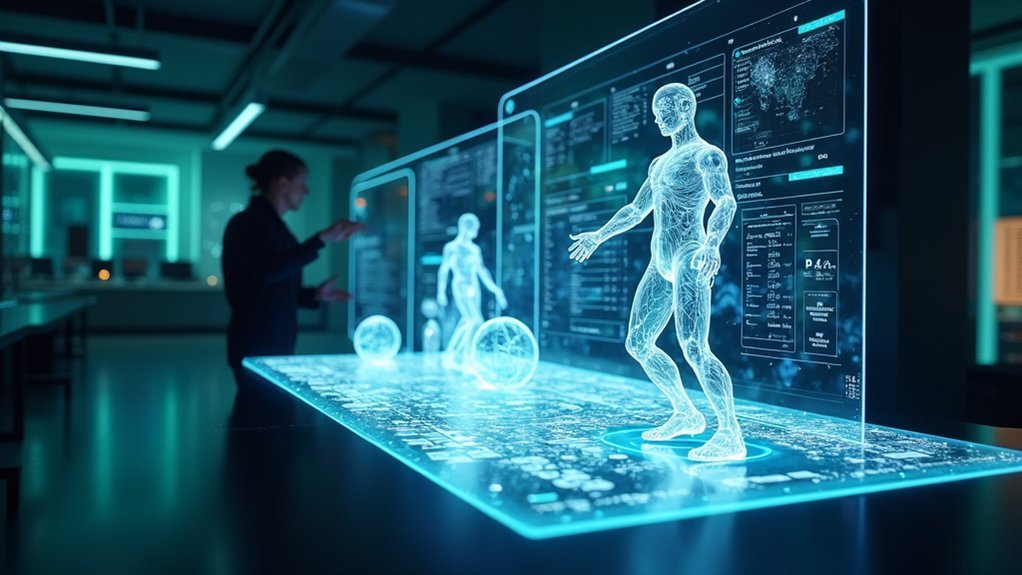
As you shift from purely mobile AR experiences to thorough mixed reality development, Microsoft’s Mixed Reality Toolkit Computer Vision SDK delivers the foundational tools you’ll need for building sophisticated HoloLens and Unity applications.
| Feature | Capability | Platform Support |
|---|---|---|
| Object Recognition | Real-time detection and tracking | HoloLens, Unity |
| Spatial Awareness | Environmental understanding | Cross-platform development |
| Gesture Recognition | Hand movement interpretation | Mixed reality headsets |
| Facial Tracking | User identification and emotion | Multiple devices |
The toolkit’s machine learning models enable real-time image processing for immersive experiences that respond naturally to user interactions. You’ll leverage spatial awareness to create applications that understand physical environments, while gesture recognition and facial tracking capabilities provide intuitive interfaces. Extensive documentation and community support accelerate your computer vision development process.
OpenCV for Virtual Reality Development
Since virtual reality demands precise real-time visual processing, OpenCV’s extensive computer vision library becomes your essential toolkit for creating immersive VR experiences that respond seamlessly to user movements and environmental changes.
OpenCV’s 2500+ optimized algorithms deliver the precise real-time visual processing that VR applications need for seamless user interaction.
This powerful image recognition tool provides over 2500 optimized algorithms that enable efficient implementation of complex visual tasks essential for VR development.
You’ll leverage OpenCV’s core functionalities including object detection, facial recognition, and motion tracking to enhance user interactions within virtual environments.
The library’s support for multiple programming languages like C++, Python, and Java gives you flexibility across different VR platforms.
OpenCV’s computer vision models excel at real-time image processing, ensuring your VR applications maintain high performance.
Additionally, you’ll benefit from robust community support featuring thorough documentation and tutorials.
Unity Computer Vision SDK
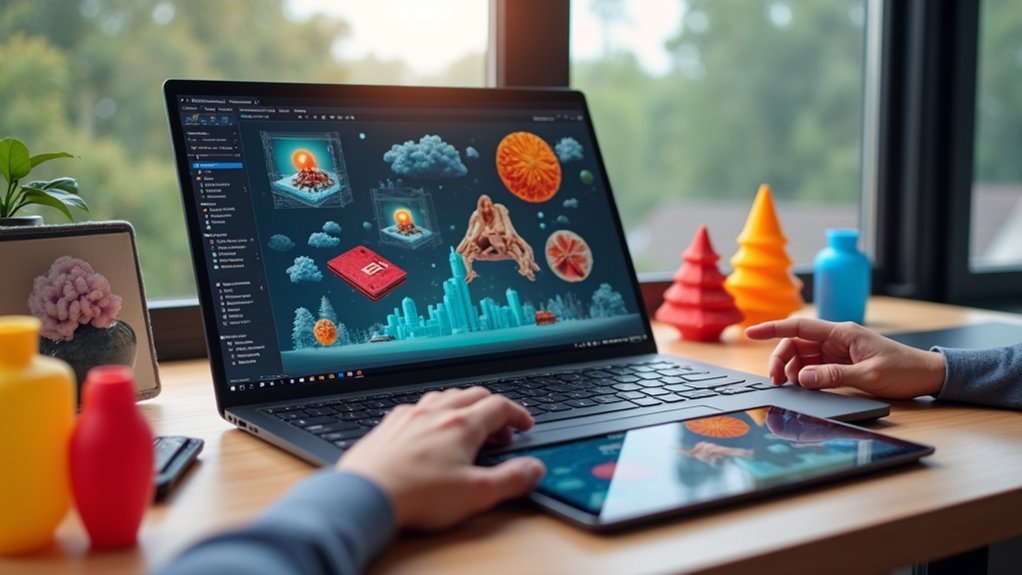
When you’re developing Unity applications that require sophisticated visual intelligence, the Unity Computer Vision SDK transforms your projects into powerful platforms capable of real-time object detection, image classification, and facial recognition.
This all-encompassing solution integrates seamlessly with your existing Unity workflow, delivering advanced computer vision capabilities that enhance both augmented reality and traditional applications.
You’ll leverage machine learning models that can be fine-tuned for your specific requirements, ensuring ideal accuracy and performance.
The SDK’s real-time image processing capabilities enable interactive experiences across Android, iOS, and Windows platforms. Cross-platform development becomes effortless, while SDKs enable rapid implementation through extensive documentation and sample projects.
Whether you’re a beginner or expert, you’ll find the tools necessary to integrate sophisticated image recognition features into your Unity applications efficiently.
Vuforia Engine for Immersive Experiences
You’ll find Vuforia Engine stands out as a powerful AR SDK that transforms how you create immersive experiences through advanced computer vision technology.
Its extensive AR development features include Model Target recognition for tracking 3D objects and cloud recognition capabilities that let you access vast image databases for large-scale applications.
You can seamlessly integrate Vuforia across multiple platforms like iOS, Android, and Unity, giving you the flexibility to reach users on their preferred devices while maintaining consistent AR functionality.
AR Development Features
While many AR development platforms focus on basic functionality, Vuforia Engine stands out as a thorough solution that empowers developers to create truly immersive experiences through advanced computer vision technology.
You’ll find that its advanced image recognition capabilities extend beyond simple image targets to include sophisticated object recognition and model targets, making it versatile for diverse augmented reality applications.
The platform’s AR development features include:
- Real-time tracking that maintains accuracy even in dynamic lighting conditions
- Cloud recognition capabilities for scalable image database management
- Seamless integration with popular game engines like Unity and Unreal Engine
- Multiple target support including cylinder targets and 3D model recognition
These extensive features enable you to build robust AR applications that deliver consistent, high-quality immersive experiences across various industries and use cases.
Cross-Platform Integration Capabilities
Although developing for multiple platforms traditionally requires separate codebases and extensive resources, Vuforia Engine eliminates these barriers by offering extensive cross-platform integration capabilities that let you deploy AR applications across iOS, Android, and Windows devices from a single development environment.
| Feature | Capability | Implementation |
|---|---|---|
| Image Recognition | Real-time detection | Cloud recognition API |
| Object Tracking | 3D model tracking | Native SDK integration |
| Unity Integration | Seamless workflow | Plugin architecture |
You’ll leverage Vuforia’s robust SDK to create immersive experiences that work consistently across platforms. The engine’s Unity integration streamlines development, while its object tracking and augmented reality features enhance retail applications. With over 800,000 developers using this technology, you can build engaging AR solutions without platform-specific complications, making cross-platform integration efficient and cost-effective.
Apple ARKit Vision Framework for VR
When developing AR applications, Apple’s ARKit Vision Framework provides you with cutting-edge computer vision capabilities that transform how users interact with digital content in physical spaces.
You’ll leverage advanced image recognition and object detection to create immersive experiences that seamlessly blend virtual elements with reality. The framework’s real-time analysis processes camera feeds and motion sensors, generating precise 3D environmental maps for accurate virtual object placement.
- Face tracking technology captures facial expressions to animate 3D models, boosting user engagement through personalized interactions.
- Image recognition capabilities identify and track specific objects or images instantly for educational and retail applications.
- Core ML integration enables sophisticated machine learning functionalities like real-time classification within augmented reality environments.
- Surface detection algorithms accurately map physical spaces, ensuring virtual objects appear naturally grounded in real-world settings.
Frequently Asked Questions
What Is the Best Image Recognition Software?
You’ll find Amazon Rekognition, Google Cloud Vision API, and Microsoft Azure Computer Vision API are top choices. If you’re doing ML projects, SuperAnnotate’s best for annotations, while DeepSignals excels at real-time processing.
Which Algorithm Is Best for Image Recognition?
You’ll find CNNs are typically best for image recognition tasks. They’re excellent at detecting spatial features automatically. For real-time applications, you’d want YOLO or SSD algorithms instead.
Which Model Is Best for Image Recognition?
You’ll find ResNet, EfficientNet, and Vision Transformers perform exceptionally well for image recognition tasks. ResNet’s skip connections prevent vanishing gradients, while EfficientNet optimizes accuracy-efficiency trade-offs, and Vision Transformers excel with sufficient training data.
What Is the Best Programming Language for Image Recognition?
You’ll find Python’s the best choice for image recognition since it’s got extensive libraries like TensorFlow and OpenCV. However, you can use JavaScript for web apps or C++ when you need maximum performance.