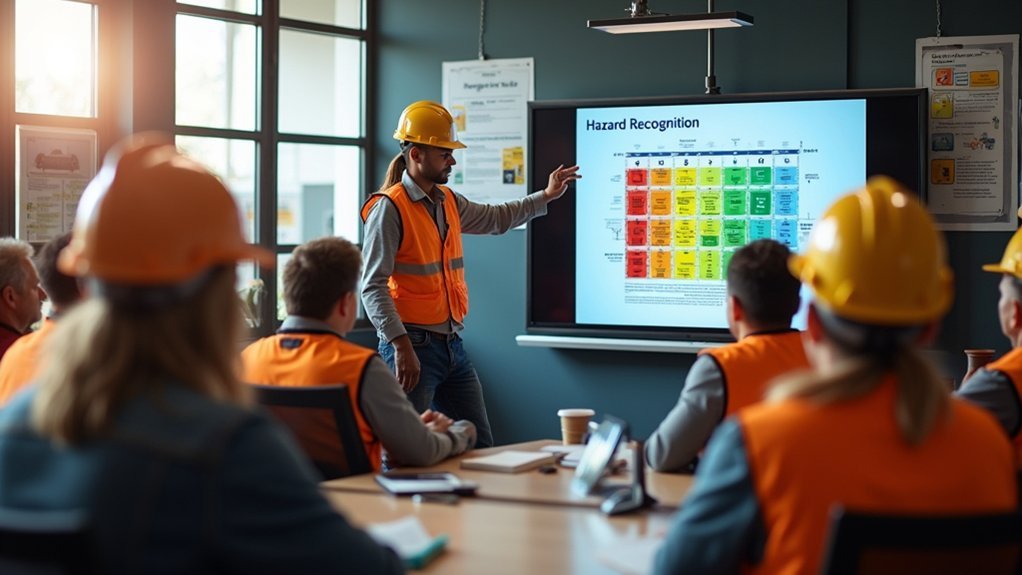
You’ll maximize your enterprise hazard recognition training by establishing clear, measurable learning objectives that align with workplace safety goals. Design immersive VR scenarios recreating authentic work environments while incorporating real-time feedback mechanisms to transform passive observation into active learning. Guarantee cross-departmental participation brings diverse operational perspectives, implement progressive skill development starting with basic scenarios, and measure effectiveness through data-driven analytics tracking incident reduction rates. These strategic approaches will enhance your safety program’s impact considerably.
Establish Clear Learning Objectives for VR Hazard Recognition Programs
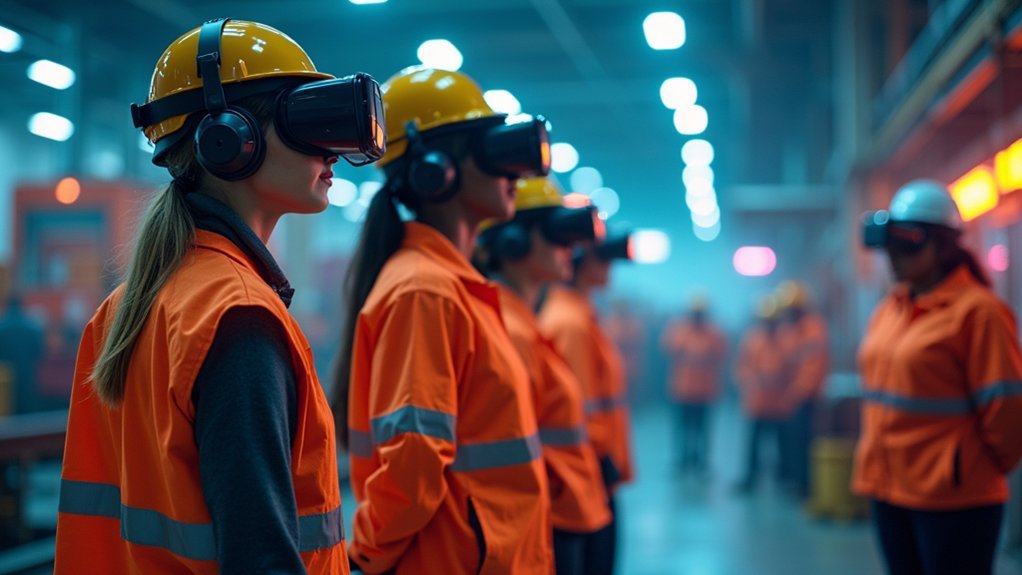
Success in VR hazard recognition training hinges on establishing clear, specific learning objectives from the outset.
Clear, specific learning objectives established from the beginning are the foundation of effective VR hazard recognition training programs.
You’ll need to define exactly what skills employees should acquire, focusing on their ability to identify hazards across physical, chemical, and ergonomic categories. Your learning objectives should include measurable outcomes—like identifying a specific number of workplace safety risks within simulated environments—to evaluate training effectiveness accurately.
Don’t forget to incorporate the hierarchy of controls into your objectives, ensuring employees understand how to prioritize hazard mitigation strategies.
This approach reinforces proactive risk management principles that translate directly to real-world applications. When you align your VR hazard recognition training objectives with broader workplace safety goals, you’re fostering a culture where accountability and safety awareness become second nature for your workforce.
Design Immersive Workplace Scenarios Using Virtual Reality Technology
Once you’ve defined your learning objectives, designing immersive workplace scenarios becomes your next critical step in creating effective VR hazard recognition training. Virtual reality technology enables you to recreate authentic work environments where employees can identify workplace hazards without real-world consequences. You’ll want to develop customized training scenarios that mirror your organization’s specific risks and challenges.
| Scenario Type | Common Hazards | Interactive Learning Elements |
|---|---|---|
| Construction Site | Falls, electrical, heavy machinery | Hard hat selection, safety harness checks |
| Manufacturing Floor | Chemical spills, moving equipment | Emergency shutdown procedures, PPE verification |
| Office Environment | Ergonomic risks, fire exits | Workstation adjustments, evacuation routes |
| Warehouse Operations | Forklift traffic, stacking hazards | Load inspection, pathway navigation |
| Laboratory Settings | Chemical exposure, contamination | Proper disposal methods, containment protocols |
This interactive learning approach considerably improves employees hazard recognition skills through hands-on practice.
Incorporate Real-Time Feedback Mechanisms in VR Training Modules
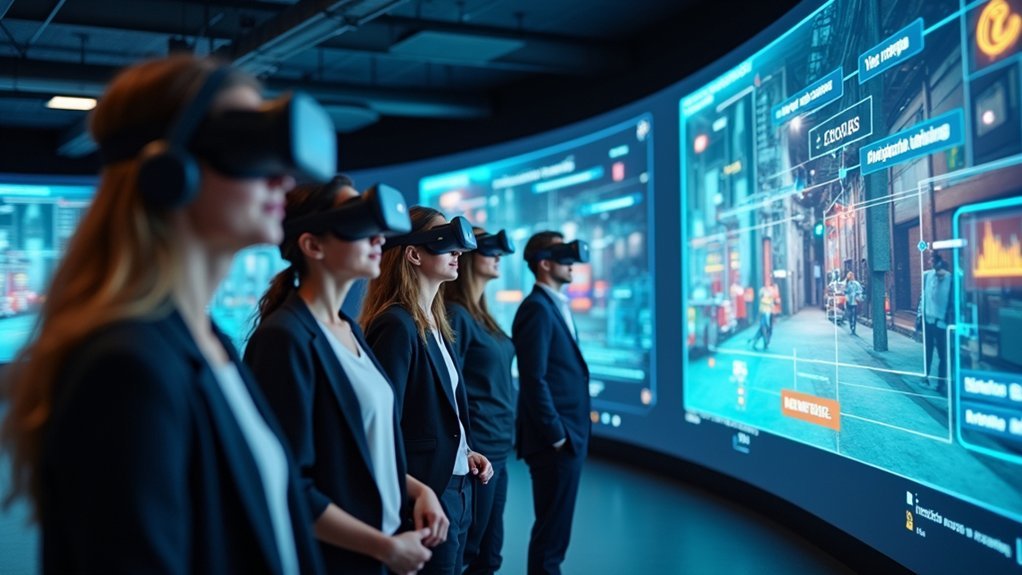
While immersive scenarios form the foundation of effective VR hazard recognition training, real-time feedback mechanisms transform passive observation into active learning experiences that accelerate skill development.
You’ll receive immediate guidance on your hazard identification decisions, improving accuracy by up to 30% compared to traditional methods. These training modules use sensor technology to simulate realistic workplace conditions, providing instant responses to your actions.
Real-time feedback promotes active participation, making you more likely to retain and apply techniques in actual work environments.
Active participation through real-time feedback increases retention and practical application of safety techniques in workplace environments.
You’ll develop stronger hazard recognition skills through immersive learning that reinforces correct identification and control methods.
Ensure Cross-Departmental Participation in Virtual Hazard Identification
You’ll maximize hazard recognition effectiveness by forming multi-department teams that bring diverse operational perspectives to your virtual training sessions.
Set up your virtual training platform to accommodate participants from different locations and departments, ensuring everyone can actively contribute to the identification process.
Conduct cross-functional hazard assessments where teams from operations, maintenance, safety, and management collaborate to spot risks that single-department groups might miss.
Multi-Department Team Formation
When establishing a multi-department team for virtual hazard identification, you’ll need representatives from every corner of your organization to capture the full spectrum of workplace risks.
Your hazard identification training program becomes more effective when employees from safety, operations, maintenance, and management collaborate to share diverse perspectives on potential hazards.
Include these key roles in your team formation:
- Safety professionals who understand regulatory requirements
- Frontline operators with hands-on experience
- Supervisors familiar with daily workplace inspections
- Management representatives for decision-making authority
Virtual platforms enable seamless communication between geographically dispersed team members, ensuring everyone participates in hazard recognition discussions.
Regular meetings promote knowledge sharing and best practices across departments.
Document your team’s findings to create valuable training resources that support ongoing employee development and enhance your organization’s overall safety culture.
Virtual Training Platform Setup
Setting up an effective virtual training platform requires strategic configuration to maximize cross-departmental participation in hazard identification sessions.
You’ll want to leverage interactive features like breakout rooms and collaborative tools that engage participants from diverse roles, regardless of their physical location.
Schedule sessions with recording capabilities so employees who can’t attend live can access hazard identification training later.
Incorporate real-time polling and quizzes to boost knowledge retention and assess understanding across different departmental backgrounds.
Make training materials available in multiple languages to promote inclusivity and enhance comprehension for all team members.
These platform configurations create an environment where employee participation thrives, breaking down departmental silos while building extensive hazard recognition skills throughout your organization.
Cross-Functional Hazard Assessment
While traditional hazard assessments often rely on single-department perspectives, cross-functional teams revolutionize safety identification by combining diverse expertise and operational insights.
Cross-functional participation enhances hazard identification by leveraging each department’s unique knowledge to recognize hazards others might miss.
You’ll discover effective strategies when implementing cross-departmental safety training:
- Schedule regular collaborative meetings to encourage open communication across teams
- Utilize virtual platforms enabling remote employees to contribute insights and observations
- Include representatives from operations, maintenance, HR, and management for thorough coverage
- Document department-specific hazards identified by team members in their specialized roles
This collaborative approach prevents workplace injuries by ensuring no potential safety risks go unnoticed.
When you engage diverse team members, you’ll develop innovative solutions that single-department assessments typically overlook.
Implement Progressive Skill Development Through VR Simulations
You’ll maximize your hazard recognition training effectiveness by leveraging VR’s immersive capabilities that allow employees to experience realistic workplace dangers without actual risk.
Start with basic hazard identification scenarios and gradually increase complexity through progressive training levels that build upon previously mastered skills.
This structured approach guarantees your workforce develops thorough hazard recognition abilities while retaining up to 75% more safety knowledge than traditional training methods provide.
VR Immersion Benefits
Since traditional training methods often fall short in preparing employees for real-world hazard scenarios, VR simulations offer a transformative approach that immerses your workforce in realistic environments where they can practice identifying dangers without actual risk.
These immersive training experiences enable your employees to develop critical hazard recognition skills while maintaining safe work conditions.
VR technology delivers exceptional benefits that enhance your training program’s effectiveness:
- Enhanced retention – Employees retain hazard recognition skills considerably better than traditional methods
- Personalized learning – Training adapts to individual learning paces and job-specific requirements
- Repeated practice – Unlimited drill opportunities build confidence in identifying potential hazards
- Real-time feedback – Immediate guidance helps refine skills and deepen understanding of hazard control measures
You’ll create more prepared, confident employees ready to maintain safe work environments.
Progressive Training Levels
Because effective hazard recognition requires systematic skill development, progressive VR training levels guarantee your employees master fundamental concepts before advancing to complex scenarios.
You’ll start with basic hazard identification principles, introducing physical, chemical, and ergonomic risks in simple environments. As employees demonstrate competency, you’ll escalate complexity by adding multiple workplace hazards simultaneously, time pressures, and decision-making elements.
This structured approach guarantees your safety training builds confidence while preventing overwhelm. Your immersive training system should include immediate feedback mechanisms that highlight correct identifications and explain missed hazards.
You’ll track individual progress through each level, guaranteeing mastery before advancement. This methodical progression creates competent hazard recognition specialists who can handle real-world situations effectively, greatly improving your organization’s overall safety performance.
Measure Training Effectiveness With Data-Driven Analytics

Three critical metrics can transform your hazard recognition training from a compliance checkbox into a powerful safety tool.
You’ll measure training effectiveness by tracking incident reduction rates, knowledge retention scores, and employee confidence levels through analytics.
Pre- and post-training assessments help you identify knowledge gaps and quantify learning gains. When you analyze incident reports and near misses before and after implementation, you’ll see direct correlation between training participation and workplace safety improvements.
Essential data points to track include:
- Incident frequency rates pre- and post-training
- Assessment score improvements across departments
- Employee feedback on hazard identification confidence
- Near miss reporting increases indicating better hazard awareness
You can’t identify what’s working without consistent data review.
Regular analytics help you adjust programs to address emerging workplace hazards and maintain training relevance.
Create Ongoing Refresher Programs Using Virtual Reality Platforms
Data analytics reveal which employees need additional training support, and virtual reality platforms offer the perfect solution for delivering targeted refresher programs.
You’ll enhance hazard recognition skills by creating immersive scenarios that replicate real workplace dangers without actual risk. VR-based training programs improve hazard identification by up to 75% compared to traditional methods, making them invaluable for maintaining safety standards.
Schedule regular refresher training sessions to keep employees engaged with evolving workplace risks and new safety protocols.
Virtual reality simulations allow your team to practice recognizing hazards in high-risk environments safely, reinforcing critical safety behaviors through realistic experiences. This approach greatly boosts employee engagement while ensuring consistent skill development.
Frequently Asked Questions
How to Improve Hazard Recognition?
You’ll improve hazard recognition by conducting regular safety inspections, implementing job hazard analysis, fostering reporting culture, leveraging sensor technology, and providing continuous training with workplace-specific examples for better retention.
What Are the Five Steps of Hazard Recognition and Control?
You’ll follow five steps: identify workplace hazards, assess their risks by evaluating severity and likelihood, implement controls using the hierarchy method, monitor control effectiveness, and continuously improve your hazard management process.
What Are the 5ps of Hazard Identification?
You’ll identify workplace hazards using the 5Ps framework: People (employee behavior and training), Processes (operational procedures), Products (materials and tools), Premises (physical environment), and Procedures (safety protocols and communication systems).
What Are the 4 Steps to Identify a Hazard?
You’ll start by reviewing safety documentation and incident reports. Next, conduct physical workplace walkthroughs. Then assess chemical and biological hazards using Safety Data Sheets. Finally, document all identified hazards thoroughly.