
Building a VR fitness platform requires quality hardware like the Meta Quest 3S ($299.99), motion tracking technology, and cadence sensors for equipment integration. You’ll need immersive environments with realistic graphics, gamification elements like achievement systems that boost exercise adherence by 44%, and real-time biometric monitoring for safety. Essential features include adaptive AI coaching, social leaderboards, cross-platform compatibility, and subscription monetization models. This all-encompassing approach transforms traditional workouts into engaging virtual experiences that maintain user motivation and deliver measurable fitness results through advanced spatial recognition systems.
Essential Hardware Components for VR Fitness Platforms
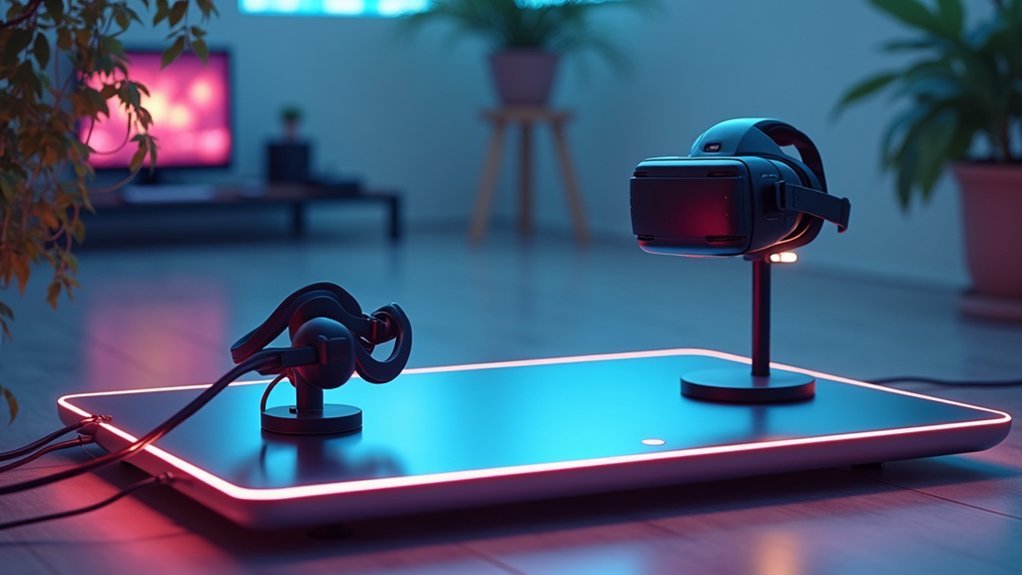
When building a VR fitness platform, you’ll need a quality VR headset as your foundation, with the Meta Quest 3 and Meta Quest 3S standing out as top choices for their broad compatibility with fitness apps like HOLOFIT.
The Meta Quest 3S offers an affordable entry point at $299.99, delivering solid performance for newcomers to VR fitness.
At under $300, the Quest 3S delivers exceptional value for anyone starting their VR fitness journey.
Beyond your VR headset, consider integrating fitness machines like stationary bikes, ellipticals, and rowing machines to create immersive workout experiences.
You’ll need a cadence sensor to connect bikes and ellipticals with VR fitness apps, ensuring accurate performance tracking during sessions.
Don’t overlook your workout space setup.
Configure proper roomscale boundaries on your Meta Quest headset to maintain safety while maximizing movement freedom during your VR workouts.
Motion Tracking Technology and Spatial Recognition Systems
Motion tracking technology forms the backbone of your VR fitness platform, using sophisticated sensors and cameras to capture every movement with remarkable precision. This technology guarantees accurate interaction within your immersive environment, enabling seamless workout experiences.
Spatial recognition systems complement motion tracking by mapping your physical space, establishing safety boundaries and preventing collisions with obstacles. Advanced headsets like Meta Quest and PICO 4 utilize inside-out tracking, eliminating external sensors while maintaining exceptional accuracy.
SLAM technology enhances spatial awareness, allowing smooth shifts between different workout modes. You’ll receive real-time feedback based on your performance, with the system continuously adjusting to optimize your fitness routine.
This integration creates responsive, safe virtual environments that adapt to your movements and space limitations.
Creating Immersive Virtual Workout Environments
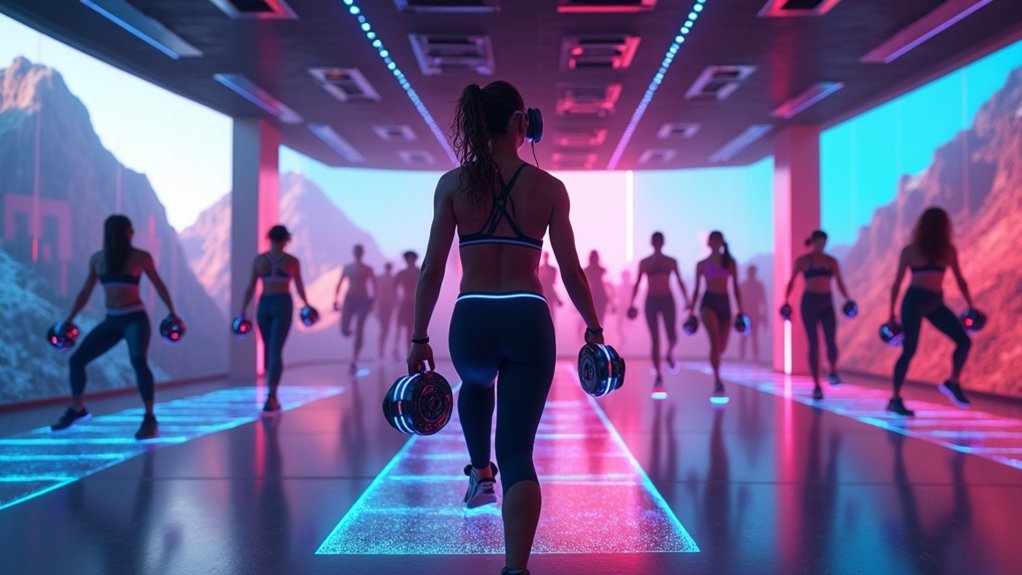
You’ll need to master three core elements when creating virtual workout environments that truly engage users.
Your virtual environment design principles must prioritize realistic graphics and diverse landscapes that transport users from their living rooms to exotic locations like Alpine ski slopes or Parisian streets.
You’ll also want to focus on interactive fitness space creation and seamless audio-visual integration that combines environmental sounds with dynamic playlists tailored to each workout setting.
Virtual Environment Design Principles
Since immersive virtual environments form the foundation of engaging VR fitness experiences, you’ll need to focus on creating lifelike, interactive settings that transport users beyond the confines of traditional workout spaces.
Your virtual environment design should incorporate breathtaking landscapes inspired by real-world locations like Antarctica and Paris to maintain motivation throughout sessions. You’ll create an immersive atmosphere through high-quality visuals and realistic graphics that keep users focused and engaged.
Dynamic audio elements, including environmental sounds and customizable playlists, enhance the overall experience. Implement gamification features like leaderboards and challenges to boost user engagement while designing environments that accommodate various fitness levels.
Ascertain safety and accessibility by providing clear visual and audio cues for instructions and motivation.
Interactive Fitness Space Creation
Interactive fitness spaces transform static VR environments into dynamic playgrounds where every movement creates meaningful responses within your virtual world.
You’ll create engaging experiences by implementing SLAM technology for precise movement tracking, ensuring your users feel genuinely present in their fitness routines.
Customize diverse virtual environments—from tropical beaches to mountain peaks—to match varying user preferences and prevent workout monotony.
Leverage Unity or Unreal Engine to build high-quality visuals with realistic interactions that boost user engagement.
Design responsive elements that react to physical movements, making each workout session feel alive and purposeful.
Regular content updates featuring new environments and seasonal themes maintain freshness, encouraging users to return consistently.
Your interactive spaces should seamlessly blend immersive graphics with intuitive controls, creating compelling reasons for sustained fitness participation.
Immersive Audio Visual Integration
Immersive audio-visual integration transforms your interactive fitness spaces into convincing alternate realities where sight and sound work together to transport users beyond their living rooms.
Your VR fitness game becomes compelling when you synchronize dynamic soundscapes with realistic visuals, creating environments that feel authentic—whether you’re cycling through Antarctic landscapes or rowing past Parisian landmarks.
To maximize your workout experience and help users achieve their fitness goals, focus on these essential elements:
- Quality headphones that deliver environmental sounds while blocking external distractions
- High-quality graphics with interactive elements that create genuine presence and engagement
- Dynamic playlists tailored to different workout intensities for sustained motivation
This thorough approach combats exercise monotony, transforming routine workouts into adventures that encourage consistent participation and long-term fitness commitment.
Gamification Elements That Drive User Engagement
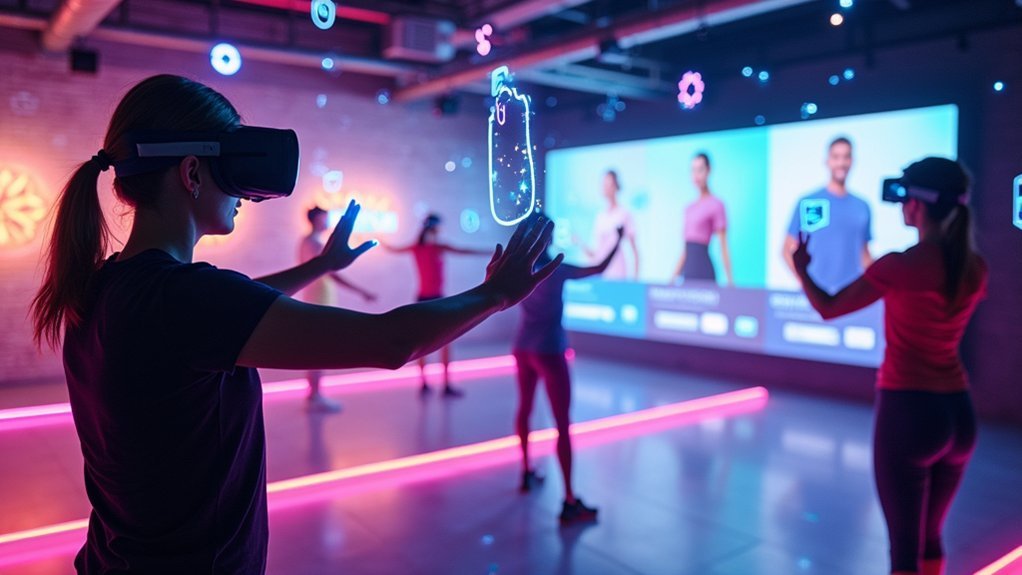
You’ll find that strategic gamification transforms mundane workouts into engaging experiences that keep users coming back for more.
Achievement systems create clear milestones that reward your progress, while social competition features tap into your natural desire to outperform friends and climb leaderboards.
Progressive challenge mechanics guarantee you’re constantly pushed to new levels, preventing the plateau effect that often derails traditional fitness routines.
Achievement Systems and Rewards
The psychology behind achievement systems transforms routine workouts into compelling challenges that keep you coming back for more. These systems tap into your natural desire for recognition and accomplishment, making each fitness session feel rewarding and purposeful.
Effective achievement systems and rewards in VR fitness platforms include:
- Progress tracking badges that visualize your fitness journey through accessible milestones and visual representations of your improvements.
- Tiered reward structures that offer virtual gear, new workout environments, or exclusive content as you complete specific challenges.
- Community-driven achievements that celebrate collective fitness goals and foster social connections among users.
Smart progress tracking doesn’t just monitor your performance—it creates meaningful moments of celebration. When you access rewards through consistent effort, you’ll develop stronger habits and deeper user engagement with your VR fitness platform.
Social Competition Features
Competition ignites motivation like nothing else, and VR fitness platforms harness this powerful drive through carefully designed social features that transform solitary workouts into dynamic community experiences.
You’ll find that community challenges create lasting bonds between users while pushing everyone toward their goals. Virtual leaderboards showcase your achievements and encourage friendly rivalries that keep you coming back for more intensive sessions.
When you track progress alongside friends, your fitness experience becomes infinitely more engaging. These gamification elements tap into your natural competitive instincts, making each workout feel like an exciting challenge rather than a chore.
Social media integration lets you share victories instantly, attracting new participants and building momentum within the community ecosystem.
Progressive Challenge Mechanics
When fitness becomes a game, your commitment transforms from obligation into obsession. Progressive challenge mechanics leverage powerful gamification elements that turn your fitness routine into an addictive experience.
You’ll find yourself naturally pushing harder when achievements, leaderboards, and daily challenges fuel your motivation. Your customizable workout intensity adapts as you grow stronger, ensuring you’re always appropriately challenged.
Key engagement drivers include:
- Achievement badges that reward milestones and consistent participation
- Dynamic leaderboards showcasing your progress against friends and global users
- Daily challenges offering fresh goals that prevent workout monotony
Research proves gamification increases exercise adherence by 44%, dramatically boosting user engagement.
Regular updates introducing new environments and challenges keep your experience fresh, while social sharing features create accountability that maintains long-term consistency in your evolving fitness journey.
Real-Time Biometric Integration and Performance Analytics
As you step into a VR fitness environment, sophisticated sensors and wearable devices begin capturing your essential signs in real-time, transforming every heartbeat, calorie burned, and movement into actionable data that enhances your workout experience.
Real-time biometric integration enables VR fitness platforms to monitor your heart rate, movement accuracy, and energy expenditure throughout each session. Performance analytics leverage this continuous data stream, providing detailed insights that help you understand your fitness progress and identify areas for improvement.
Advanced biometric tracking transforms every VR workout into personalized data insights, helping you optimize performance and achieve measurable fitness progress.
Advanced algorithms analyze your biometric patterns to deliver personalized workout recommendations, ensuring you’re training within ideal intensity zones.
This integration creates gamification opportunities where you’ll compete against personal records or challenge others based on actual performance metrics, while continuous monitoring prevents overexertion and promotes safer exercise practices.
Social Features and Community Building Tools
While solitary workouts have their place, VR fitness platforms reveal their true potential through robust social features that transform isolated exercise sessions into vibrant community experiences.
You’ll discover that leaderboards create healthy competition, letting you challenge friends and global users while tracking achievements. These social features drive user engagement by making fitness goals more meaningful and motivating.
Essential community building tools include:
- Group sessions and multiplayer modes – Join virtual workout classes with others in real-time
- In-app messaging and forums – Connect with fellow fitness enthusiasts, share tips, and provide mutual support
- Social media integration – Share progress and achievements to inspire others and attract new community members
Regular challenges and community events keep you returning, fostering lasting connections that make VR fitness feel less like exercise and more like social interaction.
Adaptive AI Coaching and Personalized Workout Plans
Beyond the motivational power of community connections, VR fitness platforms leverage cutting-edge AI technology to deliver truly personalized workout plans that adapt to your unique needs and capabilities.
Adaptive AI coaching continuously analyzes your performance metrics, exercise intensity, and progress to create dynamic routines that evolve with your fitness journey. This intelligent system enhances user engagement by offering varied workouts that remain challenging yet achievable, preventing plateaus and maintaining motivation.
VR technology amplifies this personalization by tracking your movements with precision, providing real-time feedback on form and technique. The AI adjusts difficulty levels, targets specific muscle groups, and modifies cardio intensity based on your advancing capabilities, ensuring you’ll consistently progress toward your fitness goals while experiencing greater program adherence than traditional static workout plans.
Cross-Platform Compatibility and Equipment Integration
When you’re building a VR fitness platform, cross-platform compatibility becomes the bridge that connects diverse users across different headset ecosystems, from Meta Quest to HTC Vive and beyond.
You’ll need to guarantee your VR fitness applications work seamlessly across devices while maintaining consistent performance standards.
Equipment integration transforms your platform’s versatility. You’ll want to connect various fitness machines like stationary bikes and rowing machines to create extensive workout experiences.
Here’s what you should prioritize:
- Cadence sensor connectivity for accurate performance tracking with bikes and ellipticals
- Motion tracking accuracy across different VR devices to prevent lag and disorientation
- Regular updates supporting new equipment as technology evolves
Your platform’s success depends on creating smooth, immersive experiences that work reliably regardless of users’ hardware choices.
Monetization Strategies for VR Fitness Applications
Once you’ve established a robust, cross-platform VR fitness experience, you’ll need sustainable revenue models to fund ongoing development and content creation.
A subscription model provides the most reliable approach, offering tiered access to exclusive content, features, and personalized workout plans. You should implement free trial periods to attract users and build commitment before conversion.
Complement subscriptions with in-app purchases for additional workout environments, challenges, and virtual coaching sessions. This allows customization while generating extra revenue.
Consider offering one-time purchase options for users preferring upfront payments over ongoing commitments.
Collaborate with fitness influencers and VR enthusiasts for promotional campaigns. Their credibility enhances brand visibility and attracts broader audiences to VR fitness applications, ultimately driving user acquisition across all monetization channels.
Frequently Asked Questions
How Much Space Do I Need at Home for VR Fitness Workouts?
You’ll need at least 6×6 feet of clear space for basic VR fitness workouts. This gives you room to move safely without hitting furniture or walls. Consider higher ceilings if you’re doing overhead movements.
Can VR Fitness Platforms Replace Traditional Gym Memberships Completely?
You can’t completely replace gym memberships with VR fitness yet. You’ll miss heavy weights, swimming pools, group classes, and professional trainers. VR’s great for cardio and motivation, but gyms offer equipment diversity you can’t replicate.
What Happens if I Lose Internet Connection During a Workout Session?
You’ll typically switch to offline mode where basic workouts continue running from cached data. However, you can’t access live classes, multiplayer features, or save progress until you’re reconnected to the internet.
Are VR Fitness Platforms Safe for People With Motion Sickness?
You’ll likely experience worsened motion sickness with VR fitness platforms initially. Start with shorter sessions, choose stationary workouts over moving games, adjust comfort settings, and gradually build tolerance. Consider anti-motion sickness medications if symptoms persist.
How Do I Clean and Maintain VR Equipment After Sweaty Workouts?
Use disinfectant wipes on non-fabric surfaces, remove and wash foam padding separately, let everything air dry completely before storing. Don’t submerge electronics in liquids, and replace worn padding regularly for hygiene.